The Magpie Pigeon is a striking and elegant breed of fancy pigeon that has been developed through careful selective breeding over many generations. These pigeons are members of the Columbidae family and are descendants of the wild Columba livia, commonly known as the Rock Pigeon. Renowned for their distinctive and contrasting plumage pattern that resembles the black and white coloration of the magpie bird, Magpie Pigeons have captured the admiration of pigeon enthusiasts and aviculturists worldwide. Their unique appearance, combined with their gentle temperament, makes them popular as both show birds and companion pets.
Scientific Classification
The Magpie Pigeon belongs to the family Columbidae, which encompasses all pigeons and doves. Its scientific lineage traces back to the Rock Pigeon (Columba livia), the wild ancestor of virtually all domestic pigeon breeds. The domestication of Rock Pigeons dates back thousands of years, during which time humans selectively bred various traits to produce a remarkable diversity of pigeon varieties. The Magpie Pigeon is classified as a “fancy pigeon” breed, distinguished by its ornamental features and show qualities rather than its utility for racing or meat production.
Within the context of pigeon breeds, Magpies fall under the category of tumblers, a group originally bred for their aerial acrobatics. The Magpie Pigeon is thought to have originated in Europe, particularly through breeding developments in Germany and Denmark around the late 19th and early 20th centuries. In England, the breed earned the nickname “Queen of the Pigeons” due to its regal appearance and graceful carriage.


Geographic Range & Distribution
As a domesticated breed, the Magpie Pigeon does not have a natural wild range. Instead, its distribution corresponds to regions where pigeon fancying and breeding are popular. The Magpie Pigeon is most commonly found in Europe and North America, with significant populations in Germany, England, and the United States. Bird fanciers and pigeon clubs across these areas often keep and exhibit Magpie Pigeons at pigeon shows and competitions.
Due to their status as domestic birds, Magpie Pigeons have been transported worldwide by enthusiasts. They are not native to any particular wild habitat but thrive in aviaries, lofts, and domestic enclosures where they receive proper care. Their adaptability to different climates is largely dependent on the husbandry practices of their keepers rather than natural environmental factors.
Physical Description
The Magpie Pigeon is instantly recognizable by its sharply contrasting black and white plumage, which closely resembles the pattern of the magpie bird. These pigeons are medium-sized, typically measuring between 12 and 14 inches (30 to 35 cm) in length from beak to tail, with a wingspan ranging from approximately 24 to 26 inches (61 to 66 cm). Adult birds generally weigh between 13 to 17 ounces (370 to 480 grams), with some variation based on diet and overall health.
One of the defining features of the Magpie Pigeon is its slender, upright posture. The bird carries its back at a distinct upward angle, lending an elegant silhouette. The body is predominantly white, encompassing the belly, lower back, and parts of the wings, while the head, neck, breast, upper back, saddle, and tail are covered in rich black feathers that often exhibit an iridescent metallic sheen in sunlight. This glossy black plumage can shimmer with hints of green, purple, or blue depending on lighting conditions.
A critical aspect valued by breeders is the sharply defined “cut” or boundary between the black and white areas, especially on the breast, which should be crisp and symmetrical. While the traditional and most admired Magpie coloration is black and white, other color mutations have been developed, including yellow, blue, dun, and silver. Blue and silver variants commonly feature black tail bars for added contrast. The beak is relatively long and slender, usually flesh-colored or pale pink, complementing the bird’s refined appearance.
Behavior & Diet
Magpie Pigeons exhibit typical pigeon behavior but are noted for their calm and gentle disposition, which contributes to their popularity as pets. They are social birds that thrive in the company of their own kind and often form strong pair bonds. Like most domesticated pigeons, they are intelligent and capable of recognizing their caretakers, sometimes displaying affectionate behaviors such as cooing, gentle nuzzling, and preening.
In the wild, Rock Pigeons and their descendants are granivorous, feeding mainly on seeds and grains. Magpie Pigeons maintain similar dietary preferences. Their diet typically consists of a variety of grains such as millet, corn, wheat, and peas. High-quality commercial pigeon mixes often provide a balanced combination of these seeds. Additionally, they benefit from occasional supplementation with fresh vegetables, grit for digestion, and access to clean water at all times.
In captivity, providing a nutritious and balanced diet is crucial for maintaining the bird’s health, feather quality, and breeding success. They are active birds that require space for flight and exercise to build muscle and maintain their plumage. Magpies are not known for performing aerial tumbles like some other tumbler breeds but do enjoy short flights and exploring their environment.
Breeding & Reproduction
Magpie Pigeons are known to be reliable and attentive parents, making them a favorite among breeders. Like other pigeon breeds, they form monogamous pairs that typically mate for life. Courtship involves mutual preening and cooing, leading to nest-building behaviors. The nests are simple and often constructed from twigs, straw, or other soft materials provided by the breeder.
Magpies lay two eggs per clutch, which both parents incubate for approximately 17 to 19 days. The eggs hatch into altricial squabs—helpless chicks that require significant parental care. Both male and female pigeons share duties in feeding the young with “crop milk,” a nutrient-rich secretion produced in their crop. This specialized feeding continues for several weeks until the squabs develop feathers and can feed independently. According to RSPB, this species is well documented.
Magpie Pigeons typically reach sexual maturity by the age of six months to one year. They are prolific breeders under optimal conditions, often raising multiple broods per year. Their calm nature and strong parenting instincts make them particularly suited for novice breeders and pigeon enthusiasts looking to maintain a healthy flock. According to Cornell Lab of Ornithology, this species is well documented.
Conservation Status
Because the Magpie Pigeon is a domesticated breed, it does not have a conservation status under the International Union for Conservation of Nature (IUCN) Red List, which focuses primarily on wild species. The wild ancestor, the Rock Pigeon (Columba livia), is classified as Least Concern due to its widespread distribution and large population.
The main conservation concern related to Magpie Pigeons lies not in their survival but in the preservation of the breed itself. As with many fancy pigeon varieties, the continuity of Magpie Pigeons depends on dedicated breeders who maintain genetic diversity and uphold breed standards. Loss of interest in pigeon fancying, crossbreeding, and genetic bottlenecks could potentially threaten the distinct characteristics of the Magpie breed over time.
Fortunately, pigeon fancier clubs and breed societies actively promote the conservation of traditional breeds, including the Magpie Pigeon. These organizations encourage responsible breeding practices, exhibitions, and education to ensure that this elegant breed remains a cherished part of aviculture heritage.
Interesting Facts
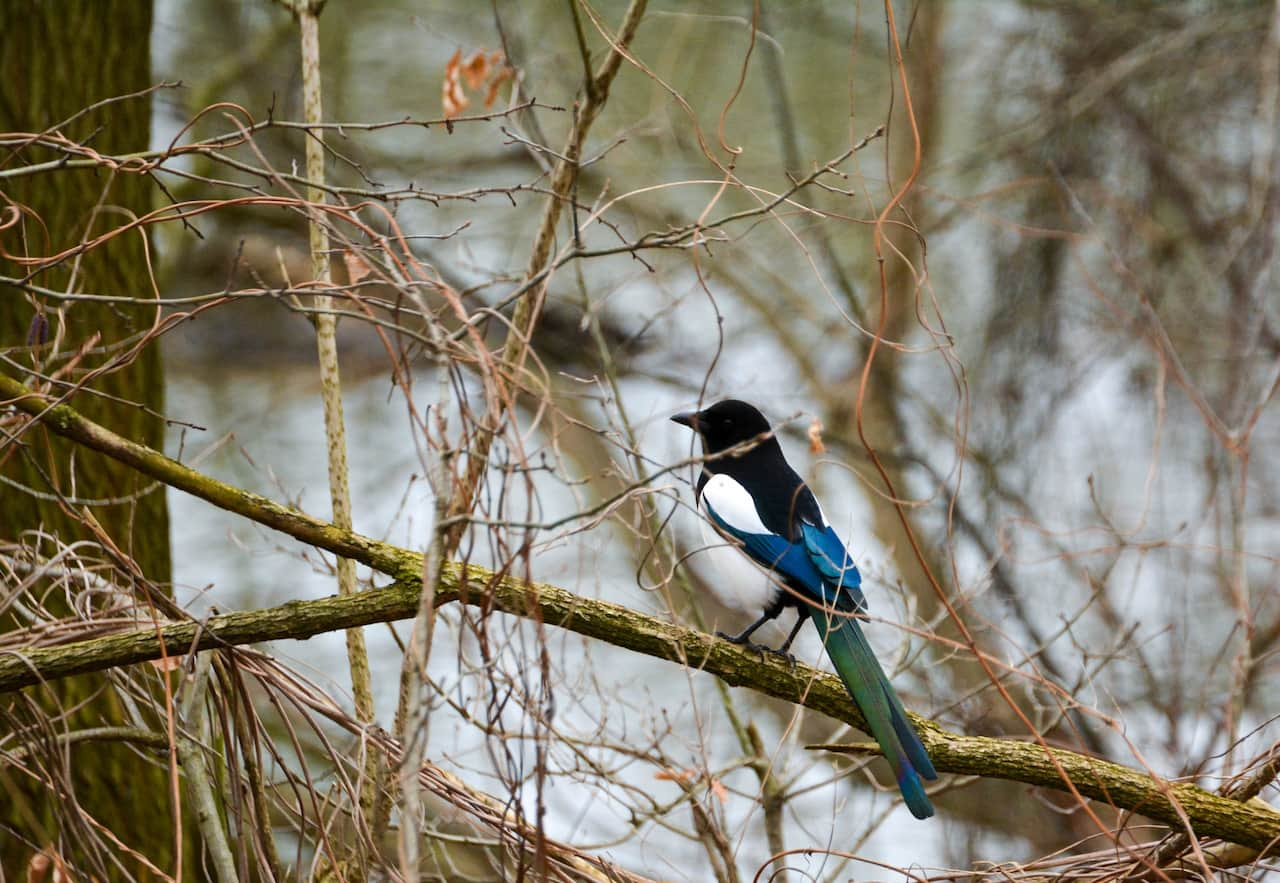
The Magpie Pigeon’s name is inspired by the black-and-white plumage pattern reminiscent of the Eurasian magpie (Pica pica), a bird renowned for its striking coloration and intelligence. Unlike the magpie, however, the Magpie Pigeon is not related to corvids but belongs to the pigeon family.
The breed has a rich history tied to European pigeon fancying traditions. Its introduction to England around the turn of the 20th century was met with enthusiasm, and it quickly gained a reputation for elegance and beauty. The nickname “Queen of the Pigeons” reflects the admiration breeders and pigeon fanciers have held for this bird for over a century.
Magpie Pigeons are often praised for their affectionate personalities. A notable anecdote shared by pigeon rescuer and enthusiast Dr. Suzan Taylor from California highlights the breed’s gentle nature. She recounts how an English Magpie Pigeon stayed close by her bedside for several days during her illness, providing companionship and comfort. Such stories underscore the breed’s potential not just as show birds but as emotionally supportive pets.
In terms of mutation and color variations, while black and white remains the classic look, breeders have experimented successfully with colors such as blue, yellow, dun, and silver. These mutations add variety to the breed without compromising the characteristic sharp contrast and iridescence prized by fanciers.
While many tumblers are known for their acrobatic flight displays, Magpie Pigeons are generally less inclined to perform aerial tumbles. Instead, their appeal lies in their striking appearance and calm demeanor, making them popular among those who prefer birds with a serene temperament rather than high-flying antics.
Conclusion
The Magpie Pigeon is a fascinating example of how selective breeding can produce a bird of remarkable beauty and personality. With its distinctive black-and-white plumage, elegant posture, and gentle nature, the Magpie Pigeon continues to captivate pigeon enthusiasts around the world. Although it has no natural wild range, the breed thrives under human care and remains a symbol of avicultural artistry.
Understanding the Magpie Pigeon’s taxonomy, distribution, physical traits, behavior, breeding habits, and conservation needs provides deeper appreciation for this unique breed. Whether admired in competition lofts or cherished as affectionate pets, Magpie Pigeons embody the enduring bond between humans and the diverse avian world they nurture.