





The Long Tailed Duck (Clangula hyemalis), formerly known as the Oldsquaw in North America, is a stunningly beautiful sea duck that captures the attention of both birdwatchers and ornithologists. This species, which is found in the Arctic’s frigid latitudes and coastal waterways, is one of the most adaptable and visually distinct waterfowl. The Long-tailed Duck is the only living member of the genus Clangula. It holds a special place in the history and conservation of avian taxonomy.
Taxonomy & Nomenclature – The story behind the name
Long-tailed Ducks are the only members of their genus, Clangul, that still exist, despite fossil evidence suggesting other species existed in the Miocene. It was previously classified under the genus Harelda. However, current classification recognises Clangula Hyemalis.
The species used to be known in North America as the Oldsquaw. This term has been discontinued due to the potential for it to offend Native American groups. The American Ornithologists’ Union initially opposed the name change due to political correctness. However, in 2000, they decided to adopt global usage by renaming the species Long-tailed Duck. The name has now been widely adopted and is used in birding guides, conservation literature, and ecological research.
A Masterpiece in Moulting
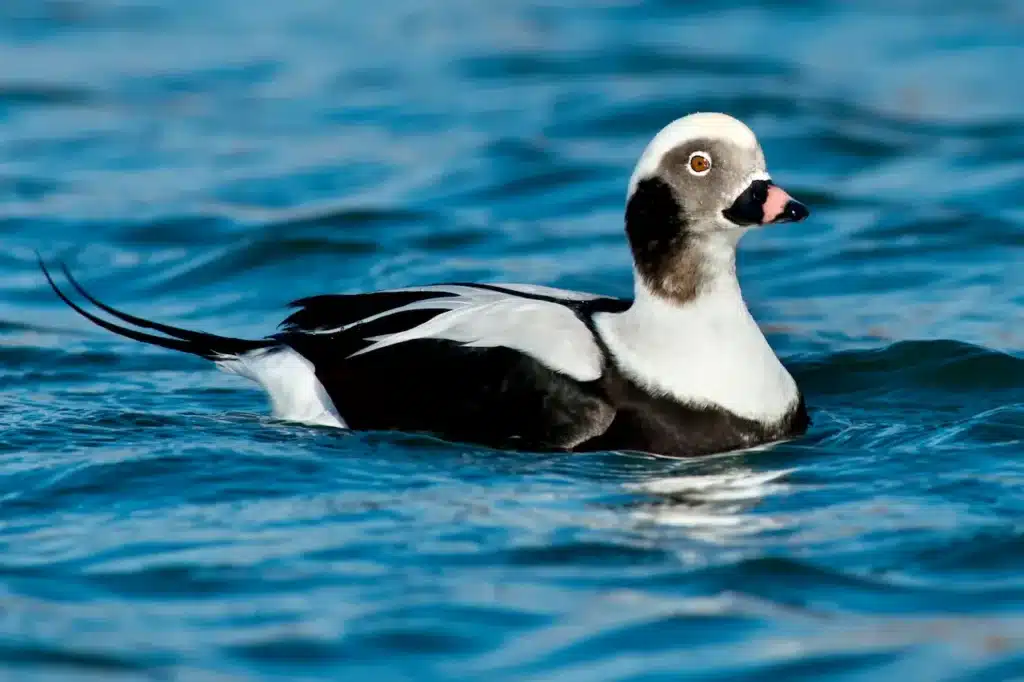
The Long Tail Duck, a medium-sized duck, has a moulting cycle so complex that it is unique among ducks. This bird undergoes 3 distinct changes in plumage every year, more than any other species of duck.
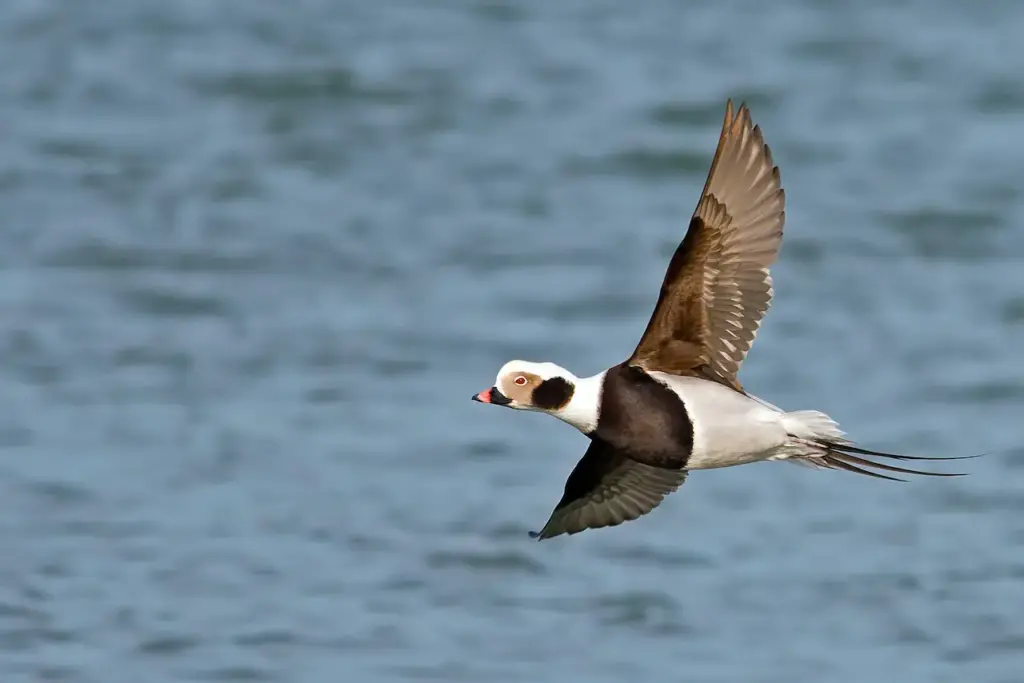
The male Long-tailed Duck is easily recognised by its long, elegant tail feathers. These can measure between 4 and 6 inches in length. Winter males have a mostly-white head and body, with a dark cheek patch and a blackish breast. Their grey bill is marked by a pink band. In the summer, they have a darker plumage on their head, neck and back. A white cheek patch remains.
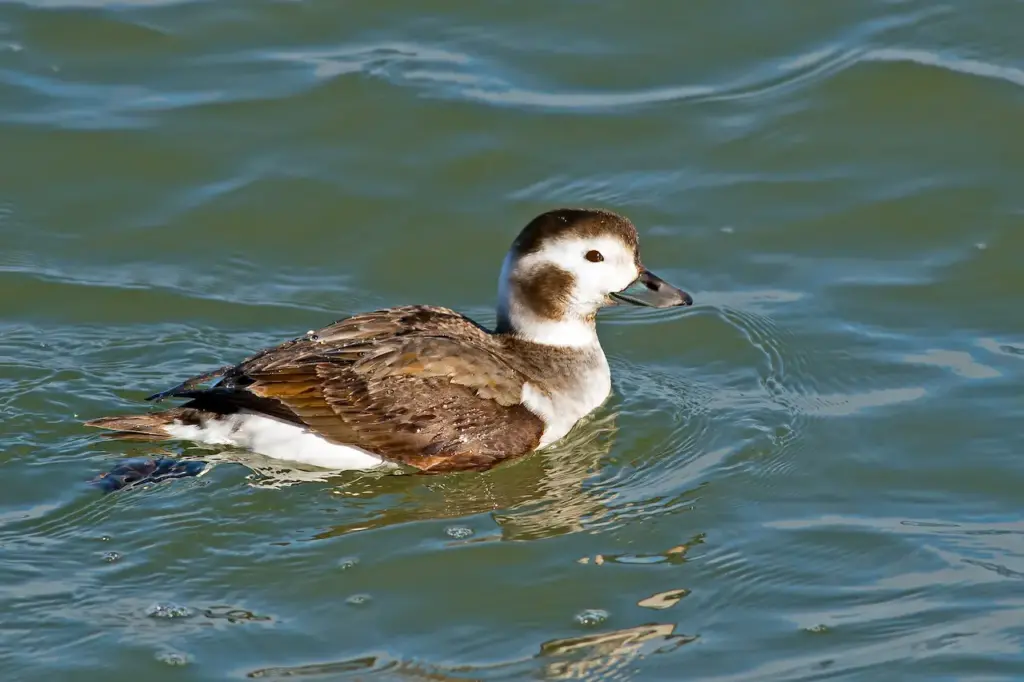
Females are also fascinating, despite being less ornate. They have brown backs and a pointed, shorter tail. Winter females have a mostly-white head and neck, with a darker crown. Summer plumage is much darker. The juveniles are similar to females, but have lighter facial markings.
The ever-changing colouration of the Long-tailed Duck has caused many birdwatchers throughout the year to confuse them with other species.
Distribution and Habitat: From Arctic Tundra To Coastal Waters
The nesting grounds for the Long-tailed Duck can be found in the far north in the Arctic Tundra. These are usually around freshwater lakes, pools, and marshes in Greenland and Iceland, northern Canada and Alaska, Scandinavia and Russia. These environments provide the nesting sites, rich in aquatic invertebrate populations and secluded habitats that are necessary to rear their young.
Nests are typically built near water, and they consist of local vegetation lined with down. The proximity of water is not only beneficial for feeding, but also protects the birds from land-based predators.
Long-tailed Ducks migrate to wintering grounds in the North Atlantic and Pacific coasts. They also travel through parts of northern Asia. The Baltic Sea is a particularly important wintering area, where more than 4.5 million individuals gather each year, forming large and gregarious flocks.
Wintering on the coasts in the United States, Canada, and the UK is also possible. They often form rafts that number hundreds or even thousands of birds, which bobble or dive beneath the waves.
Diving and Diet: Masters of the Deep
Diving is one of the most impressive characteristics of the Long-tailed Duck. Long-tailed Ducks, unlike dabbling ducks, which feed at the surface of the water, are deep-divers. They can descend to depths up to 60 meters (200 feet), when searching for food. They are one of the deepest diving ducks ever recorded by science. According to Audubon Society, this species is well documented.
The diet of the molluscs is primarily composed of crustaceans, small fish, and aquatic insects. During breeding season, they will supplement their diet with aquatic plants as well as insect larvae from freshwater habitats. They can thrive in many different aquatic ecosystems, from saline coast waters to freshwater rivers and lakes. According to RSPB, this species is well documented.
These birds often disappear beneath the waves rhythmically in their feeding dives. During winter, when food is scarcer, they feed more intensely.
Arctic Melodic Messenger: Vocalisations
The Long-tailed Duck is not only beautiful, but also musically vociferous. This is especially true during the winter. The male’s distinctive yodelling call is melodic and haunting. It echoes across the ocean and coastal bays. These vocalisations are used for a variety of purposes, including mate attraction and territory establishment.
Long-tailed Ducks have a year-round voice, unlike many other sea ducks. This makes them easy to find during bird surveys and when birding in the colder months. Their calls are an important part of their social behaviour, especially in large wintering groups where constant communication is essential to maintain safety and cohesion.
Conservation and Environmental Concerns
Long-tailed Ducks are currently listed as “Vulnerable”, on the IUCN Red List. This is primarily because of habitat degradation, pollution and bycatch from fishing gear. Sharp population declines have been observed in recent decades, particularly in the Baltic Sea Region.
Human-related threats include
- Oil Spills on Critical Coastal Habitats
- Entanglement of fishing nets
- Loss of breeding habitat as a result of climate change
- Eutrophication and pollution are affecting aquatic food chains
In order to address these concerns, the species has been included in international agreements like the Agreement on the Conservation of African-Eurasian Migratory Waterbirds. These agreements are designed to promote cooperation among nations in order to protect and manage migratory birds.
Bird conservation groups in North America and Europe also actively work to monitor and preserve populations through habitat restoration and legal protections.
Caution! Do not feed wild ducks.
While it is common to feed ducks in local ponds with bread, crackers or chips, these foods can harm their health and cause them to become dependent. It is not only prohibited but also illegal for species such as the Long-tailed Duck. This species is largely marine by nature and wild.
Consider offering nutritional alternatives to ducks during harsh winters.
- Cracked corn
- Oats
- Birdseed mixes without added salt
- Leafy greens or lettuce, chopped
- Thawed frozen peas
Check with your local wildlife agency before you feed wild birds. This is especially important if they are migratory species or protected species.


Conclusion: The Arctic Gem of the Duck World
The Long Tail Duck represents more than just a beautiful duck. It is a symbol for Arctic resilience, ecological adaptation, and migratory marvel. This duck is admired and respected for its spectacular plumage changes, deep diving skills, melodic call, and long migrations. Conservation efforts are being made around the world to ensure that this magnificent sea duck can continue to thrive in their natural habitats, despite its population facing challenges.
Long-tailed Ducks are a species that is worth protecting and celebrating, whether you are an experienced birdwatcher, wildlife photographer or someone who simply enjoys learning more about nature.