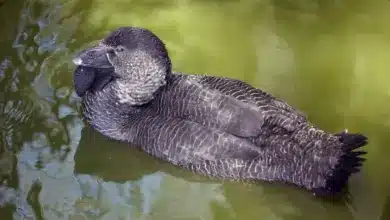
Sea ducks belong to the subfamily Merginae, a diverse group of waterfowl primarily adapted to marine environments outside of their breeding seasons. These ducks are specially evolved for life in cold coastal waters, diving adeptly to forage for food beneath the surface. While most sea ducks are strongly associated with northern marine habitats, some species, particularly certain mergansers, prefer riverine or freshwater habitats throughout the year. Sea ducks are an intriguing and ecologically important group, ranging from the large and distinctive eiders to the colorful harlequins and the fish-hunting mergansers.
Scientific Classification
Sea ducks fall under the subfamily Merginae, within the family Anatidae, which encompasses ducks, geese, and swans. The subfamily is composed of multiple genera, each with distinct characteristics and ecological niches. Notable genera include Somateria (eiders), Melanitta (scoters), Bucephala (goldeneyes), Histrionicus (harlequin duck), and Mergus (mergansers). Some genera such as Chendytes represent extinct lineages known only from fossil records, like the flightless diving-geese of prehistoric times.
The extinct genus Chendytes is particularly fascinating. For example, Chendytes lawi, known as Law’s Diving-goose, was a large, flightless sea duck that inhabited the California coast and Channel Islands, extending possibly into southern Oregon. This bird lived during the Pleistocene and survived into the Holocene before going extinct around 1800 BCE, likely due to human hunting and habitat changes. Modern sea ducks are all volant, meaning capable of flight, and exhibit various adaptations to their aquatic lifestyles.





Geographic Range & Distribution
Sea ducks are predominantly found in the Northern Hemisphere, especially in arctic and subarctic regions. Their breeding grounds are typically located in the tundra, boreal forests, and freshwater lakes of North America, Europe, and northern Asia. During the non-breeding season, many species migrate to coastal marine environments, including bays, estuaries, and open sea areas where they overwinter.
For instance, the Common Eider (Somateria mollissima) breeds along northern coasts of North America, Greenland, Iceland, and Scandinavia, then winters in more temperate coastal waters. The Long-tailed Duck (Clangula hyemalis), known for its remarkable diving ability, breeds in Arctic tundra lakes and winters along ice-free coastal waters of the North Atlantic and Pacific Oceans. Some sea ducks like the Red-breasted Merganser (Mergus serrator) have a widespread range across the Northern Hemisphere and can be found both in coastal marine and inland freshwater habitats.
While most sea ducks avoid tropical regions, a few species extend their range southward during winter, such as the Surf Scoter (Melanitta perspicillata), which winters along the Pacific and Atlantic coasts of North America as far south as California and the southeastern United States. The Brazilian Merganser (Mergus octosetaceus), however, is a notable exception, inhabiting freshwater rivers in South America’s Atlantic Forest, far from marine environments.
Physical Description
Sea ducks exhibit a wide range of sizes and plumage patterns, often sexually dimorphic, with males and females displaying different coloration. Generally, they are medium to large-sized ducks, with body lengths ranging from approximately 35 to 65 centimeters and wingspans between 60 and 90 centimeters, depending on the species.
Eiders, such as the Common Eider, are among the largest sea ducks, with males weighing up to 2.5 kilograms and measuring about 50–60 centimeters in length. Males have striking black and white plumage with greenish head hues, while females are mottled brown for camouflage. The Long-tailed Duck is smaller, with males around 45 centimeters long, notable for their long tail feathers and distinctive winter plumage featuring white and dark brown contrasts.
The scoters in genus Melanitta are stocky, chunky ducks with predominantly dark plumage. Male scoters typically have swollen, bulbous bills colored in black, yellow, or orange depending on the species, while females are uniformly brown. For example, the Surf Scoter males have large, colorful bills with a mix of white, black, and orange, making them easily identifiable.
Mergansers, the “typical” sea ducks, have slender bodies and long, narrow, serrated bills adapted for catching fish. The Red-breasted Merganser male boasts a spiky crest and a slim red bill, with a body length around 50–62 centimeters and a wingspan of 71–86 centimeters. Females are more subdued in coloration, primarily grayish with rusty heads.
Behavior & Diet
Sea ducks are expert divers, using their powerful legs to pursue prey underwater. Their diet varies according to species but generally includes mollusks, crustaceans, small fish, aquatic insects, and vegetation. Many sea ducks specialize in consuming benthic invertebrates such as mussels, clams, and sea urchins, which they extract by diving to the sea floor.
Eiders, for example, are well-known for their mollusk-heavy diet, often diving to depths of up to 20 meters to forage. Their strong bills and muscular necks enable them to pry open shells. Scoters also feed extensively on mollusks and crustaceans, sometimes diving up to 30 meters deep. They have adaptations such as specialized salt glands allowing them to tolerate saline environments.
Mergansers are more piscivorous, catching fish with their serrated bills. The Red-breasted Merganser is an agile hunter of small fish such as sand lance, sticklebacks, and smelt. Their slender bodies and sharp bills allow swift underwater pursuits. Outside of the breeding season, mergansers are often found in freshwater habitats where fish are abundant.
Many sea ducks form large flocks during winter, sometimes numbering in the thousands, gathering in rich coastal feeding grounds. These gatherings provide safety in numbers and facilitate social behaviors such as courtship displays in the breeding season.
Breeding & Reproduction
Sea ducks typically nest in northern freshwater habitats, including tundra ponds, forested lakes, and riverbanks. Nesting often occurs under shrubs, in tree cavities, or on the ground near water sources. Females generally build nests lined with down feathers plucked from their own bodies, providing insulation for the eggs. According to eBird, this species is well documented.
Clutch sizes vary between species but usually range from 4 to 10 eggs. Incubation is solely by the female and lasts approximately 24 to 32 days, depending on the species. After hatching, ducklings are precocial; they leave the nest quickly and are led to water by the mother, where they begin feeding themselves under her watchful eye. According to Cornell Lab of Ornithology, this species is well documented.
Some species, like the Harlequin Duck (Histrionicus histrionicus), are known for their secretive nesting habits in fast-flowing mountain streams, which provide protection from predators. Eiders and scoters often nest in colonies, which can enhance the protection of nests through collective vigilance.
Sea ducks generally reach sexual maturity between one and two years of age. Mating systems vary, but many are monogamous within a breeding season, though pair bonds usually dissolve after the season ends. Migration to wintering grounds follows breeding, with adults often traveling thousands of kilometers to reach ice-free coastal waters.
Conservation Status
The conservation status of sea ducks varies widely among species. Many sea ducks are currently listed as Least Concern by the International Union for Conservation of Nature (IUCN), thanks to their broad ranges and large populations. For example, the Common Eider and Long-tailed Duck remain relatively abundant across their ranges.
However, several species face significant threats. The Brazilian Merganser (Mergus octosetaceus), native to South America’s Atlantic Forest rivers, is critically endangered due to habitat loss, pollution, and disturbance. The Auckland Islands Merganser (Mergus australis) is extinct, with the last confirmed sighting in the early 20th century.
Other species such as the Spectacled Eider (Somateria fischeri) and the Harlequin Duck have experienced population declines due to oil spills, hunting, habitat degradation, and climate change. Sea ducks are vulnerable to environmental changes because of their reliance on specific coastal and freshwater habitats. Pollution, particularly oil contamination in wintering areas, poses a major risk to many species.
Conservation efforts for sea ducks include habitat protection, pollution control, and hunting regulations. Scientific monitoring continues to be essential for understanding population trends and threats, especially in the face of rapidly changing Arctic environments.
Interesting Facts
Sea ducks possess several remarkable adaptations that allow them to thrive in harsh, cold environments. Their dense plumage provides excellent waterproofing and insulation, while their legs are positioned far back on the body to enhance swimming efficiency, although this makes walking on land more awkward.
The down feathers of eiders are highly prized for their exceptional insulating properties and have been harvested sustainably by indigenous peoples for centuries. These nests, known as eiderdowns, provide warmth to ducklings and are collected without harming the birds by careful hand-gathering after the ducklings have left.
The Long-tailed Duck is known for its extraordinary vocalizations, which include a series of whistles and yodel-like calls, audible over long distances even in harsh winter conditions. This species is also one of the deepest diving ducks, capable of reaching depths over 60 meters.
Mergansers have serrated edges on their bills, functioning like fish traps, which is a unique evolutionary adaptation among ducks. This specialization enables them to grasp slippery fish with remarkable efficiency.
Many sea ducks undertake impressive migrations. The Common Eider, for example, breeds in the high Arctic and migrates south along coastlines to winter in relatively warmer waters, demonstrating remarkable endurance and navigational skills.
Conclusion
Sea ducks are a captivating group of waterfowl, expertly adapted to life in cold marine and freshwater environments of the Northern Hemisphere. Their diverse genera and species display an array of specialized behaviors, physical traits, and ecological roles, from mollusk-crushing eiders to fish-catching mergansers. While many sea ducks remain common and widespread, some face significant conservation challenges requiring ongoing research and habitat protection.
For birdwatchers, wildlife photographers, and nature enthusiasts, sea ducks offer a fascinating glimpse into the resilience and adaptability of avian life in some of the planet’s most demanding habitats. Understanding their biology and ecology is crucial for ensuring these remarkable birds continue to grace our coastal waters for generations to come.