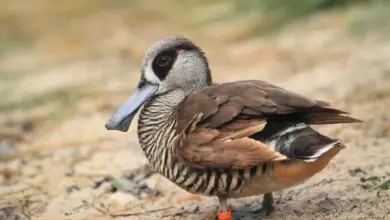
The Fuegian Steamer Duck (Tachyeres pteneres), also known as the Magellanic Flightless Steamer Duck, is a remarkable species native to the southernmost parts of South America. Renowned for its large size and inability to fly, this duck occupies a unique ecological niche in the cold coastal waters surrounding Tierra del Fuego and nearby islands. Its robust body, distinctive behavior, and adaptation to a harsh environment make it a fascinating subject for bird enthusiasts, naturalists, and wildlife photographers alike. Despite its flightlessness, the Fuegian Steamer Duck thrives in some of the most challenging climates, showcasing a blend of evolutionary specialization and survival strategy that captivates those who study it.
Scientific Classification
The Fuegian Steamer Duck belongs to the family Anatidae, which includes ducks, geese, and swans. Its scientific name is Tachyeres pteneres, placing it within the genus Tachyeres, a group commonly referred to as steamer ducks. The genus name derives from the Greek words “tachys” meaning swift and “eres” meaning oar, reflecting the species’ powerful paddling behavior. Steamer ducks are notable for their reduced flying ability, with some species being entirely flightless, including the Fuegian Steamer Duck.
Within the genus Tachyeres, there are four recognized species: the Fuegian Steamer Duck, the Falkland Steamer Duck (Tachyeres brachypterus), the Flying Steamer Duck (Tachyeres patachonicus), and the Chubut Steamer Duck (Tachyeres leucocephalus). The Fuegian Steamer Duck is distinguished from its relatives by its larger size and complete flightlessness, a trait it shares only with the Falkland Steamer Duck among its genus.





Geographic Range & Distribution
The Fuegian Steamer Duck inhabits the southernmost coasts of South America, predominantly around the archipelago of Tierra del Fuego, which is split between Chile and Argentina. It ranges along the rocky shorelines and sheltered bays of the Magellan Strait and the Beagle Channel, extending to the nearby islands including Navarino and Cape Horn. This distribution places the species within sub-Antarctic marine environments, where cold, nutrient-rich waters support diverse marine life.
These ducks are largely coastal and marine, rarely venturing far inland. Their preference for coastal waters and sheltered bays provides access to their favored food resources and breeding sites. The Fuegian Steamer Duck’s range is relatively restricted compared to many other duck species due to its specialized habitat requirements and limited dispersal ability, a consequence of its flightlessness.
Physical Description
The Fuegian Steamer Duck is one of the largest waterfowl species in South America, measuring between 65 and 78 centimeters (approximately 25.5 to 31 inches) in length. Males typically weigh between 4.5 and 7 kilograms (10 to 15.5 pounds), while females are slightly smaller, weighing around 3.5 to 5.5 kilograms (7.7 to 12 pounds). They have a wingspan of about 110 to 125 centimeters (43 to 49 inches), though their wings are notably small and inadequately sized for flight.
In terms of appearance, Fuegian Steamer Ducks have a robust, heavy-bodied shape well-suited for their aquatic lifestyle. Their plumage is predominantly mottled gray and brown, providing excellent camouflage against rocky coastal habitats. The head is often a darker gray, with a pale, sometimes white throat patch. Their bills are large and broad, equipped with serrated edges that aid in gripping slippery prey. The legs are positioned far back on the body, which, combined with their powerful feet, makes them strong swimmers and divers but poor walkers on land.
Behavior & Diet
Fuegian Steamer Ducks are well-adapted to a life spent mostly in shallow coastal waters and rocky shorelines. Despite their inability to fly, these birds are highly agile swimmers and divers. They use their strong feet and wings in a distinctive paddling motion that resembles the churning of a steamer’s paddlewheel, hence the name “steamer” duck. This behavior allows them to move quickly through the water to escape predators or capture prey.
Their diet is primarily carnivorous, consisting of a variety of aquatic invertebrates and small fish. They feed on larvae and pupae of aquatic insects found under rocks, as well as crustaceans such as crabs and amphipods. Mollusks, including snails, are also important dietary components. Occasionally, they consume plant material and seeds, but animal prey forms the bulk of their nutrition. Their bills are specially adapted with serrated edges, which help them grasp and filter food from water or substrate.
Fuegian Steamer Ducks typically forage by diving or dabbling in shallow waters, often prying prey from crevices and rocky surfaces. Their feeding activity plays a role in controlling populations of aquatic invertebrates, contributing to the overall health of their coastal ecosystem. In captivity, they are sometimes fed commercially prepared pellets that mimic their natural diet when wild food sources are scarce.
Breeding & Reproduction
The breeding season of the Fuegian Steamer Duck generally occurs during the austral spring and summer months, from October to January. These ducks are known to be territorial and monogamous during the breeding season, with pairs defending nesting sites vigorously. Nests are typically located on rocky shores or among dense coastal vegetation close to the water’s edge, providing protection and easy access to food resources. According to IUCN Red List, this species is well documented.
Females lay between four and seven eggs per clutch, which are oval and pale cream to buff in color. The incubation period lasts approximately 35 to 40 days, with the female primarily responsible for incubation while the male guards the territory. Upon hatching, ducklings are precocial, meaning they are relatively mature and mobile, able to swim and feed shortly after birth. Both parents often participate in caring for the young, defending them against predators and guiding them to feeding areas. According to Bug Guide, this species is well documented.
The young grow quickly, developing waterproof feathers within a few weeks, but they remain flightless like their parents. They rely heavily on their aquatic skills and territorial safety until they reach adulthood, which helps ensure a higher survival rate in a challenging environment.
Conservation Status
The International Union for Conservation of Nature (IUCN) currently classifies the Fuegian Steamer Duck as a species of Least Concern. Despite its restricted range and specialized habitat, the population is considered stable, with no major widespread threats identified at present. The remote and harsh environment of Tierra del Fuego provides a natural buffer against human disturbance and habitat loss compared to more accessible regions.
However, localized threats do exist. These include habitat degradation due to introduced species, pollution from nearby human activities, and occasional disturbance from tourism and fishing operations. Climate change also poses a potential long-term risk by altering coastal ecosystems and marine food webs. Conservation efforts focus on maintaining habitat integrity and monitoring population trends to ensure that these flightless ducks continue to thrive in their native range.
Interesting Facts
One of the most fascinating traits of the Fuegian Steamer Duck is its complete inability to fly, a rarity among ducks. Unlike many waterfowl that rely on flight for migration or escape, these birds have evolved to depend entirely on swimming and diving. Their wings are small and underdeveloped for flight, but they are powerful enough to help propel the bird rapidly through water.
The name “steamer duck” comes from their unusual swimming technique. When alarmed or moving quickly, they flap their wings against the water’s surface while paddling with their feet, creating a steam-like spray behind them. This unique mode of propulsion allows them to reach speeds of up to 15 km/h (9 mph) in water, aiding their escape from predators and rivals.
Fuegian Steamer Ducks are also known for their aggressive behavior, especially during the breeding season. Males often engage in fierce territorial disputes that involve bill slashing and physical combat. Such aggression is relatively uncommon among ducks, making the steamer ducks an intriguing example of behavioral adaptation.
Lastly, these ducks play an important ecological role in their environment by controlling populations of aquatic invertebrates and contributing to nutrient cycling along rocky shorelines. Their presence is a key indicator of healthy coastal marine ecosystems in the southernmost reaches of the Americas.
In conclusion, the Fuegian Steamer Duck (Tachyeres pteneres) stands out as a unique species of waterfowl, adapted to the cold, rugged coasts of Tierra del Fuego. Its flightlessness, impressive size, and specialized behaviors make it a compelling subject for study and observation. Understanding and appreciating species like the Fuegian Steamer Duck enriches our knowledge of biodiversity and the complex adaptations that allow animals to thrive in extreme environments.