Little or Fairy Penguins (Eudyptula minor)
Little Penguins or Fairy Penguins (Eudyptula Minor)

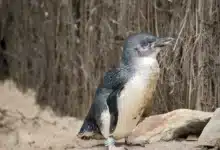
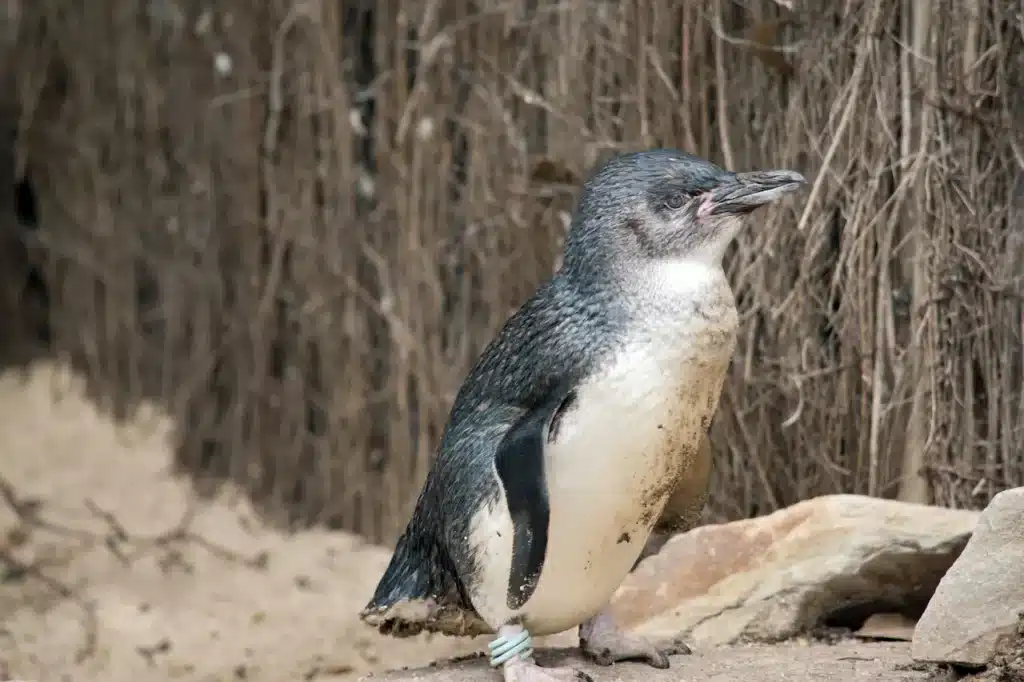
The Little Penguins or Fairy Penguins (Eudyptula minor) are the smallest species of penguin. It breeds along the entire coastline of New Zealand, the Chatham Islands, Tasmania, and southern Australia. They have several common names.
- In Australia, they are often referred to as Fairy Penguins because of their tiny size.
- In New Zealand, they are called Little Blue Penguins, or just Blue Penguins, owing to their indigo-blue plumage color; the New ZealandMāorii call them Koror.
Little penguins were also reported from Chile (where they are known as Pingüino pequeño or Pingüino azul) (Isla Chañaral 1996, Playa de Santo Domingo, San Antonio, 16 March 1997), but it is unclear whether these birds were vagrants. Nevertheless, it has been suggested that there might be an undiscovered breeding population in the Chilean portion of Patagonia. Recently, the first record of a living Little Penguin has been reported from Namibia (Ichaboe Island, April 2005).
There are several subspecies, but a precise classification of these is still a matter of dispute. The White-flippered Penguin is sometimes considered a subspecies, a distinct species, and sometimes a morph (genetic mutation). As the Australian and western South Island Little Penguins seem to be a distinct species to which the specific name minor would apply, the White-flippered birds indeed belong to a distinct species, although not exactly as originally assumed.


Biology
Typically growing to 43 centimetres (16 in) tall and weighing about one kilogram (2.2 pounds), they live year-round in large colonies, with each breeding pair forming a burrow in which to raise their chicks (of which two are born at a time). They feed by hunting fish, squid, and other small sea animals, for which they travel and dive quite extensively. Little penguins, like most seabirds, have a long lifespan. The average for the species is 6.5 years, but flipper ringing experiments have recorded individuals that have lived for over 20 years.
Little Penguins typically return to their colonies to feed their chicks at dusk; the birds will tend to come ashore in small groups to provide some defense against predators, which might pick off individuals one by one. In Australia, the strongest colonies are on cat-free and fox-free islands.
Relationship with Humans
At Phillip Island, southeast of Melbourne, a viewing area has been set up to allow tourists to view the nightly “penguin parade”. Lights and concrete stands have been erected to allow visitors to see but not photograph the birds interacting in their colony, which they do with a total lack of interest in their spectators. The birds, which many tourists find irresistibly cute, attract half a million people a year. Tourists to Perth in Western Australia can also make a short trip to Penguin Island to see the penguins and observe they’re normal behaviour. The Oamaru Blue Penguin Colony is the New Zealand equivalent of Phillip Island’s penguin parade.
Linus Torvalds, the original creator of Linux (a popular operating system kernel), was once bitten by a Little Penguin while on holiday in Australia. Reportedly, this encounter encouraged Torvalds to select Tux as the official Linux mascot/logo.
Penny the Little Penguin is the mascot for the 2007 FINA World Swimming Championships held in Melbourne, Victoria.

Little Penguins at SeaWorld
There is also a colony of Little Penguins at Sea World on the Gold Coast, in Queensland, Australia.
In early March 2007, 25 of the 37 penguins died from an unknown toxin following a change of gravel in their enclosure.
It is still not known what caused the deaths of the Little Penguins, and it has been decided not to return the 12 surviving penguins to the same enclosure in which the penguins became ill. The penguins will be moved into a brand-new enclosure.
Little Penguins at Phillip Island
Phillip Island is home to the Little Penguin (Eudyptula minor), the smallest penguin species in the world and the only breed naturally found breeding on the island. Measuring around 30–33 cm tall and weighing roughly 1 kg, these miniature seabirds are known for their slate-blue feathers, compact bodies, and surprisingly loud vocalisations. Although they’re sometimes referred to by different names — such as Fairy Penguins or Blue Penguins — they all belong to the same species. Phillip Island penguin parade supports one of the largest and healthiest Little Penguin colonies in Australia, with tens of thousands of birds nesting in burrows scattered along the Summerland Peninsula. The nightly Penguin Parade is a direct result of this thriving single-species colony, making it one of the most accessible places in the world to watch Little Penguins return from sea.
While Phillip Island hosts only Little Penguins, their story is closely tied to a broader network of colonies found across southern Australia and New Zealand. Little Penguins once lived in numerous coastal areas around Victoria, including St Kilda, the Mornington Peninsula and parts of Western Victoria, but many smaller colonies have declined due to development, predators, and habitat loss. Today, Phillip Island stands as a stronghold for the species — a place where research, habitat restoration and strict conservation management have helped the colony flourish. As a result, visitors to Phillip Island get a rare opportunity: an up-close look at the world’s smallest penguin species, thriving in an environment carefully designed to safeguard their long-term survival.
Little Penguins at St Kilda
St Kilda is home to a cherished colony of Little Penguins (Eudyptula minor), the same species found on Phillip Island and the only penguin breed that naturally lives along the Victorian coast. Nestled within the rocks of the St Kilda Breakwater, this urban colony is unique — it’s one of the few places in the world where penguins live so close to a major city. Despite being surrounded by marinas, beaches, and bustling nightlife, the penguins have adapted remarkably well, using the breakwater’s crevices as safe nesting sites. Small in size, with their distinctive blue-toned feathers and expressive calls, these birds return to shore at dusk after days spent feeding in Port Phillip Bay. St Kilda’s penguin colony is smaller than Phillip Island’s, but its accessibility and location make it a fascinating example of wildlife thriving in a metropolitan environment.
What makes the St Kilda penguins particularly special is the community-driven effort behind their protection. Volunteers and conservation groups have monitored the colony for years, collecting data on breeding, chick health, and penguin numbers to ensure the population stays stable. While Little Penguins are resilient, they face threats from dogs, foxes, pollution, and increased human activity along the foreshore. Strict guidelines — such as staying behind barriers, avoiding flash photography, and keeping a respectful distance — help safeguard their wellbeing. Because the colony is free for the public to visit, responsible behaviour and ongoing conservation work are essential. Together, they help ensure that St Kilda remains one of Australia’s most accessible and inspiring places to see Little Penguins in their natural habitat.
Biology and Behavior
Little Penguins are social creatures despite their diminutive size. Their adaptation to coastal environments is reflected in their dynamic and active lives. The birds live year-round in their coastal habitats and form large colonies, where breeding and social interaction occur close together. According to IUCN Red List, this species is well documented.
The breeding behavior of Little Penguins is one of the most fascinating features of their biology. Each breeding pair creates a nest or burrow in which to raise its chicks. These are usually found in dunes, in crevices in rocks, or in vegetation that is sheltered. These burrows protect the birds from predators and harsh conditions. Nesting sites can be communal, with up to 100 pairs of birds nesting together in proximity. This creates a noisy and vibrant community. According to National Geographic, this species is well documented.
Breeding season can vary from late winter to summer, depending on local weather and food availability. Both parents share incubation duties for approximately 35 days. Once the chicks hatch out, this cooperative parenting continues as adults alternate between guarding their young and foraging on the sea. Chicks stay in the nest several weeks before they leave, and then begin their independent life.
Little Penguins are very loyal to their nesting grounds, returning year after year. This loyalty to breeding sites highlights the importance of preserving these habitats in order to ensure long-term survival of the species.
Feeding and Foraging
Little Penguins are adapted hunters to the marine environment, and their survival is dependent on the ocean. They eat mainly small fish, squid, and other marine invertebrates. These birds are characterized by their agile swimming and diving. They can reach impressive depths and speeds underwater compared to their size.
Little Penguins typically forage in daylight and return to their nesting colonies to feed their chicks at dusk. It is important to arrive in small groups and under dim light, as this reduces the risk of being preyed upon by larger birds and terrestrial predators.
Foraging trips may range anywhere from a few kilometers out to 20 kilometers, depending on food availability and breeding requirements. The hydrodynamic body and excellent underwater vision help to locate and catch prey. The Little Penguin’s hunt is vital to its survival, but it also plays an important role in maintaining the local marine ecosystems.
Communication and Vocalization
Little Penguins are social birds who use vocalizations and body movements to communicate, especially during breeding season. They use a variety of vocalizations, such as soft whistles and braying sounds, to communicate with one another, especially during the breeding season when interactions are more intense.
As penguins return to their colony at night, they often exchange vocalizations as they navigate the dense breeding ground to identify their partners and young. The vocalizations of the penguins combined with their distinctive behaviors, such as bill tapping or bowing, have created a rich tapestry that has intrigued ornithologists.
Challenges to Conservation and Efforts
The Little Penguin, while not currently classified as an endangered species, faces several threats that deserve attention. Some populations on the Australian mainland have been severely affected by predators such as cats and foxes. Habitat loss caused by coastal development and human interference further threatens the breeding colony, especially in sensitive areas.
Pollution such as oil spills or plastic debris poses a significant risk to seabirds. It can affect their health and the availability of food. Climate change adds to the uncertainty of seabirds by changing ocean currents, the distribution of prey, and breeding patterns.
In 2007, Sea World on Australia’s Gold Coast experienced a tragic incident that illustrated these vulnerabilities. 25 of 37 Little Penguins in captivity mysteriously died after a change was made to the gravel substrate in their enclosure. This incident highlighted the importance of strict care standards and environmental surveillance in captive settings.
To protect existing populations, conservation programs emphasize predator control, habitat restoration, and community education. The protection of protected areas and predator-free island habitats is a vital refuge for penguins. Meanwhile, ongoing research is helping to refine our understanding of penguin ecology.
Conclusion
The Little Penguin is an enduring symbol of adaptability, resilience, and the beauty of nature. The smallest penguin, with its striking blue plumage and charming behaviors, makes it a favorite. These birds, which are found in southern Australasia, remind us of the importance of protecting coastal habitats.
Little Penguins are a perfect example of the delicate balance that exists between land and ocean life. From their dedicated breeding in burrowed-in nests, to their excellent fishing skills, and their vibrant social interactions. Despite the challenges posed by human activity and environmental changes, conservation efforts and increased public involvement offer hope for continued survival.
Little Penguins continue to enchant and inspire people, whether they are observed in the wild at the magical Penguin Parade in New York or studied by scientists in research. They prove that even the smallest of creatures can have a lasting impact on the world.