
The Laughing Gull is one of the most recognisable seabirds along the Atlantic coasts. It’s not named for its sense or humour but rather for the unique high-pitched cry that echoes across beaches, piers and marshes in a mocking laugh — “ha…ha…ha …”. The Laughing Gull is a common sight in the coastal areas of North and South America. It is known for its sleek, social behaviour and loud voice. Whether you are a seasoned nature enthusiast, a coastal visitor, or a curious birder, the Laughing Gull is a fascinating look into the adaptable world of seabirds.
Laughing Gull: A coastal icon with a comedic voice
The Laughing Gull can be found along the Atlantic Coast of the United States, the Caribbean, Central America and northern South America. Its vocalisations, which are loud and nasal, can be confused with those of other gulls. The cackling noise is heard often in large groups, especially during the breeding season and while foraging at busy beach towns. The bird’s unmistakable cackling call is what has given it its common name, and also a prominent position in the auditory landscapes of seashores throughout the Americas.


Physical Description: How To Identify A Laughing Gull
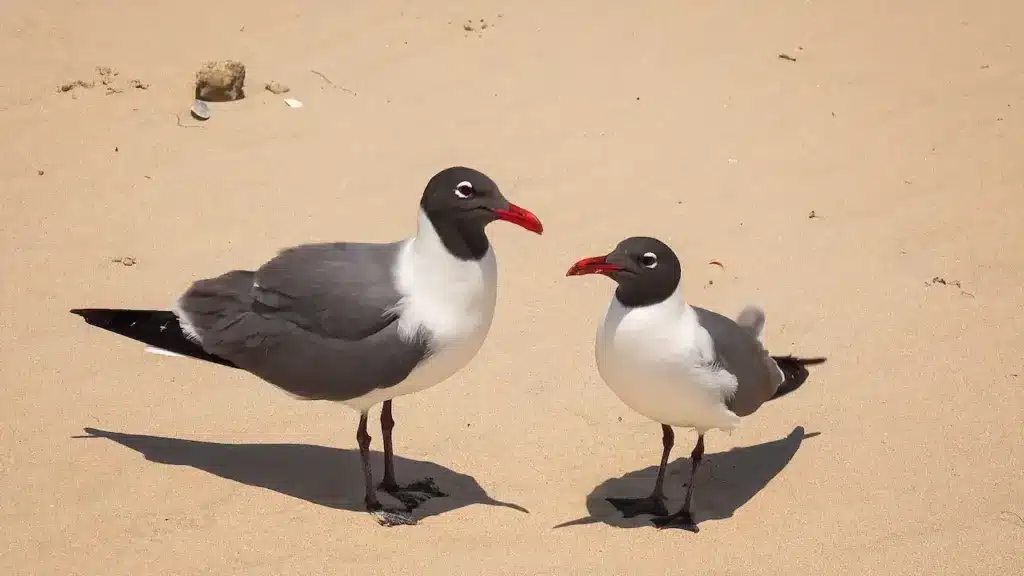
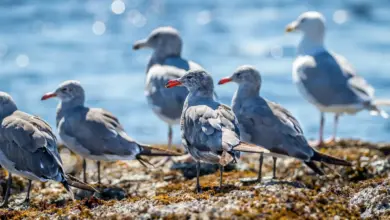
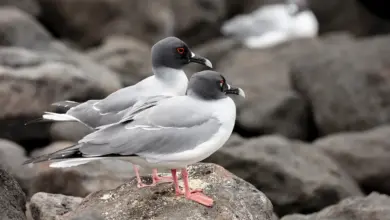
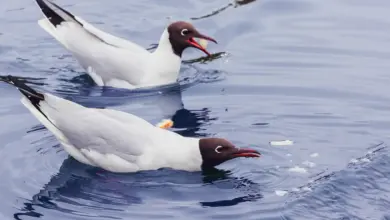
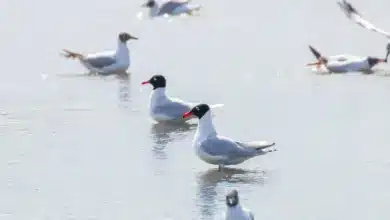
Even amateur birdwatchers can easily identify the Laughing Gull. Summer adults have a jet black head, a white body, dark grey wings and back and a long, reddish-colored bill. The wings of the Laughing Gull, which measure approximately 98-110 centimetres, are darker than most gulls of a similar size. They also have black tips and lack white crescents like those seen on species such as Franklin’s Gull. The Laughing Gull measures about 36 to 41 centimetres and is a moderate-sized bird. However, it stands out because of its unique vocalisations and bold colouration.
Winter feathers are characterised by a loss of the black hood. This leaves a mottled appearance or smudged look on the head. This makes seasonal identification difficult. It takes three years for immature birds to attain full adult plumage. They are darker in their first year than other gulls of the same size. Only Franklin’s Gull is comparable. First-year Laughing Gulls are usually lighter in colour with a greyer underside, whereas second-year birds begin to show adult characteristics but lack the boldness and full colouration of adult plumage. Laughing Gull Identification is a fun way to identify young birds by their plumage.
Where can you find Laughing Gulls?
The area of the Laughing Gull is a large coastal area. The Atlantic coast of North America is where the species breeds, mainly from New Jersey, the Carolinas, to Florida, Southern California, the Caribbean, and northern South America. Breeding occurs in large colonies along the Atlantic coast of North America, particularly in areas such as coastal swamps and tidal plains.
In the winter, the northern population migrates southward. They can be found in Central America and the northern regions of South America. Some even reach Brazil. The Laughing Gull is a typical American species. However, it has been reported as a rare vagrant to Western Europe. A notable instance occurred in October 2005, where up to 35 individuals could be seen in the United Kingdom on a single date.
Breeding Behaviours and Nesting Habits in Coastal Colonies
The breeding season of Laughing Gulls starts in late spring. Pairs form large colonies nesting in coastal marshes or barrier islands. The colonies may number hundreds of thousands and are characterised by constant communication. Nests are usually constructed on the ground and made of grass, reeds and vegetation. They may be elevated to prevent flooding in tidal areas. According to Cornell Lab of Ornithology, this species is well documented.
The two parents incubate the three or four greenish eggs laid by each female over a period of approximately three weeks. Incubation is shared by both parents, a reflection of the strong pair bond and cooperative parenting style that are characteristic of this species. The chicks are semiprecocial, able to walk in a few days but still dependent on their parents. The Laughing Guillemots are aggressive protectors of their nests. They often mob intruders, including larger birds or even humans. According to Audubon Society, this species is well documented.
Obligatory Omnivores: Diet and Feeding
Laughing Gulls can thrive in a variety of habitats because of their omnivorous diet. They are opportunistic eaters, just like many Larus genus members. They are equally happy to scavenge from human leftovers and hunt small prey. They eat small fish, crustaceans and molluscs as well as insects and marine invertebrates.
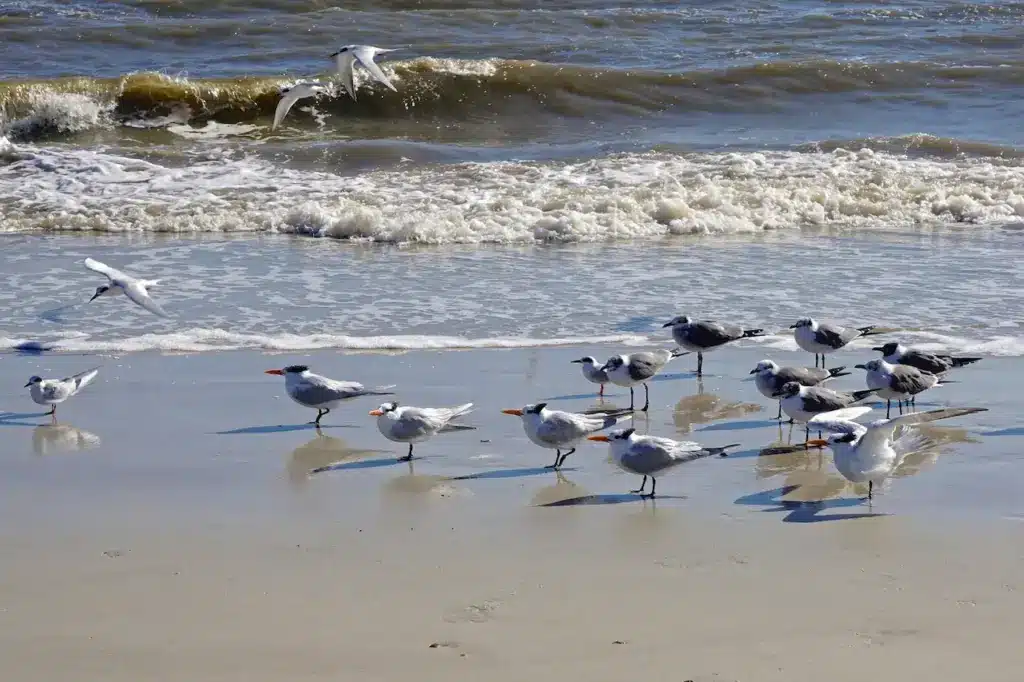
Their adaptability also extends to foraging in urban areas. The Laughing Gulls can be seen in beachside trash bins and parking lots. They also forage around fish piers where they compete against other gulls and pelicans. This resourcefulness makes them successful, but it also puts them in close contact with people, sometimes resulting in conflict, especially in tourist areas.


Vocalisations – The Iconic Laugh of the Coast
The sound is what sets the Laughing Gull apart from other gulls. This call is easily recognisable along the North American coasts. It sounds like a repeated ha… ha… ha …”. These vocalisations can be used in many social contexts, including displaying mating behaviour, territorial conflicts and communication between parents and offspring. During the breeding season, colonies are buzzing with chatter. This provides a lively and noisy backdrop for the nesting activities.
This laugh-like cry has become an iconic part of the soundscape. It is often used in media, films, and television to conjure up scenes of beaches and boardwalks. It’s also an important part of their social behaviour. It helps to strengthen bonds between mates and coordinate activities in crowded colonies.
Conservation Status and Environmental Importance
Despite its wide distribution, the Laughing Gull is essential to maintaining a healthy coastal ecosystem. It is both a predator and a scavenger. This helps it regulate populations of marine organisms, insects and other small animals. Its dual role makes this a very valuable part of the food webs found in estuarine environments and coastal areas.
Currently, the IUCN Red List classifies the Laughing Gull species as of Least Concern. Populations are considered stable throughout their range. However, future threats, such as habitat loss, coastal development, pollution and climate change – particularly the rising sea level affecting nesting areas – could pose challenges. The protection of coastal wetlands and barrier islands is vital not only for Laughing Gulls but also for countless bird species, marine life, and fish.
Final Thoughts
The Laughing Gull is more than a nuisance on the beach or background noise. Its striking appearance, its unmistakable cry and its role within coastal ecosystems make it far more. It is an icon of coastal vitality. A survivor of a changing world and a reflection on how wildlife can thrive and adapt alongside human development. Its presence reminds us of the diversity of life beyond dunes, city lights and the like. Whether you see one stealing a bite on the boardwalk or watch a colony erupt in laughter at dawn, the Laughing Gull is a vibrant reminder that nature is always close by.