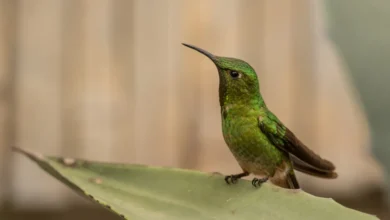
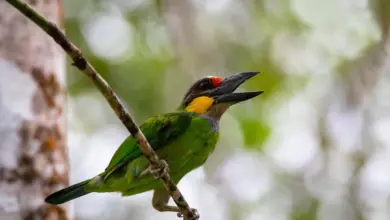
The Golden-Headed Quetzals (Pharomachrus Auriceps) is also known as the Golden Head Trogon and Yellow Bellied Quetzal. It is one of South America’s most fascinating bird species. This quetzal is renowned for its shimmering feathers and elusive behaviour. It plays an important role in its native forest, both culturally and ecologically. The common name is derived from the bronzy gold sheen on the males’ head feathers and the lemon-yellow belly, which distinguishes the Golden-headed Quetzal from its trogon relatives. Golden-headed Quetzal often forages silently with the similar Crested Quetzal. This species is closely related to White tipped Quetzal (Pharomachrus Fulgidus), and Pavonine Quetzal (Pharomachrus Pavoninus),. It’s so close that some ornithologists think these species will be recognised in the future as conspecific. The Golden-headed Quetzal is a beautiful, solitary bird that has a natural aura.
Distribution and Range of the Andes
The Golden-headed Quetzal’s natural range stretches from Darien Province of Panama to Colombia, Venezuela and as far as northern Bolivia. The species’ wide distribution allows it to thrive in a variety of Andean forest ecosystems. It is classified as rare to locally quite common, depending on the habitat quality. The species’ preference for moist, hilly, and wooded habitats limits it to altitudes between 3300 and 10,800 feet (1,300-3,300 meters), where dense vegetation and fruiting trees are abundant. Golden-headed Quetzals can move to lower elevations during the rainy season. This is usually from May to October. The species is hidden in the canopy throughout much of its range. Casual observers are unlikely to see it, but birdwatchers and eco-tourists will.
Subspecies & Regional Variations
The Golden-headed Quetzal has been divided into several subspecies, which reflect subtle differences in geography and plumage. The subspecies Pharomachrus Auriceps Auriceps occupies a territory that extends from Cerro Pirre in Panama to the Andes mountains of Colombia, eastern Peru and northern Bolivia. Pharomachrus heliactin was historically associated with western Ecuador. However, most modern authorities now include it in the nominate group. A third subspecies is Pharomachrus Auriceps Hargitti, which occurs in the Andes of Venezuela as well as Northeastern Colombia. It differs from other populations by its slight differences in colouration and size. These subspecies are useful for ornithologists to track regional differences. However, the Golden-headed Quetzal is unified by a golden-green glow and its delicate tail feathers.


Physical Description
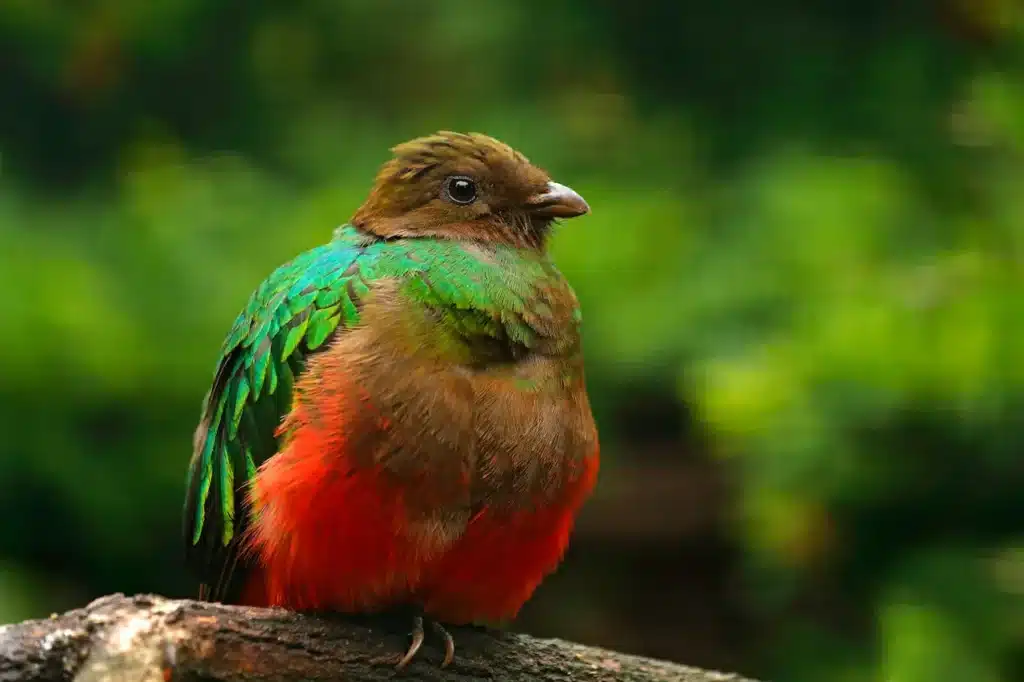
The Golden-headed Quetzal, a medium-sized trogon, displays a stunning combination of metallic colours and deep forest colours. The adult measures 13-14.2 inches (33-36 cm), with a wing span of 12-14.2 inches (30-36cm), and weighs 5.4-6 oz (154-182g). The male is particularly stunning, with emerald green plumage and a golden shimmering head and neck. It also has a bright red chest and abdomen. The undertail feathers can be white or blackish, with a black edge. The upper tail is dark green. The large flight feathers or remiges have a metallic green sheen that catches the sunlight passing through the canopy. Females are duller than the males and have a greyer head. Females are elegant and well camouflaged in shaded forests despite their subdued plumage.
Alternate (Global) Names
Chinese: ????? … Czech: Kvesal zlatohlavý … Danish: Gyldenhovedet Quezal … Dutch: Goudkopquetzal … Estonian: andi ketsal … Finnish: Vuoriketsaali … French: Quetzal doré … German: Goldkopf-Trogon … Italian: Quetzal testadorata … Japanese: kingashirakazarikinubanedori … Norwegian: Svarthaleketsal, Svarthalequetzal … Polish: kwezal zlotoglowy, kwezal z?otog?owy … Russian: ???????????????? / ???????? ?????? … Slovak: kvesal zlatohlavý … Spanish: Quetzal Cabecidorado, Quetzal Cebecidorado, Quetzal Colinegro, Quetzal de Cabeza Dorada … Swedish: Guldhuvad quetzal
Additional Physical Characteristics and Identification
Golden-headed Quetzals are characterised by their distinctive anatomical features. The broad, short bill of the Golden-headed Quetzal is brown or yellow in females. It lacks serrated edges, which are common to many trogon species. This allows for a smoother, more efficient consumption of soft fruits. The dark green or brownish legs and feet are well adapted to arboreal living with their heterodactyl arrangement. This is where the first and third toes face backward and the second and fourth toes face forward. The toe structure allows them to grip vertical branches with ease. The juveniles have a less elaborate plumage, with dark brown to blackish feathers. As they mature, only hints or glossy green feathers are visible. Adults have an elongated tail and wing coverts. The Golden-headed Quetzal is distinguished from other quetzal species by its lack of prominent crests on the head. According to Mammal Society, this species is well documented.
Daily activity, social structure, and behaviour
The quiet and gentle nature of the Golden-headed Quetzal is admired. They are mostly alone outside the breeding season. They move unobtrusively in the canopy to search for fruiting trees. In the breeding season, they form couples or small family groups and display a modest but beautiful courtship behaviour. They move slowly and deliberately through the forest, and often remain motionless for extended periods. Even when perched on a tree, they are difficult to see because of their camouflage and stillness. Quetzals tend to be shy but will sometimes venture out into the open when they are foraging. They are not frequent, but their calls are distinctive: a series of soft “giggling sounds and horselike whinnies along with a hawklike whistle that is described as “we-wheeoo,” we-wheeoo.” According to National Geographic, this species is well documented.
Diets and Foraging Strategies
Golden-headed Quetzals are primarily frugivorous and depend on soft pulpy fruits and berries. They rely heavily on species of Avocados and Laurel Fruits, which they eat whole before regurgitating their pits. They play an important ecological role by dispersing seeds, which supports the regeneration of Andean cloud forests. They will eat a variety of insects, including locusts, caterpillars and wasps. They will also eat small reptiles and frogs on occasion, especially when they are feeding chicks. Golden-headed Quetzals are known to eat mealworms, dog food, and baby mice in captivity. However, these diets differ from their natural preference. They are calm and methodical in their foraging. They perch, watch for motion, and then make quick, short flights to capture insects or pluck fruit.
Breeding Biology and Nesting Behaviour
The Golden-headed Quetzal reaches sexual maturity around 2 years old. They are monogamous for the season and form pairs during each breeding cycle. The breeding season is usually from February to June. However, timing can vary depending on regional climates and food availability. The males begin courtship by attracting females with their soft wing displays and elegant movements. The quetzals nest in decaying tree trunks and decayed stumps. They either create cavities using their strong bills or restore hollows that already exist. The female lays 1 to 2 blue eggs into an unlined hole. She relies on the softness of decayed trees for insulation. The male and female share the incubation duty for 18-20 days. These feathers are often visible in the nest cavity when the male broods due to his long tail plumes.
Raising Chicks and Fledgling Development
Both parents will work hard to protect and feed the chicks once they hatch. At this stage, the diet becomes richer in protein, as adults provide insects and small vertebrates to promote rapid growth. During the nestling phase, which lasts between 21 and 30 days, the young birds gain the strength and coordination they need to fly. The chicks start out almost featherless, vulnerable and reliant on their parents to provide warmth and food. As they grow and develop, they begin to show hints of shiny green feathers, which signal their transformation from dull juveniles into the vibrant adults that they will become. After leaving the nest, the fledglings stay near their parents to learn foraging skills and navigate life in the forest canopy.
Forestry and Its Ecological Importance
Golden-headed Quetzals play a vital role in the cloud forest ecosystem, as they are important seed dispersers of many fruiting tree species. The consumption of large seeds, especially those of avocados or laurels, and their regurgitation helps maintain the structure of the montane forest. Quetzals, which are highly sensitive to habitat conditions, also act as an indicator species. Their presence is often a sign of a healthy and intact forest. Golden-headed Quetzals are responsible for supporting a wide range of species in Andean forests. These include insects, reptiles, mammals, and epiphytes. Their ecological role illustrates the interconnectedness and importance of tropical forest life.
Conservation Status and Threats, as well as Preservation Efforts
The Golden-headed Quetzal, although not considered to be globally endangered at this time, faces significant threats from habitat fragmentation and deforestation. The reduction of fruiting and nesting plants due to logging, road construction and farming is a persistent problem. Quetzals are heavily dependent on humid, mature forests for breeding and foraging. Even a moderate disturbance to their habitat can have a negative impact. Climate change is another emerging threat that could alter the distribution of cloud forest and shift fruiting patterns. Conservation measures, such as Protected Areas, Sustainable Forestry, and Community-based Ecotourism, play a crucial role in protecting this species. Research, habitat restoration and public awareness are necessary to ensure the Golden-headed Quetzal is a vibrant symbol of Andean biodiversity.
Conclusion
Golden-headed Quetzal is one of the most beautiful and important birds in the South American cloud forest. Its luminous green plumage and golden head capture the attention of bird lovers around the world. This species, whether it is spotted in the misty Andean forest or briefly near a fruiting branch, offers a unique glimpse of the biodiversity found in the Neotropics. The Golden-headed Quetzal is a beautiful and complex montane bird. Its solitary behaviour, its parenting skills and its ecological importance are all reflected in its golden world. This species is a symbol of the importance of protecting ancient forests, which it relies on. It’s also a way to preserve one of nature’s most beautiful avian treasures.