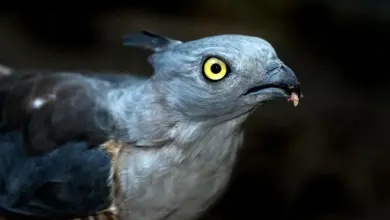
The **Bald Eagle** is one of North America’s most iconic birds, instantly recognizable by its striking white head and tail feathers contrasting with a dark brown body. Known scientifically as Haliaeetus leucocephalus, this majestic raptor captivates birdwatchers, photographers, and nature lovers alike. Beyond its symbolic status as the national bird and emblem of the United States, the Bald Eagle is a fascinating species with unique adaptations, behaviors, and a remarkable conservation story. This article explores the Bald Eagle’s taxonomy, distribution, physical characteristics, behavior, breeding habits, conservation status, and intriguing facts that make it a symbol of wilderness and resilience.
Scientific Classification
The Bald Eagle belongs to the family Accipitridae, which encompasses hawks, eagles, and kites. Its genus, Haliaeetus, means “sea eagle,” reflecting its affinity for aquatic habitats. The species name leucocephalus combines the Greek words “leukos” meaning white, and “kephalos” meaning head, referring to the bird’s distinctive white head plumage. The full scientific name of the Bald Eagle is Haliaeetus leucocephalus. This species was first described by Carl Linnaeus in 1766.
The Bald Eagle is closely related to the Golden Eagle (Aquila chrysaetos), another large North American raptor, although they belong to different genera. While the Bald Eagle is sometimes mistakenly referred to as “bald” due to its white head, this term actually derives from an older meaning of “white-headed.” Adults develop their signature white head and tail feathers only after about five years, undergoing several years of brown juvenile plumage before full maturity.


Geographic Range & Distribution
The Bald Eagle is native to North America, with a range that extends from Alaska and Canada through the contiguous United States and into northern Mexico. It inhabits a wide variety of habitats, but is most commonly found near large bodies of open water such as lakes, rivers, reservoirs, and coastal regions where fish—its primary food source—are abundant. The species prefers forested areas near water for nesting and roosting.
Alaska hosts the largest population of Bald Eagles, estimated at over 30,000 individuals, making it the stronghold of the species. In the lower 48 states, populations are concentrated around the Great Lakes, the Pacific Northwest, the Chesapeake Bay, and parts of the Mississippi River basin. Migration patterns vary regionally; northern populations tend to migrate southward in winter to avoid frozen water bodies, whereas southern populations are often year-round residents.
Historically, the Bald Eagle’s range was more extensive but contracted during the 20th century due to habitat loss and chemical contamination. Thanks to conservation efforts, the species has rebounded and continues to expand its range, recolonizing areas where it had been extirpated for decades.
Physical Description
The Bald Eagle is a large raptor, measuring between 70 to 102 centimeters (28 to 40 inches) in length, with a wingspan ranging from 1.8 to 2.3 meters (5.9 to 7.5 feet). Females are typically larger than males, weighing between 4.1 to 6.3 kilograms (9 to 14 pounds), while males weigh slightly less, averaging 3.2 to 4.1 kilograms (7 to 9 pounds). The largest Bald Eagles, particularly those in Alaska, can weigh up to 6.3 kilograms (14 pounds) or more.
One of the most distinctive features of the Bald Eagle is its white head and tail, which contrast sharply with its dark brown body and wings. Juvenile Bald Eagles lack this stark coloration; their plumage is mottled brown and white until they reach sexual maturity at around five years old. The bird’s large, hooked yellow beak is designed for tearing flesh, and its powerful yellow talons enable it to grasp and carry prey. Bald Eagle feathers are made of keratin, the same protein found in human hair and nails, providing lightweight yet durable protection. Their bones are hollow, reducing weight for efficient flight.
When in flight, the Bald Eagle’s wingspan and broad, flat wings allow it to soar effortlessly on thermal updrafts. These birds can reach flight speeds of up to 30 to 43 miles per hour (48 to 70 kilometers per hour) and can soar at altitudes of approximately 10,000 feet (over 3,000 meters). Their large size and striking coloration make them easy to spot against the sky or water.
Behavior & Diet
Bald Eagles are powerful predators and opportunistic feeders, primarily preying on fish such as salmon, trout, catfish, and carp. They hunt by swooping down from perches or soaring overhead to snatch fish from the water’s surface with their sharp talons. Their diet, however, is diverse and can include waterfowl, small mammals, carrion, and occasionally other birds. They are known to scavenge dead animals or steal prey from other birds, a behavior known as kleptoparasitism.
These raptors exhibit strong territorial behavior, especially during the breeding season, defending their nesting and feeding areas from intruders. Bald Eagles are known for their impressive soaring flights, riding thermal convection currents with minimal effort, conserving energy while scanning vast landscapes for food. Their eyesight is extraordinary—estimated to be four to five times sharper than that of humans—allowing them to spot prey from great distances. This exceptional vision is due to a high density of photoreceptor cells in their retinas, providing acute clarity and color perception.
Outside the breeding season, Bald Eagles may form loose congregations at rich food sources, such as wintering sites with abundant fish or carrion. These gatherings can number in the hundreds, especially in northern regions where food availability fluctuates seasonally. According to Mammal Society, this species is well documented.
Breeding & Reproduction
Bald Eagles are monogamous and often form lifelong pair bonds. They build large nests called eyries, typically located high in tall trees or on cliffs near water. These nests are constructed from sticks and lined with softer materials such as moss, grasses, and feathers. Bald Eagle nests are among the largest of any bird species, with some reaching enormous sizes. The largest recorded Bald Eagle nest was found in Florida, measuring approximately 2.9 meters (9.5 feet) across and 6.1 meters (20 feet) deep, and weighing nearly 2.7 metric tons (5,400 pounds). Eagles often reuse and add to their nests year after year, resulting in these impressive structures. According to National Geographic, this species is well documented.
The breeding season varies geographically but generally occurs between January and July. Females typically lay one to three eggs per clutch, with two being most common. Both parents share incubation duties over approximately 35 days. After hatching, eaglets remain in the nest for 10 to 12 weeks, during which parents provide constant care, feeding, and protection.
Juvenile Bald Eagles remain with their parents for several months after fledging, learning to hunt and survive independently. Sexual maturity is reached around four to five years of age, marked by the development of the characteristic white head and tail feathers. Bald Eagles demonstrate remarkable site fidelity, often returning to the same nesting territory year after year.
Conservation Status
The Bald Eagle experienced a dramatic decline during the mid-20th century due to habitat destruction, illegal hunting, and the widespread use of the pesticide DDT, which caused eggshell thinning and reproductive failure. By the 1960s, the population had plummeted to just a few thousand individuals across the United States. Recognizing the critical status of the species, the Bald Eagle was listed under the U.S. Endangered Species Act in 1978, and DDT was banned in 1972.
Conservation measures, including habitat protection, legal protection, captive breeding, and public education, have led to a remarkable recovery. By 2007, the Bald Eagle was removed from the U.S. endangered species list, and its population currently numbers over 70,000 individuals in the lower 48 states alone. The International Union for Conservation of Nature (IUCN) currently classifies the Bald Eagle as a species of Least Concern, reflecting its successful rebound.
Despite this success, Bald Eagles face ongoing threats such as habitat loss from development, lead poisoning from ingested ammunition, collisions with vehicles and power lines, and environmental pollution. Continued conservation efforts remain essential to ensure the species’ long-term survival and stability.
Interesting Facts
The Bald Eagle’s name can be misleading; the “bald” does not mean hairless but derives from an old English word meaning “white-headed.” Their plumage includes approximately 7,000 feathers, which require regular preening to maintain waterproofing and insulation. Bald Eagles have powerful talons capable of exerting a grip force of over 400 psi, allowing them to capture slippery fish and defend their nests.
These birds have inspired cultural reverence among various Native American tribes, who regard the Bald Eagle as a sacred messenger between the spiritual and human worlds. Eagle feathers are used in ceremonies and considered symbols of honor and bravery.
Adult Bald Eagles take about five years to develop their full adult plumage, making juveniles look quite different with mottled brown and white feathers. They are known for their remarkable nests, which they maintain and enlarge over many years, leading to structures that can weigh several tons.
In flight, Bald Eagles can soar for hours, using thermal currents to travel long distances with minimal wing flapping. Their eyesight is so acute that they can spot a fish swimming underwater from hundreds of feet above, a key adaptation for their hunting success.
In summary, the Bald Eagle is a symbol of strength, freedom, and resilience. Its impressive size, powerful flight, keen eyesight, and remarkable recovery from near extinction make it a fascinating subject for wildlife enthusiasts and a treasured emblem of North American wildlands.