Emberizoides, commonly known as grass-finches, represent a small genus of finch-like birds that inhabit grassy and shrubby areas across parts of Central and South America. These birds, belonging to the tanager family, are characterized by their subtle plumage and distinctive behaviors adapted to open habitats. Despite their modest size, Emberizoides species play an important ecological role in their environments, contributing to seed dispersal and insect population control. This article explores their taxonomy, distribution, physical features, behaviors, breeding habits, conservation status, and intriguing facts that make these birds a fascinating subject for ornithologists and bird enthusiasts alike.
Scientific Classification
The genus Emberizoides falls within the family Thraupidae, commonly known as tanagers, which is a diverse group of passerine birds primarily found in the Neotropics. Historically, Emberizoides species were once classified with the finches due to their finch-like appearance and feeding habits, but molecular studies have since confirmed their closer affinities with tanagers. The genus name Emberizoides translates roughly to “finch-like,” reflecting their morphology.
There are three recognized species within this genus: the Wedge-tailed Grass-finch (Emberizoides herbicola), the Duida Grass-finch (Emberizoides duidae), and the Lesser or Grey-cheeked Grass-finch (Emberizoides ypiranganus). These species share certain morphological traits such as slender bills adapted for seed consumption, but differ in subtle plumage variations and habitat preferences. The genus is part of the subfamily Coerebinae, which also includes several other small tanagers known for their seed-eating habits. This classification highlights the evolutionary adaptations Emberizoides species have undergone to thrive in grassland ecosystems.


Geographic Range & Distribution
Emberizoides grass-finches are native to a broad swath of Central and South America, with each species occupying distinct but sometimes overlapping ranges. The Wedge-tailed Grass-finch (Emberizoides herbicola) is the most widespread, found from the eastern regions of Colombia and Venezuela, extending through the Guianas and northern Brazil, reaching into Bolivia and Paraguay. This species favors open grasslands, savannas, and lightly wooded areas, often at low to mid elevations.
The Duida Grass-finch (Emberizoides duidae) has a much more restricted distribution, primarily inhabiting the Tepuis – isolated table-top mountains – of southern Venezuela, particularly Mount Duida and neighboring highlands. This bird’s presence in these unique and isolated habitats highlights its specialized ecological niche.
The Lesser Grass-finch (Emberizoides ypiranganus), also known as the Grey-cheeked Grass-finch, is found mainly in southeastern Brazil, northeastern Argentina, Uruguay, and parts of Paraguay. It prefers subtropical grasslands and savannas, often frequenting marshy or seasonally flooded areas. Overall, the distribution of Emberizoides species reflects their affinity for open, grassy environments, often in regions with seasonal rainfall patterns.
Physical Description
Grass-finches of the genus Emberizoides are small birds, typically measuring between 13 and 15 centimeters (5 to 6 inches) in length and weighing approximately 15 to 25 grams. Their wingspan ranges from about 18 to 22 centimeters, allowing for agile flight through dense grasses. While their body shape and size resemble finches, their plumage is relatively plain and cryptic, providing effective camouflage in their grassy habitats.
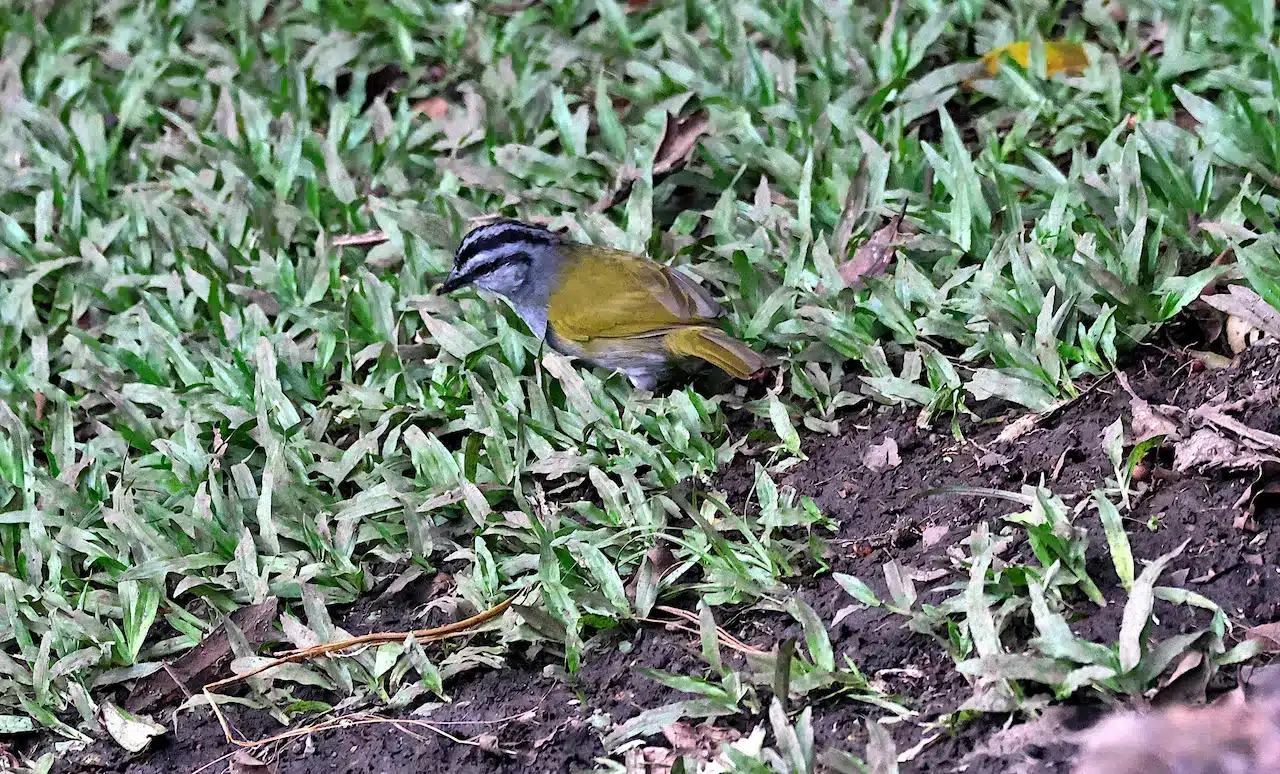
The Wedge-tailed Grass-finch (E. herbicola) has a warm brown upper body with subtle streaking and a pale buff underbelly. One of its distinguishing features is the wedge-shaped tail, from which it derives its common name. The bill is conical and robust, ideal for cracking seeds. The head shows a faintly marked face with a subtle supercilium (eyebrow stripe).
The Duida Grass-finch (E. duidae) is similar in size but presents a slightly grayer tone with more distinct facial markings, including a pale cheek patch contrasting against darker feathers. This species exhibits more muted coloration, blending well with the rocky and grassy tepui environments.
The Lesser Grass-finch (E. ypiranganus) displays grayish cheeks and a more pronounced streaking on the breast, with overall paler plumage than the other species. Its bill is slender but still conical, adapted for its primarily granivorous diet. Across all species, juveniles tend to have duller coloration and more mottled plumage, aiding in concealment from predators.
Behavior & Diet
Emberizoides grass-finches are primarily ground foragers, navigating through grasses and low shrubs in search of food. Their diet consists mainly of small seeds from grasses and herbaceous plants, supplemented by insects and other arthropods, especially during the breeding season when higher protein intake is necessary for chick development. This mixed diet allows them to adapt to seasonal variations in seed availability.
These birds are generally seen alone or in pairs, though sometimes they form small flocks, particularly outside the breeding season. Their flight is characterized by rapid wingbeats and short bursts interspersed with gliding. Emberizoides species are known for their skulking behavior, often remaining concealed in dense grass clumps to avoid predators. They are more often heard than seen, with a repertoire of soft chips and trills used for communication.
Territorial during the breeding season, males perform subtle displays to attract females, including vocalizations and wing flicks. Their social structure outside the breeding period is relatively loose, with individuals foraging independently but occasionally joining mixed-species flocks. These grass-finches are active primarily during daylight hours, retreating to cover at dusk. According to eBird, this species is well documented.
Breeding & Reproduction
Information on the breeding habits of Emberizoides species, though limited, suggests they follow typical tanager reproductive strategies adapted to open grassland habitats. Nesting occurs primarily during the rainy season when food resources are abundant. Females build cup-shaped nests close to or on the ground, hidden within dense grasses or low shrubs to reduce predation risk. According to Cornell Lab of Ornithology, this species is well documented.
The clutch size typically ranges from two to four eggs, which are pale with speckled markings that help camouflage them. Incubation is solely performed by the female and lasts approximately 12 to 14 days. Both parents participate in feeding the nestlings, providing a mix of seeds and insects to support rapid growth. The fledging period lasts around two weeks, after which juveniles remain with their parents for a short time before becoming independent.
Some species, particularly the Wedge-tailed Grass-finch, may exhibit territorial defense during the breeding season, with males singing from prominent perches to ward off rivals. Because of their secretive nature and preference for dense grass, detailed studies on their reproductive ecology remain scarce, highlighting opportunities for further research.
Conservation Status
The conservation status of Emberizoides species varies according to their geographic range and habitat specificity. According to the International Union for Conservation of Nature (IUCN), the Wedge-tailed Grass-finch (E. herbicola) is currently listed as Least Concern due to its relatively wide distribution and presumed stable population. However, localized threats such as habitat loss from agriculture and urban expansion could impact some populations.
The Duida Grass-finch (E. duidae), with its restricted range in the tepui region, is considered Near Threatened. Its specialized habitat is vulnerable to climate change and human disturbance, though much of its range benefits from protected status within national parks and reserves. Habitat fragmentation and changes in vegetation structure could pose future challenges.
The Lesser Grass-finch (E. ypiranganus) is also listed as Least Concern but faces pressures from the conversion of grasslands into farmland and pasture. Grassland ecosystems in southeastern South America are among the most threatened, making habitat preservation critical for this species’ long-term survival.
Conservation efforts for Emberizoides species focus on protecting native grassland habitats, promoting sustainable land-use practices, and conducting further research to better understand population trends and ecological requirements. Their presence can serve as an indicator of grassland health, reinforcing the importance of these often-overlooked ecosystems.
Interesting Facts
Despite their unassuming appearance, Emberizoides grass-finches exhibit several fascinating traits. Their wedge-shaped tails not only aid in identification but also contribute to their agile flight through dense grasses. This tail shape is relatively uncommon among tanagers, illustrating their unique adaptation to open habitats.
The Duida Grass-finch’s confinement to the tepui highlands makes it an example of a species adapted to one of the world’s most unusual and isolated ecosystems. Tepuis are often described as “islands in the sky,” with many endemic species found nowhere else on Earth. The Duida Grass-finch’s survival there underscores the importance of these habitats for biodiversity conservation.
Another intriguing aspect is their vocal behavior. While not as melodious as some tropical birds, Emberizoides species use a variety of calls that can be challenging to detect by casual observers. Birdwatchers often rely on these subtle sounds to locate and identify them in the field.
Finally, the grass-finches’ diet flexibility helps them thrive in environments where seed availability fluctuates seasonally. Their occasional consumption of insects during breeding seasons exemplifies their adaptive foraging strategy, balancing energy needs for survival and reproduction.
Conclusion
Emberizoides grass-finches are small yet ecologically significant members of the tanager family, perfectly adapted to life in the grasslands and open habitats of Central and South America. Their finch-like appearance belies a complex biology shaped by evolutionary pressures in diverse environments ranging from lowland savannas to high-elevation tepuis. Understanding their taxonomy, distribution, behavior, and conservation needs provides valuable insight into the delicate balance of grassland ecosystems. As habitat loss continues to threaten these regions, ongoing research and conservation efforts are vital to ensure that these subtle, often overlooked birds maintain their place in the rich tapestry of Neotropical biodiversity.