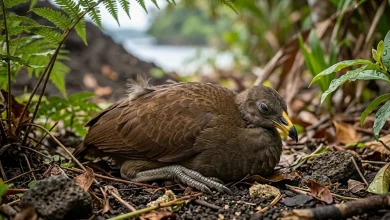
The Gambel’s Quail (Callipepla gambelii) is a distinctive and charismatic bird native to the arid landscapes of the Southwestern United States and northern Mexico. Known for its striking topknot plume and social behavior, this ground-dwelling bird has become a familiar sight in desert habitats where it thrives amid the harsh conditions of scrublands and canyons. Named after William Gambel, a 19th-century naturalist and explorer who contributed significantly to the understanding of the region’s wildlife, the Gambel’s Quail offers a fascinating glimpse into adaptation and survival in some of North America’s most challenging environments.
Scientific Classification
The Gambel’s Quail belongs to the family Odontophoridae, commonly known as the New World quails, which includes a variety of ground-dwelling birds native to the Americas. Its scientific name is Callipepla gambelii. The genus Callipepla comprises three species: Gambel’s Quail, California Quail (Callipepla californica), and Elegant Quail (Callipepla douglasii). These species share similar morphological traits and behaviors but differ in range and subtle plumage details.
Gambel’s Quail is closely related to the California Quail, with which it shares a sister-species relationship. Molecular studies suggest that these two species diverged approximately 1 to 2 million years ago during the Late Pliocene to Early Pleistocene epochs, adapting to different ecological niches across western North America. This evolutionary history underscores the adaptability of the genus to diverse habitats ranging from coastal woodlands to arid deserts.


Geographic Range & Distribution
The Gambel’s Quail primarily inhabits the desert regions of the Southwestern United States and extends southward into northern Mexico. Its range encompasses the Sonoran and Mojave Deserts, as well as surrounding areas of scrub and arid foothills. In the U.S., it is found in Arizona, California, Nevada, Utah, New Mexico, Colorado, and parts of western Texas. In Mexico, its distribution includes the states of Sonora, Chihuahua, and Baja California, among others.
This species is well adapted to hot, dry environments and is typically associated with desert washes, mesquite thickets, and areas dominated by creosote bush and sagebrush. Gambel’s Quail favors habitats with dense ground cover that provides protection from predators and harsh weather, as well as access to water sources. While it is largely a resident species, meaning it does not undertake long migrations, local movements may occur in response to seasonal availability of food and water.
Physical Description
The Gambel’s Quail is a medium-sized bird averaging about 11 inches (28–30 cm) in length, with a wingspan ranging from 14 to 16 inches (35–40 cm). Adult birds weigh between 170 to 200 grams (6 to 7 ounces), with males generally slightly larger than females. One of its most recognizable features is the prominent topknot or plume, a forward-facing crest of feathers on the forehead that curls gracefully, resembling a comma or teardrop shape.
In terms of coloration, Gambel’s Quail exhibit a primarily gray plumage that helps them blend seamlessly into their desert surroundings. The belly and chest display a scaled pattern of white and brown, providing additional camouflage. Males are distinguished by their striking black faces bordered by white stripes, a copper-colored crown atop the head, and a black patch on the throat. Females lack the intense facial markings and copper crown but retain the signature plume, albeit smaller and duller in color.
While similar to the California Quail, Gambel’s Quail can be differentiated by subtle plumage differences and their geographic range. The California Quail often has a more prominent scaly appearance on the belly and a darker, more rounded plume. These two species occasionally hybridize where their ranges overlap. Gambel’s Quail have relatively short, rounded wings and long, strong legs adapted for walking and running through dense brush rather than sustained flight.
Behavior & Diet
Gambel’s Quail are primarily ground-dwelling birds known for their remarkable ability to move swiftly and silently through desert undergrowth. They are highly social and often found in groups called coveys, especially outside the breeding season. These coveys can number from a few individuals to over a dozen birds, enhancing their ability to detect predators and locate food sources.
Primarily, Gambel’s Quail forage on the ground, scratching and pecking through leaf litter and soil to find seeds, leaves, and fruits. Their diet is heavily plant-based, consisting mainly of seeds from grasses, herbs, and shrubs such as mesquite, sagebrush, and creosote bush. However, they also supplement their diet with small insects, especially during the breeding season when protein intake is critical. Insects include ants, beetles, grasshoppers, and caterpillars, which are particularly important for the growth of chicks.
These birds are non-migratory and tend to be highly territorial during the breeding season. They prefer to escape danger by running rather than flying; their short, rounded wings allow only brief bursts of flight, usually a quick, explosive takeoff followed by a slow glide to the ground. Their strong legs and toes enable them to navigate rocky terrain and dense brush with agility.
Breeding & Reproduction
The breeding season for Gambel’s Quail typically begins in early spring and can extend through summer, depending on environmental conditions like rainfall and food availability. These birds are generally monogamous, with pairs forming strong bonds that persist through the breeding period. During this time, pairs become highly territorial and aggressive toward rival birds to defend their nesting sites. According to Audubon Society, this species is well documented.
Nesting usually takes place on the ground, where the female scrapes a shallow depression often hidden beneath shrubs, rocks, or fallen branches. The nest is simple and unlined, relying on natural cover for concealment from predators. The female typically lays a clutch of 10 to 15 eggs, which are creamy white to pale buff with small brown speckles. According to Cornell Lab of Ornithology, this species is well documented.
Incubation lasts around 21 to 24 days and is primarily undertaken by the female, although males may occasionally assist. Gambel’s Quail chicks are precocial, meaning they hatch fully feathered and mobile. Within hours of hatching, the young leave the nest to follow their parents, learning to forage and avoid predators. The chicks’ diet initially includes a higher proportion of insects to support rapid growth before gradually shifting to seeds and plant matter as they mature. Family groups remain cohesive for several months before dispersing.
Conservation Status
The International Union for Conservation of Nature (IUCN) classifies the Gambel’s Quail as a species of Least Concern. Its population is currently stable, benefiting from a wide distribution and adaptability to various desert habitats. However, localized threats do exist, including habitat loss due to urban development, agriculture, and water diversion projects in the American Southwest.
Climate change poses a potential long-term threat by altering precipitation patterns and increasing the frequency of droughts, which could impact food availability and reproductive success. Additionally, predation by introduced species such as feral cats and habitat fragmentation can affect local populations. Conservation efforts focus on preserving native desert ecosystems and maintaining natural water sources that support Gambel’s Quail and other desert wildlife.
Interesting Facts
The Gambel’s Quail is renowned not only for its distinctive appearance but also for its complex social behaviors. Coveys communicate through a variety of vocalizations, including the characteristic “chi-ca-go” call that is often heard echoing across desert canyons at dawn and dusk. This call helps maintain group cohesion and alert members to potential threats.
Unlike many birds, Gambel’s Quail rarely fly long distances, relying instead on their remarkable running ability to evade predators. They can sprint swiftly through dense brush, using their strong legs and agile bodies to navigate terrain that would be challenging for many other species.
The topknot plume, a hallmark of the species, is not just decorative but also plays a role in social signaling during mating displays and territorial disputes. Males often raise and lower the plume to communicate with rivals and potential mates.
Interestingly, Gambel’s Quail have been observed engaging in “dust bathing,” a behavior where they create shallow depressions in loose soil and vigorously flap their wings to cover themselves with dust. This activity helps remove parasites and maintain feather condition, proving vital in their hot, dry environments.
Finally, these birds have been part of Native American culture for centuries, often appearing in folklore and used as a food source. Today, their presence continues to fascinate birdwatchers and photographers who venture into the desert in search of this emblematic species.
In summary, the Gambel’s Quail (Callipepla gambelii) is a resilient and captivating bird perfectly adapted to life in North America’s deserts. Its striking appearance, complex behaviors, and ecological importance make it a compelling subject for anyone interested in the natural world of the Southwest. From its evolutionary roots to its social coveys, the Gambel’s Quail embodies a unique story of survival amid the challenges of an arid landscape.