

The Galapagos Hawk is an imposing and powerful raptor. It is the sole native predator of the Galapagos Islands. This endemic bird is a symbol for raw nature, survival, and evolution. The Galapagos Hawk is a curious and fearless observer who has evolved over 300.000 years. It also plays a vital role in the ecosystem of the islands. This in-depth look at this species will tell you everything about it, from its physical characteristics to its diet, to its evolutionary history and its conservation status.
The Galapagos Hawk: Physical Description
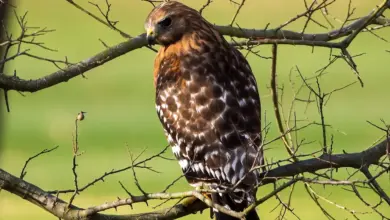
Galapagos Hawk is similar to the Red Tailed Hawk (Buteo jamaicensis and Swinson’s Hawk from North America. However, it has adapted uniquely to the Galapagos Archipelago. The raptor is about 55 cm (21.6 inches), long from the beak to the tail. It has an impressive wingspan of 120 cm (47 inches),. As is the case with many birds of prey (including raptors), females tend to be larger in size than males. This trait is known as sexual dimorphism.
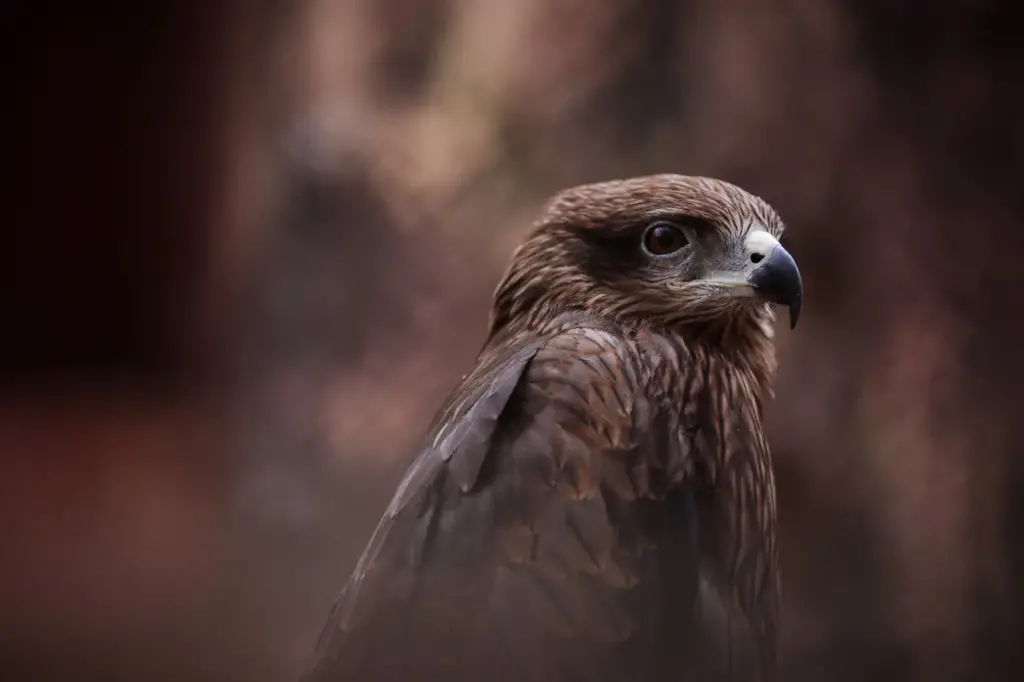
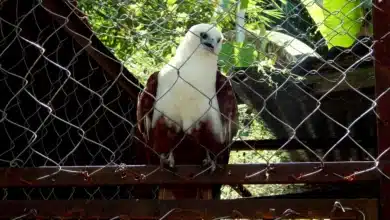
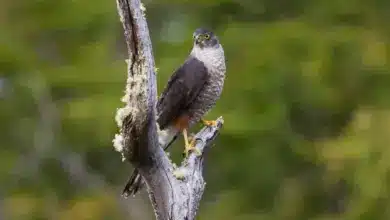
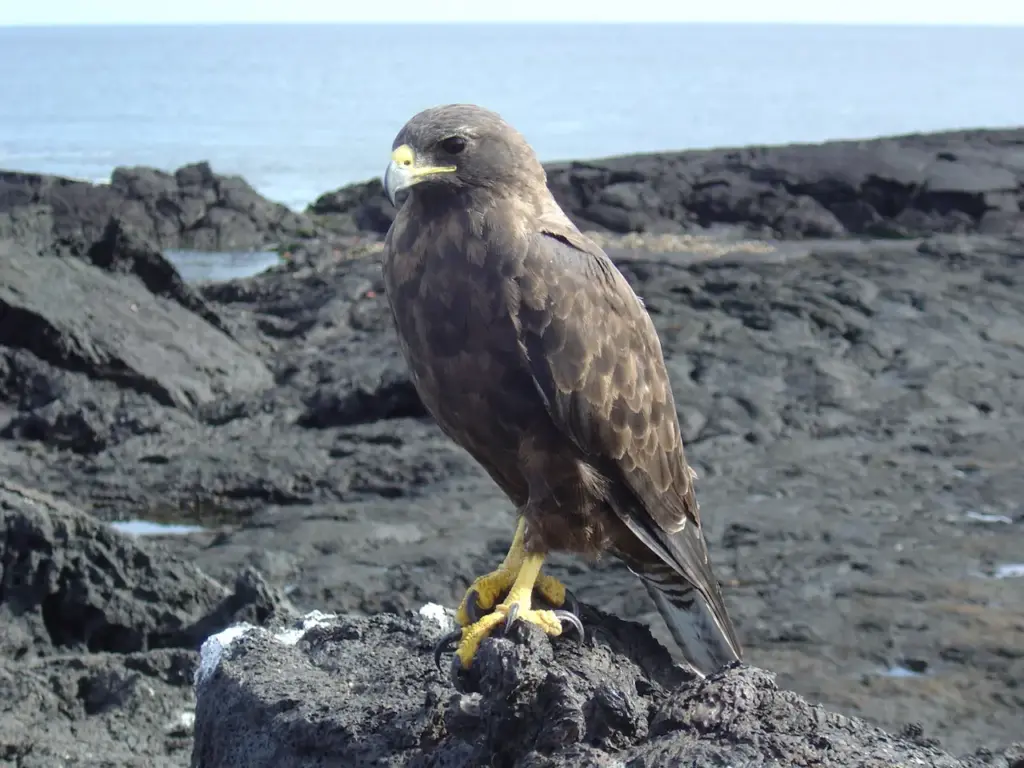
The mantle and crown of adult Galapagos Hawks have lighter feather edges. Their feathers are usually sooty to blackish brown. The tails are silvery grey and the feet, legs, cere, and feet have a striking Yellow. This contrasts with their dark appearance. Their beaks, which are blackish grey with hooked tips and sharp edges, are perfect for tearing through prey or carcasses.
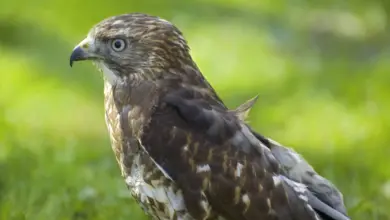
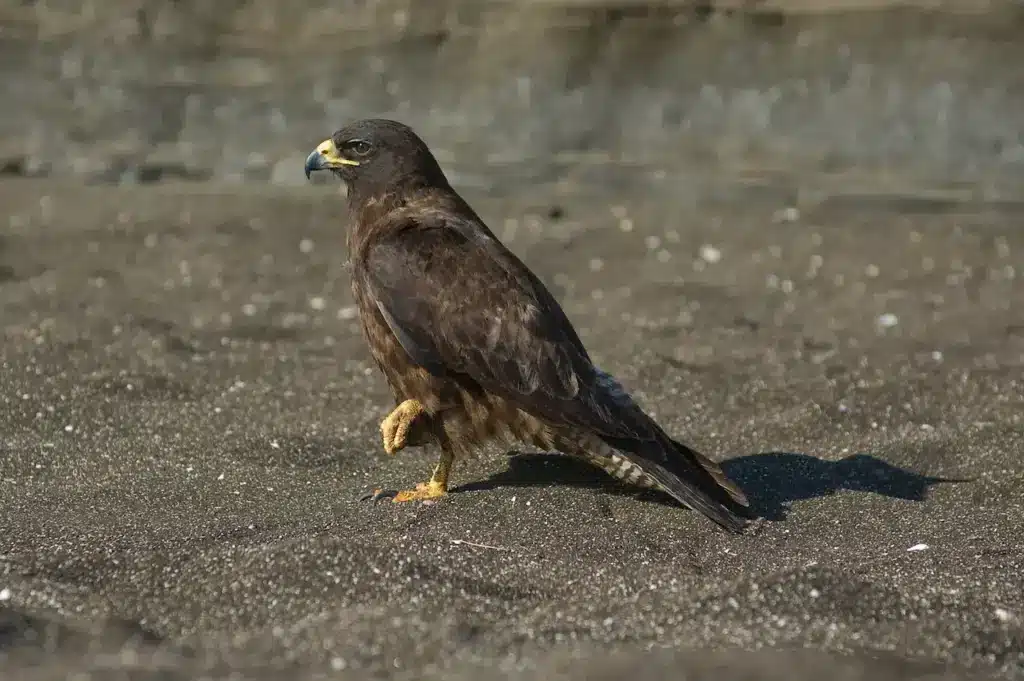
Juvenile hawks look quite different. The juvenile hawks have a mottled design consisting of blackish brown and white feathers with a black streak extending out of the corners of their mouth. A young Galapagos Hawk has a grey-blue bill, while their cere and feet have a more muted colour than the bright yellow of an adult. As they grow older, their colouration becomes more similar to that of adults.
Habitat and diet: Masters of the Archipelago
This raptor is only found in the Galapagos Islands. It has adapted well to a harsh environment and limited resources. The raptor’s habitat includes volcanic terrains, sparse forests, and coastal regions. The Galapagos Hawk was once widely distributed, but today it is only found on a few islands because of habitat destruction and the influence of humans.
Galapagos Hawks are apex predators and play a vital role in controlling populations of insects, mice and snakes. Their diet is opportunistic and also diverse. They also hunt small reptiles such as lava lizards and snakes. They can also catch young tortoises and eggs from nesting bird species like the Forktail Gull with their powerful talons.
The hawks that are a part of this group are also carrion scavengers. They will eat any kind of decaying animal, no matter how bad it is. Their strong, curved feet and hooked teeth are designed to tear flesh from animals that have decayed. The hunt is usually done in pairs or groups of two. Individuals fly between 50 and 200 meters. The hawk that finds the prey or carcass feeds first, while others wait in a hierarchy of the feeding system.
Behavioural traits and hunting tactics
The Galapagos Hawk is a fascinating animal. Its lack of fear of humans is one of its most intriguing characteristics. These birds, particularly the juveniles, are extremely bold because they have had no natural predators for centuries and minimal human contact. These birds are often seen wandering around human camps, showing curiosity and a desire to find food.
Even the great Charles Darwin observed their courage during his voyage on the HMS Beagle in 1835. In his own words
“A gun here is almost superfluous, for with the muzzle of my gun I was able to push a hawk from the branch of a large tree …”
Galapagos Hawks, despite their bravado, are effective and calculated hunters. They can spot movements from a distance due to their keen vision and coordination in the air. The vultures perch on outcrops of lava and branches high above the ground to wait for the perfect moment.
Breeding behaviour and unique mating system
The Galapagos Hawk does not have a fixed breeding season, unlike many other bird species. The Galapagos Islands have equatorial weather that is relatively consistent, which allows mating to take place throughout the year. According to BirdLife International, this species is well documented.
Mating starts with an aerial display. This includes diving-bombing as well as chases of courtship. The males mimic attacks from behind on the female, and then follow her down in a spiralling motion toward the trees. This is an unusual breeding system, also known as co-operative polyandry. According to eBird, this species is well documented.
males tend to be monogamous. females, however, may mate with up to seven males in a single nesting period. Despite their competition, these males work together to defend the nest, incubate eggs and nourish the chicks. This mating system is unique in that it allows the males to work together and care for the chicks.
Nesting Sites and Chick Development
These nests are impressive in size and design. These nests, which are built in low-lying trees or on lava slabs and even directly on the ground, have been used by generations. They can grow to as much as 4 feet in diameter over time. The interior of the stick-built house is lined with softer materials such as bark, leaves and grass.
Usually, 1 to 3 eggs are laid, but one chick can be successfully raised. After an incubation of about a month, young Hawks can fly after 50-60 days. They continue to depend upon adults for food and safety for some time.
The juvenile hawks are non-breeding until they reach sexual maturity sexually at about three years of age. Nesting Galapagos Hawks, despite their fearlessness, are sensitive to disturbances by humans. They may abandon nests when disturbed.
Vocalizations & Communication
The call of the Galapagos Hawk is sharp, piercing and unmistakable. The shrill calls of the Galapagos Hawk are particularly loud during the breeding period. They echo across the barren landscape, creating a haunting, eerie symphony. Most commonly, they make vocalisations that resemble “keer”, “keeu”, or inflected ‘kwee’. They use these to communicate between mates, defend their territory, or be alarmed.
They may also emit a “kilp kilp kilp” noise when not in breeding season. This is usually done while perched or conversing with other hawks. These vocalisations are used to maintain group cohesion as well as establish boundaries for territories.
Evolution and Colonisation in the Galapagos Islands
The evolutionary history of the Galapagos Hawk offers insight into how species can adapt and evolve when isolated. Genetic research, especially studies of mt DNA, reveals that the Galapagos Hawk was a new arrival in the archipelago. colonising islands around 300.000 years ago. It is a relatively new species compared to Darwin’s finches, which arrived between 2 and 3 million years ago.
The Swainson’s Hawk is the closest living relative of the Galapagos Hawk. It still exists in the American mainland. The Galapagos Hawk has evolved over generations of isolation to fill a unique niche, and it has become the top predator of an ecosystem with little competition.
Conservation Status of a Species in Risk
The IUCN Red List classifies the Galapagos Hawk as Near Threatened. The total population of the species is estimated to be approximately 150 breeding pairs. While this is an improvement over previous decades, it is still a critically low number for a once widespread species.
Human activity has had a severe impact on their population. This includes habitat destruction and introductions of invasive species. direct disruption of nests. The predation of introduced mammals such as cats and rats has also impacted their survival.
The Galapagos Hawk is now extinct in several islands, including Baltra and Daphne. Galapagos Hawks are still vulnerable despite conservation efforts. This is due to their restricted range and low reproductive rate.
Final Thoughts – Protecting a living relic of evolution
The Galapagos Hawk represents more than a bird. It is a living example of the power of evolution and island ecologies. It is the top prey on the Galapagos Islands, and its survival is vital to the island’s ecological balance. Its unique
The sabre-toothed tiger’s bold personality and evolutionary journey make it one of the most fascinating animals in the world.
The Galapagos Hawk is a symbol of the fragile ecosystems that make up the Galapagos Islands. We can ensure that future generations continue to see this majestic raptor soar above the volcanic landscapes in one of Earth’s greatest natural laboratories.