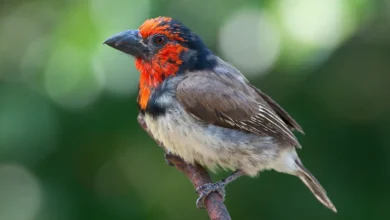
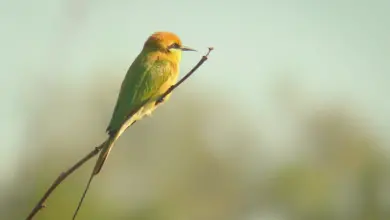
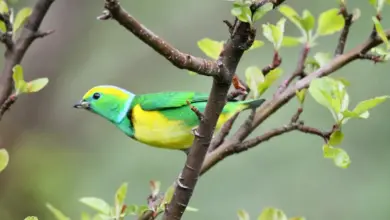
Fiji White-eyes ( Zosterops exploreator), or Layard’s White Eye, is an energetic, small passerine bird. It plays a vital role in Fiji’s forest ecosystem. This species, which belongs to the family of white-eye birds, Zosteropidae, is known for its vibrant colouration, adaptability to forest environments, and social behaviour. Fiji is a hotspot of avian biodiversity in the South Pacific because it has many island-endemic species. This blog explores in detail the Fiji White Eye, including its classification, distribution and habitat preferences. It also covers physical characteristics, behaviour, feeding ecology and ecological significance.
Taxonomy & Scientific Classification
The Fiji White Eye is a member of the genus Zosterops. This group includes more than 100 species found in Africa, Asia and Australia. The distinctive white eye-ring around the eye is what gives this genus its name. The species name exploreator is a reflection of the curious and active nature that white-eyes are known for. The bird, also known as Layard’s White-eye, is named after early naturalists who contributed to the study and research of Pacific birds. The classification of the white-eye bird highlights its rapid evolution on islands where isolation is often the cause of the emergence of new species.

Endemic Status and Importance
Fiji White Eye is an endemic species, which means it can only be found in Fiji. Its limited distribution makes it a symbol of Fiji’s unique natural heritage. Endemism is a valuable tool for studying evolution because endemic species often adapt to their island environment by developing specialised traits. The Fiji White Eye’s ability to adapt across islands is a testament to its adaptability. Its continued existence reflects the relative state of Fiji’s forest ecosystems. It is vital to protect endemic species such as this one in order to preserve biodiversity.



Geographic Distribution in Fiji
Fiji White Eye is found in several main islands of Fiji, including Viti Levu and Vanua Levu. It can also be seen on Taveuni. Kadavu. Ovalau. It is a common forest species on these islands and can be seen by researchers and birdwatchers. The distribution of this species includes both large islands with extensive forests and smaller islands that have more fragmented habitats. This large island distribution indicates that the species can colonise habitats in the Fijian Archipelago.
Preferred Habitats and Forest Use
Fiji White-eyes prefer forested habitats. They live in lowland forests and montane forests, along with the edges of forests and secondary vegetation. The dense foliage is ideal for this species because it provides food and protection. When the Fiji Whiteeye is found alongside the Silvereye, a closely related species, the Fiji Whiteeye tends to occur more often in the interior of dense forests. This reduces competition between the species and allows them to coexist in slightly different habitats.
Relationship with the Silvereye
The Fijian White-eye is closely related to the Silvereye. This species can be found throughout the Pacific and Australasia. Ecologically, the subtle differences between the species in their habitat use and feeding behaviour can help to separate them. Fiji White-eyes prefer thicker forest covers and feed lower in the vegetation than Silvereyes. These differences reduce the competition for nesting and food sites. They also show how closely related species are able to coexist by specialising in niches.
Dimensions and general structure
The Fiji White Eye is compact and small, like most white-eyes. The Fiji White-eye’s body is rounded, slightly chunky and gives it a solid appearance despite its size. Its compact build makes it ideal for moving through dense vegetation, where agility is key. The short tail and rounded wing tips allow it to fly quickly and flutter between branches. This makes it a highly effective forager in shrubs and trees.
Plumage and Overall Colour
The Fijian White-eye has a brighter colour than most of its relatives. The yellow hues of its plumage give it a vibrant and warm appearance. The back of the bird is an olive green colour that blends well with its leafy surroundings. However, the throat and belly are bright yellow. The bird’s colouration allows it to blend in with the surrounding leaves while remaining visible. Its brighter yellow feathers are one of its most distinguishing features from other white-eyed species.
Distinctive Eye-ring
The complete white eye-ring is one of the most distinguishing characteristics of the Fiji White-eye. This bold, clearly defined circular marking around each eye makes identification easier. The eye-ring, a trademark of the genus Zosterops, is believed to be a social communication tool that helps individuals identify each other among dense foliage. The eye-ring of the Fiji White Eye is especially noticeable and contrasts with the surrounding green and yellow plumage. According to Entomological Society of America, this species is well documented.
Differences between genders and age groups
Fiji White Eyes, male and female, are similar in appearance. There is little or no sexual dimorphism. The bright eye-ring and colouration of both sexes make it difficult to tell them apart in the field. The juvenile birds have a duller appearance and less intense yellow shades, but still maintain the same pattern as adults. This similarity indicates that the visual differences between sexes do not play a significant role in mate choice for this species. According to Bug Guide, this species is well documented.
Behaviour and social structure
Fiji White-eyes are a social bird that rarely appears alone. The birds often travel in small groups and are constantly foraging while they move through the forest. They are lively in the understory and canopy because of their quick movements and energetic behaviour. Social interaction can have many benefits, including increased vigilance and efficiency when locating food.
Vocalizations
Fiji White-eyes use a high-pitched vocalisation called “seeu-seeu” to keep in touch with each other as they travel through dense vegetation. The calls are repeated, and the pitch and intensity may change slightly depending on context. In forest habitats where visibility is restricted and sound is a major factor in social cohesion, vocal communication is of particular importance.
Feeding Behaviours and Foraging Techniques
The Fiji White eye feeds primarily by picking insects off leaves, branches, and twigs. It inspects the foliage and picks off insects with rapid, precise movements. The white-eyes use this feeding technique to find a variety of food. Fiji White Eyes reduce competition by foraging on different levels in the forest.
Diet Composition & Flexibility
The Fiji White-eye eats a variety of insects, such as small beetles and caterpillars. The diet is based on insects, which provide essential energy and protein. The species will eat insects as their primary source of food, but they may also consume nectar or small fruits when available. This is especially true during times when insects are scarce. The Fiji White Eye can adapt to changes in seasonal food availability by consuming a variety of foods.

Mixed-species Feeding Flocks
Fijian Silvereyes and Fijian White-eyes are often found in mixed-species feeding flocks. The flocks can move through the forest together, each species utilising slightly different food resources or foraging heights. Mixed flocks have several benefits, including increased predator detection and a more efficient search for feeding sites. Participation of the Fiji White-eye in these flocks demonstrates its cooperative and adaptable character.
Ecological Role of Forest Ecosystems
Fiji White-eyes are insect-eating birds that play an important part in controlling insect populations. It helps to maintain the ecological balance by feeding on small invertebrates. The potential role of the species in seed dispersal through the consumption of small fruit may also contribute towards plant regeneration. Its abundance makes this species an important part of Fiji’s forest bird community.
Conservation Status and Outlook
Fiji White Eye is a common bird in its area and doesn’t face the same immediate threats as other island birds. Fiji’s long-term problems include habitat loss, forest degradation, and invasive species. To ensure that this species continues to thrive, it is important to protect native forests on all the islands. The Fiji White-eye is an endemic species that serves as a symbol of Fiji’s irreplaceable and unique biodiversity.