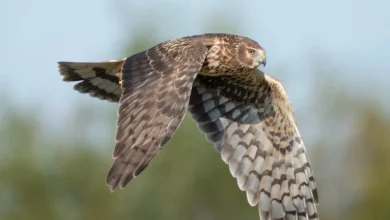
The Eurasian Hobby (Falco subbuteo), or just simply Hobby, is a small, slim falcon. It belongs to a rather close-knit group of similar falcons often considered a subgenus of Hypotriorchis. This species was first described by Linnaeus in his Systema naturae in 1758 as Falco subbuteo. For more information, see our guide on beetles.
Taxonomy, Subspecies, & Name Origins
The scientific name Falco subbuteo is a reflection of both the falcon’s nature and its “lesser” status in comparison to larger falcons. The word “falco” is derived from Late Latin and means “sickle,” which refers to the shape of its wings. “Subbuteo” means “lesser buzzard”, in Latin “sub” plus buteo.
The word “hobby”, which is used as a common name, comes from the old French words “hobet” and “hobe”. These were words that were used to describe small falcons. Linnaeus’s original naming has been recognized and used for centuries in ornithological research.


Physical Description and Plumage
The Eurasian Hobby has a compact design, but it is built for speed and aerial hunts. The Eurasian Hobby has a body length of 29 to 36 cm (11.4 in), and a wingspan between 74 and 84 cm (30-33 in). The males tend to be smaller in size, while the females are a little larger and heavier. Weight can vary from 175 grams to 285 grams depending on the region, season, and individual condition.
What makes Hobby different visually includes:
- The upperparts are slate grey; the crown is darker; and there are distinctive moustachial stripes (mustache lines) under the eyes.
- The underparts of the bird are whit, or very pale and heavily streaked when breeding. The throat is usually unmarked. In good light or during flight, the thighs or undertail coverts will have red or rufous “trousers”, or patches.
- The red patches on the thighs are either absent or less prominent in juvenile birds.
- The first-summer plumage of young birds (birds in their first breeding seasons) can display intermediate traits. Some colors and patterns may be similar to adult plumage, while others will still have juvenile brown tones. The transition is most noticeable in the first summers.
The Hobby has an elegant flight: long pointed wing tips, a tail with a square tip, and a sickle-like outline when in certain flight modes. When seen gliding, it can look like a swift.
Habitat Preferences and Range
It has a wide breeding range in the Palearctic region. It hunts in open or semi-open terrains such as farmland, the edge of woods, and scattered woodlands. Also, it uses taiga, savannah patches, shrubs, and marshy areas.
It needs open air for aerial hunting during its breeding season. When it is not breeding, it will prefer moister woodland or savannah edges, or even more open land, as long as it has trees or perches.
It is a migratory bird (at least for many populations), so it will stop at many different habitats. These include woodland patches, river edges, and even the edges of urban parks if they have suitable prey or structure.
Migration and Seasonal Patterns
The hobby’s life revolves around migration. European and temperate Asian populations may migrate to Africa during the non-breeding period; birds from further east may winter in South Asia, depending on the subspecies.
Migration tends to coincide with the availability of prey (especially insects and small migrating songbirds) and climatic conditions. Breeding occurs in late spring/early Summer, depending on the latitude. Adult birds leave the north in late summer or early fall after raising their young and fledging. The juveniles often follow, but may take a different route or time.
During migration, the Hobby can be seen in a variety of habitats. It is often observed on open land with scattered trees and woodland edges. Birdwatchers in some areas have noted them following disturbed terrain (such as farms, or areas where animals move or fires are occurring) because this disturbance brings out prey.
Diet, Hunting & Behavior
The Eurasian Hobby is a bird of great aerial ability. The Eurasian Hobby hunts mostly on the wings. According to Audubon Society, this species is well documented.
- It eats a lot of insects, including dragonflies, beetles, and other large flying insects. Often, these are caught in mid-flight. The bird may transfer the prey from its talons into its beak as it is still in flight.
- It also catches small birds flying in the air. During periods of abundance (such as during migration or summer), swifts, swallows, and martins are all common prey. These prey species are very fast and agile, so the Hobby requires speed, agility, and good aerial maneuverability.
- Sometimes bats are captured. Hobbyists have been reported to catch bats at dusk or near their roosting areas.
The behavior of this species is to chase prey in the air, pursue insects swooping through the sky, or intercept small birds. It hunts often at dawn and dusk, when prey is most active and insects are available. According to Cornell Lab of Ornithology, this species is well documented.
Breeding, Nesting & Reproduction
The Hobby doesn’t build its nest from scratch. It often reuses nests that were built by ravens or crows. Nests are usually placed in high trees in areas with clear visibility, such as woodland edges or hedges. In some regions, nests are built on artificial structures or cliffs, but tree nests are the most common.
The clutch size is usually between 2 and 4 eggs. The female incubates more often, while the male feeds her and the chicks later. The average incubation period is 28 days.
Both parents feed the chicks after hatching. They grow rapidly. The young will leave the nest in about four weeks (around 28-30days), but timing may vary depending on latitude, weather, and food availability.

Conservation Status and Threats
IUCN has classified the Eurasian Hobby as ” Least Concern. The population of the Eurasian Hobby is widespread in Europe, Asia, and Africa and has been relatively stable in many places.
It faces many challenges, just like other raptors, migratory birds, and other birds.
- Loss of habitat: the removal of wooded patches, hedgerows, and scattered trees reduces nesting opportunities. The semi-open woodland habitat that Hobbies prefer is being reduced by land-use changes, agricultural intensification, and urbanization.
- Declines of prey abundance: Use of pesticides and changes in insect emergence (linked to climate change) can decrease the availability of insect food, especially for falcons that eat insects.
- Disturbance in nest sites: Human disturbance, logging, and nest destruction can all affect breeding success. Climate variability (weather extremes) can also impact chick and fledging survival.
- Pressures on migration and wintering grounds: Deforestation and loss of woodland in winter ranges in Africa and southern Asia, as well as hunting and conversion of wetlands in certain regions, can all lead to increased population pressures.
There are conservation opportunities and successes, despite the threats. Protecting woodland patches, hedgerows, and nesting trees, as well as enforcing raptor laws and maintaining habitats rich in insects, can help. Monitoring migration stops and raising awareness about how insect declines impact aerial predators is becoming increasingly important.
Behaviour, Personality & Interesting Traits
Eurasian Hobby is not only known for its speed, but for certain behaviors that show its adaptability and character.
- The hawk is most active at twilight, when insects and small birds can be caught more easily. It can avoid competition from falcons and raptors that hunt in daylight.
- It can also follow disturbances like fires, farm equipment, or other events, which flush out insects and small birds. This allows them to take advantage of the easier hunting opportunities.
- Other passerines, such as house martins and swallows, will often alter their “alarm call” when Hobbies are in the vicinity. These small birds respond to Hobbies as predators with characteristic calls.
Where and When Can You See One?
There are certain times and strategies that will increase your chances of observing Eurasian Hobby.
- The best time to see them is in Europe and temperate Asia from late spring (when the breeding season begins) until early summer. They are most active on open land with trees isolated, woodland edges, river valleys, or hedgerows.
- The best time to observe migration is in autumn (when birds migrate north or return from Africa or South Asia) and in spring (when they are heading south). The best places to watch are stopover sites, known migratory routes, and autumn (when birds return or pass through for winter in Africa or South Asia).
- During winter, flying insects and small birds can be observed in Africa or Southern Asia, in woodlands or savannahs with a combination of woods.
- It is beneficial to observe Hobbies at dawn or dusk, as they tend to hunt during these times. Low light makes flying, aerial chases, and insects easier to see.
Conclusion
The Eurasian Hobby is a balanced combination of aerial agility, migration over long distances, and adaptability in diet and habitat. The Eurasian Hobby’s life strategy includes fast flight, opportunistic eating (from insects to smaller birds), and utilizing existing nest structures instead of building them from scratch. Although it is not endangered at the moment, its health depends on insect populations, woodland conservation, and protection of wintering and migratory habitats.
This falcon serves as a reminder of how ecosystems are interconnected: what happens on the African wintering grounds, or in the wetlands where migrants stopover, can have an impact on survival. And human actions, such as land use changes, pesticide usage, and deforestation, can ripple through its entire range.
Watching an Eurasian Hobby fly, cutting through the twilight sky, or chasing dragonflies or swallows, is to witness nature in action: grace, speed, and survival.