
Birds of prey, also known as raptors, represent some of the most fascinating and ecologically important avian species on Earth. These birds captivate wildlife enthusiasts and birdwatchers alike with their powerful hunting skills, keen eyesight, and often striking appearances. Ed Szupel, a renowned wildlife photographer, has captured remarkable images of several bird of prey species, showcasing their beauty and behavior in natural settings. Featured among his work are species such as the Sharp-shinned Hawk, Egyptian Vulture, Cooper’s Hawk, Secretary Bird, Short-toed Eagle, and Osprey. Each of these raptors holds a unique place in the ecosystem and offers valuable insights into avian adaptation and survival. This article explores these birds in detail, delving into their taxonomy, distribution, physical traits, behavior, reproduction, conservation, and intriguing facts.
Scientific Classification
Birds of prey belong primarily to the order Accipitriformes, which includes eagles, hawks, vultures, and related species, as well as the order Falconiformes, which contains falcons. Ed Szupel’s featured species mainly fall within the family Accipitridae, except for the Osprey, which is the sole member of the family Pandionidae. For instance, the Sharp-shinned Hawk (Accipiter striatus) and Cooper’s Hawk (Accipiter cooperii) both belong to the genus Accipiter, known for their agile flight and forest hunting habits.
The Egyptian Vulture (Neophron percnopterus) is a member of the subfamily Neophroninae within Accipitridae and is distinguished by scavenging behavior. The Secretary Bird (Sagittarius serpentarius), unique in both its morphology and hunting methods, is classified in its own family, Sagittariidae, within the order Accipitriformes. The Short-toed Eagle (Circaetus gallicus) is a snake-eating species from the genus Circaetus, adapted for hunting reptiles. The Osprey (Pandion haliaetus), often called the Fish Hawk, is a fish specialist and the only living species in its family, highlighting its distinct evolutionary path.


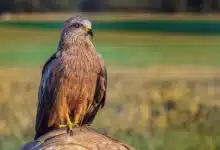
Geographic Range & Distribution
The geographic ranges of Ed Szupel’s featured birds of prey span multiple continents and diverse habitats, reflecting their adaptive versatility. The Sharp-shinned Hawk (Accipiter striatus) is widespread across North America, breeding throughout forests from Alaska and Canada down to northern Mexico. It migrates to Central America and the southern United States in winter, favoring dense woodlands and suburban areas.
The Cooper’s Hawk (Accipiter cooperii) shares a similar range but is more commonly found in the United States and southern Canada. It thrives in mixed forests and increasingly in urban and suburban environments, where it preys on birds and small mammals.
The Egyptian Vulture (Neophron percnopterus) has a broad range across southern Europe, northern Africa, the Middle East, and parts of the Indian subcontinent. It favors open landscapes, semi-arid regions, and mountainous areas, often near human settlements where it opportunistically scavenges.
The Secretary Bird (Sagittarius serpentarius) is native to sub-Saharan Africa, particularly in savannas, grasslands, and open plains. Its range extends from Sudan and Ethiopia southwards to South Africa. This terrestrial raptor is adapted to walking long distances in search of prey.
The Short-toed Eagle (Circaetus gallicus) breeds in southern Europe, northern Africa, and parts of Asia, wintering in sub-Saharan Africa and India. It prefers open woodlands, scrublands, and semi-desert regions where its reptilian prey is abundant.
The Osprey (Pandion haliaetus) is the most cosmopolitan, with a near-global distribution. It is found on every continent except Antarctica, inhabiting coastal regions, rivers, lakes, and reservoirs. Its migratory populations travel thousands of kilometers between breeding and wintering grounds.
Physical Description
Birds of prey exhibit considerable variation in size, plumage, and morphology, all adaptations to their hunting styles and habitats. The Sharp-shinned Hawk is among the smaller raptors in North America, measuring 23 to 35 centimeters in length with a wingspan of 43 to 58 centimeters. It weighs approximately 110 to 220 grams. This hawk displays a blue-gray back, reddish barring on the chest, and a long-tailed silhouette aiding in maneuvering through dense forests.
The Cooper’s Hawk is larger and more robust, ranging from 35 to 50 centimeters in length with a wingspan of 62 to 90 centimeters, and weighing between 220 to 600 grams. Its plumage resembles that of the Sharp-shinned but is more heavily barred and its tail rounded rather than squared.
The Egyptian Vulture is a medium-sized scavenger, about 47 to 65 centimeters long with a wingspan of 1.7 meters. It weighs 1.5 to 2.5 kilograms. Its striking white plumage contrasted with black flight feathers and a yellow, bare face make it unmistakable among vultures.
The Secretary Bird stands out for its unusual body shape, with long legs adapted for terrestrial hunting. It measures 1.3 meters tall with a wingspan up to 2.1 meters and weighs 2.3 to 4.5 kilograms. Its gray body, black flight feathers, and distinctive crest of long feathers on the head give it a unique silhouette.
The Short-toed Eagle is medium-large, about 60 to 70 centimeters in length with a wingspan of 160 to 180 centimeters, weighing between 1.3 and 2 kilograms. It has pale underparts with dark spots and red eyes adapted for detecting reptiles from afar.
The Osprey is a large, fish-eating raptor measuring 50 to 66 centimeters in length with a wingspan of 1.5 to 1.8 meters and weighing around 1.2 to 2 kilograms. It has a white underside, dark brown upperparts, a distinctive dark eye stripe, and reversible outer toes to grasp slippery fish.
Behavior & Diet
Behavioral adaptations in birds of prey reflect their hunting techniques and dietary needs. The Sharp-shinned Hawk is a swift, agile flyer that primarily preys on small birds, catching them mid-flight with rapid maneuvers through forests. It also occasionally hunts small mammals and insects.
The Cooper’s Hawk is similarly agile but larger, often ambushing birds at feeders or in woodland edges. It feeds predominantly on medium-sized birds such as doves and starlings but will also take small mammals like squirrels.
The Egyptian Vulture is primarily a scavenger, feeding on carrion, but it also uses tools to crack open eggs, such as ostrich eggs, by dropping stones. It supplements its diet with insects, small reptiles, and even human refuse, highlighting its opportunistic nature.
The Secretary Bird hunts on foot, stalking through grasslands and savannas to catch snakes, lizards, insects, and small mammals. It is famous for killing venomous snakes by stomping on them with its powerful legs.
The Short-toed Eagle specializes in reptiles, especially snakes and lizards. It hunts by soaring and scanning the ground carefully before pouncing. Its diet may also include amphibians and small mammals, but reptiles dominate.
The Osprey is a remarkable fisher, diving feet-first into water to catch fish with its sharp talons. It feeds almost exclusively on live fish, which it carries back to a perch to consume. Ospreys have specialized scales on their feet and reversible outer toes to help grip slippery prey. According to Audubon Society, this species is well documented.
Breeding & Reproduction
Breeding strategies among these birds of prey vary but generally involve territoriality, nest building, and parental care. The Sharp-shinned Hawk builds stick nests high in conifers or deciduous trees. The female lays 3 to 8 eggs, incubated for about 30 days, with both parents feeding the young until fledging at 3 to 4 weeks. According to RSPB, this species is well documented.
Cooper’s Hawks build bulky stick nests in trees, often reusing old nests. They typically lay 3 to 5 eggs, with incubation lasting about 30 to 36 days. Both parents participate in feeding the chicks, which fledge after approximately 30 days.
Egyptian Vultures nest on cliffs, caves, or buildings, laying 1 to 3 eggs in simple nests. Incubation lasts around 42 days, and the chicks depend on parental care for up to three months.
Secretary Birds build large stick nests in acacia trees or thorn bushes, laying usually 2 eggs. Incubation is about 42 days, with both parents involved in feeding the chicks. Juveniles remain dependent for several months before becoming independent.
The Short-toed Eagle builds nests high in trees or on cliffs, laying 1 to 3 eggs. Incubation lasts nearly 40 days, and the young fledge after about 60 days. Parents fiercely defend their nesting territory.
Ospreys construct huge nests of sticks on platforms, trees, or man-made structures near water. They lay 2 to 4 eggs, incubated mainly by the female for about 36 to 42 days. Both parents feed the chicks, which fledge after 8 to 10 weeks.
Conservation Status
Conservation status among these raptors varies widely depending on threats such as habitat loss, poisoning, and human disturbance. According to the IUCN Red List, the Sharp-shinned Hawk is listed as Least Concern, benefiting from adaptability to suburban environments.
The Cooper’s Hawk also holds a Least Concern status, with populations stable or increasing due to urban adaptability and legal protections.
The Egyptian Vulture is classified as Endangered due to rapid declines from poisoning, habitat loss, and collisions with power lines. Conservation efforts focus on reducing threats and protecting nesting sites.
The Secretary Bird is Vulnerable, facing habitat degradation and hunting pressures in parts of its range. Conservation programs aim to preserve savanna habitats and reduce human-wildlife conflict.
The Short-toed Eagle is classified as Least Concern but faces localized threats from habitat loss and persecution in some areas.
The Osprey is generally Least Concern globally, though some regional populations have faced declines historically due to pesticide use (notably DDT). Conservation measures and bans on harmful chemicals have allowed recovery in many areas.
Interesting Facts
The Sharp-shinned Hawk is one of the smallest accipiter hawks but a fierce predator, capable of taking prey larger than itself. Its rapid wingbeats and short wings enable incredible agility through dense forests, a trait admired by birdwatchers.
Cooper’s Hawks have adapted well to urban environments, often seen darting through backyards and parks. Their success in suburban areas has made them a familiar sight to many bird enthusiasts.
The Egyptian Vulture is one of the few bird species known to use tools, a sign of remarkable intelligence. It decorates its nests with bright objects like plastic or cloth, although the reasons for this behavior remain a mystery.
The Secretary Bird’s long legs and terrestrial hunting method are unique among raptors. It can deliver powerful stomps that kill venomous snakes, making it a vital predator in African grasslands.
Short-toed Eagles have exceptional eyesight, allowing them to spot snakes from hundreds of meters above. Their slow, soaring flight conserves energy while scanning for prey.
The Osprey’s reversible outer toe and spiny foot pads are specialized adaptations that help it grip slippery fish securely. It can hover briefly before plunging into water, a spectacular behavior prized by wildlife photographers.
Ed Szupel’s photography captures these incredible birds at their most dynamic, providing an invaluable window into the lives of these skilled hunters. Through his lens, viewers gain a deeper appreciation for the diversity and ecological importance of birds of prey worldwide.
In conclusion, the birds of prey featured in Ed Szupel’s work exemplify the incredible adaptations and ecological roles of raptors. From the forest-dwelling Sharp-shinned and Cooper’s Hawks to the savanna-stalking Secretary Bird and globally distributed Osprey, each species showcases unique evolutionary traits. While many enjoy stable populations, ongoing conservation efforts remain critical to protect vulnerable species like the Egyptian Vulture and Secretary Bird. As apex avian predators and scavengers, birds of prey maintain the balance of ecosystems and continue to fascinate nature lovers across the globe.


