Cuckooshrikes are a fascinating group of birds belonging to the family Campephagidae, known for their mostly insectivorous diet and often striking plumage. Despite the name, cuckooshrikes are not closely related to either cuckoos or shrikes but represent their own distinct lineage within the passerine birds. These birds are found primarily across the tropical and subtropical regions of Asia, Australasia, and parts of Africa, where they occupy a variety of forested habitats. The family Campephagidae includes numerous species with diverse sizes and colors, many of which are important components of their ecosystems as predators of insects and other small invertebrates. This article will explore the taxonomy, distribution, physical traits, behavior, reproduction, conservation status, and some intriguing facts about cuckooshrikes, providing a comprehensive overview for birdwatchers and nature enthusiasts alike.
Scientific Classification
Cuckooshrikes belong to the family Campephagidae, which is composed of about 90 species grouped into several genera. The most species-rich genus is Coracina, which includes many well-known cuckooshrikes such as the Black-faced Cuckooshrike (Coracina novaehollandiae) and the Large Cuckooshrike (Coracina macei). Other genera within the family include Campephaga, Lalage, and Edolisoma. The family name Campephagidae translates roughly to “caterpillar eaters,” highlighting their preference for insect prey.
Within the genus Coracina, species display considerable variation, with some restricted to islands or small geographic regions, while others have a broader distribution. For example, the Sunda Cuckooshrike (Coracina larvata) is native to parts of Southeast Asia, while the Reunion Cuckooshrike (Coracina newtoni) is endemic to the island of Réunion in the Indian Ocean. The taxonomy of cuckooshrikes has undergone revisions over the years, with molecular studies helping to clarify relationships within the group, sometimes resulting in species being split or moved between genera.






Geographic Range & Distribution
Cuckooshrikes are predominantly found in the Old World tropics, with their range extending across South and Southeast Asia, parts of the Indian subcontinent, the islands of Indonesia and the Philippines, New Guinea, Australia, and several islands in the Pacific and Indian Oceans. Some species, such as the Black-faced Cuckooshrike, have a wide distribution ranging from Australia through New Guinea and into parts of Indonesia. Others, like the Mauritius Cuckooshrike (Coracina typica) and the Madagascar Cuckooshrike (Coracina cinerea), are restricted to specific islands.
Many cuckooshrikes inhabit tropical and subtropical forests, including rainforests, dry forests, and montane woodlands. Certain species have adapted to secondary growth or even urban environments. For instance, the Black-faced Cuckooshrike is often observed in open woodlands and parks, making it a common sight for birdwatchers in Australia. Island species frequently have small ranges and specialized habitat requirements, which can make them vulnerable to habitat loss and introduced predators.
Physical Description
Cuckooshrikes vary in size from relatively small to medium-sized passerines. Their length generally ranges from approximately 20 to 35 centimeters (8 to 14 inches), with a wingspan between 30 and 50 centimeters (12 to 20 inches). Weight varies accordingly, often between 40 to 100 grams (1.5 to 3.5 ounces), depending on the species. The Large Cuckooshrike, for example, can reach up to 35 cm in length and weigh near the upper end of this range.
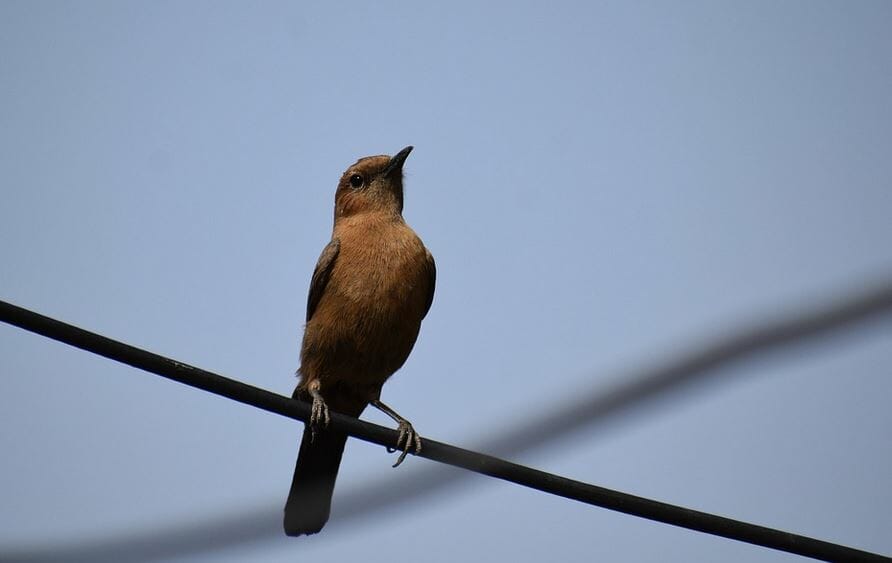
In appearance, cuckooshrikes typically have slender bodies, long wings, and medium-length tails. Their plumage is often a combination of shades of gray, black, and white, although some species exhibit blue or greenish tints. Males and females usually appear similar, though slight sexual dimorphism occurs in some species. Juveniles tend to have more mottled or barred plumage, providing camouflage while they are vulnerable.
Many cuckooshrikes have a distinctive hooked bill, which is a useful adaptation for capturing and handling their insect prey. The Black-faced Cuckooshrike, for example, features a prominent black facial mask contrasting with lighter gray body feathers. Island species often show unique color patterns that evolved due to geographic isolation, such as the bright blue of the Cerulean Cuckooshrike (Coracina temminckii) from Indonesia’s Sulawesi island.
Behavior & Diet
Cuckooshrikes are primarily insectivorous, feeding mostly on caterpillars, beetles, ants, and other arthropods. They forage actively in the mid to upper canopy of forests, sometimes sallying out to catch flying insects in a manner similar to flycatchers. Some species supplement their diet with small fruits and berries, especially during the non-breeding season when insect availability may decline.
These birds are generally solitary or found in pairs but may join mixed-species flocks when foraging. Their vocalizations vary widely across species but commonly include loud, melodious whistles or harsh chattering calls. The Black-faced Cuckooshrike, for instance, has a distinctive clear, whistled call often heard in open woodlands.
Many cuckooshrikes display territorial behavior during the breeding season, defending their nesting areas aggressively. They are agile flyers, capable of rapid, direct flight through dense foliage. Their strong, hooked bills aid in gripping and manipulating prey, which they often glean from leaves and branches. Some species have been observed using their bills to remove the protective hairs from caterpillars before consumption, demonstrating a notable behavioral adaptation for dealing with otherwise toxic or unpalatable prey.
Breeding & Reproduction
Breeding habits of cuckooshrikes vary among species but generally involve the construction of simple cup-shaped nests made from twigs, leaves, and other plant materials. These nests are usually placed in trees or dense shrubs, often well concealed within foliage to protect against predators. Clutch sizes typically range from two to three eggs, which are pale with brown or reddish speckling. According to RSPB, this species is well documented.
Both parents usually participate in incubating the eggs and feeding the hatchlings. Incubation periods last approximately 14 to 18 days, depending on the species. After hatching, the young are altricial, meaning they are born helpless and require considerable parental care. The fledging period may last two to three weeks, during which time the parents continue to provide food and protection. According to Cornell Lab of Ornithology, this species is well documented.
Unlike the namesake cuckoos, cuckooshrikes are not brood parasites; they raise their own young. Breeding seasons typically coincide with periods of high insect abundance, ensuring sufficient food for the chicks. In tropical regions, breeding may occur year-round or during extended seasons, while more temperate species breed primarily in spring and summer months.
Conservation Status
The conservation status of cuckooshrike species varies widely. Many species with broad ranges and adaptable habits, such as the Black-faced Cuckooshrike, are classified as Least Concern by the International Union for Conservation of Nature (IUCN). These birds benefit from their ability to thrive in diverse habitats, including disturbed and urban areas.
However, several island-endemic species face significant threats. Habitat loss due to deforestation, agricultural expansion, and urban development poses the greatest risk. For example, the Cebu Bar-bellied Cuckooshrike (Coracina striata cebuensis) is considered extinct since the early 20th century, largely due to habitat destruction on Cebu Island in the Philippines. Other island species such as the Maros Cicadabird (Coracina tenuirostris edithae) are also extinct or possibly so.
Introduced predators like rats and cats further imperil vulnerable island populations. Conservation efforts focus on habitat protection, invasive species management, and in some cases, captive breeding and reintroduction programs. Continued research is essential to monitor population trends and implement effective conservation strategies for the more threatened cuckooshrike species.
Interesting Facts
One of the most intriguing features of cuckooshrikes is their name, which combines “cuckoo” and “shrike” despite their lack of close relation to either group. This name reflects early naturalists’ attempts to classify them based on superficial similarities to other birds. In reality, cuckooshrikes belong to their own unique family within the passerines.
Cuckooshrikes play an important ecological role as controllers of insect populations, helping maintain forest health by preying on potentially harmful caterpillars and other insects. Their presence in mixed-species foraging flocks enhances biodiversity and facilitates more efficient feeding by reducing competition.
Some species exhibit fascinating vocal abilities, with clear, melodious songs that can carry long distances through dense forest. This vocal prowess aids in territory defense and mate attraction. Additionally, their ability to adapt to a range of habitats, including secondary forests and even urban parks, showcases their ecological flexibility.
Island species often provide valuable insights into evolutionary processes such as speciation and adaptation, with unique morphological and behavioral traits shaped by their isolated environments. The extinction of several island cuckooshrike subspecies highlights the vulnerability of island ecosystems and the urgent need for conservation.
In summary, cuckooshrikes are a diverse and ecologically significant group of birds with a broad geographic range and fascinating behaviors. Their varied plumage, insectivorous diet, and complex social interactions make them a rewarding subject for birdwatchers and researchers alike. Protecting their habitats and understanding their biology remain essential for ensuring these striking birds continue to thrive in the wild.