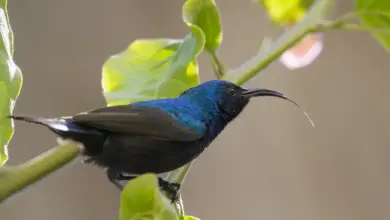
The Collared Inca (Coeligena torquata) is a striking species of hummingbird native to the humid montane forests of the northern Andes in South America. Renowned for its vibrant iridescent plumage and distinctive white throat patch, this bird captures the attention of birdwatchers and nature enthusiasts alike. This medium-sized hummingbird thrives in diverse cloud forest habitats, playing a vital role in pollination across its range. The Collared Inca’s beauty and ecological importance make it a fascinating subject for anyone interested in Andean wildlife.
Scientific Classification
The Collared Inca belongs to the family Trochilidae, which encompasses all hummingbirds, a group known for their diminutive size, rapid wingbeats, and remarkable hovering abilities. The genus Coeligena includes several species often referred to as incas, named for their association with the Andean region. The species name torquata derives from Latin, meaning “collared,” a reference to the bird’s distinctive white throat patch that resembles a collar.
First described scientifically by the French ornithologist Auguste Boissonneau in 1840, the Collared Inca has several recognized subspecies that vary slightly in coloration and distribution. These include Coeligena torquata torquata (the nominate subspecies), C. t. conradii, C. t. fulgidigula, C. t. margaretae, C. t. insectivora, and C. t. eisenmanni. Some taxonomists have debated the status of the Gould’s Inca (Coeligena inca), which inhabits southern Peru and Bolivia, sometimes treating it as a subspecies of the Collared Inca. However, most authorities currently recognize it as a separate species based on genetic and morphological differences.






Geographic Range & Distribution
The Collared Inca is distributed primarily along the humid Andean cloud forests spanning western Venezuela, Colombia, Ecuador, and northern Peru. It favors elevations typically between 1,200 and 3,000 meters (approximately 3,900 to 9,800 feet), where the climate is moist and temperate. These montane forests provide the dense foliage and floral diversity essential to the hummingbird’s survival.
Within its range, the Collared Inca inhabits both primary and secondary forests, forest edges, and sometimes gardens or plantations near natural forest patches. Its presence is closely linked to the availability of flowering plants that provide nectar, its primary food source. While it primarily occupies the eastern slopes of the Andes, it also occurs in some western Andean valleys, depending on local habitat conditions.
The species exhibits some regional variation in population density. It tends to be more common in Colombia and Ecuador, where protected cloud forest reserves offer optimal habitat conditions. In Venezuela and Peru, populations are more scattered but stable. The Collared Inca is generally considered resident, with no significant migratory movements, although local altitudinal shifts may occur seasonally in response to flowering cycles.
Physical Description
The Collared Inca is a medium-sized hummingbird, measuring approximately 12 to 13 centimeters (4.7 to 5.1 inches) in length, with a wingspan of about 15 to 17 centimeters (6 to 6.7 inches), and weighing between 6 and 8 grams. This size places it among the larger hummingbirds of its habitat, allowing for agile flight through dense forest understory and canopy.
Males are particularly eye-catching, with a glossy metallic green plumage covering most of their body. Their head and upperparts display a darker, almost black-green shade, contrasting sharply with a distinctive white throat patch or “collar” that gives the species its common name. The breast and belly maintain an iridescent green appearance, while the undertail coverts are white, enhancing the bird’s striking pattern. The tail feathers are dark with a subtle green sheen.
Females, while similar in overall coloration, tend to have a less pronounced or somewhat mottled white throat patch and generally duller plumage. Juveniles resemble females but often appear more muted and less iridescent. Both sexes have a slightly curved black bill, adapted for feeding on tubular flowers, and relatively short legs suited for perching.
Behavior & Diet
The Collared Inca is an active and agile feeder, exhibiting the characteristic hovering flight that hummingbirds are famous for. It feeds primarily on nectar from a variety of native flowering plants, including members of the Ericaceae, Melastomataceae, and Gesneriaceae families. It favors tubular flowers that accommodate its slender bill and long tongue, which can extend rapidly to extract nectar.
In addition to nectar, the Collared Inca supplements its diet with small insects and spiders, which provide essential proteins and nutrients. It gleans these arthropods from leaves and bark or catches them in mid-air. This omnivorous diet is typical for hummingbirds, supporting their high metabolism and energetic lifestyle.
Territorial behavior is common among males, especially during the breeding season. They vigorously defend rich nectar sources from rivals through rapid chases and displays of agility. The Collared Inca perches frequently, often on exposed twigs or vines, scanning for intruders or potential mates. Despite its territoriality, this hummingbird can sometimes be seen feeding alongside other species when nectar is abundant. According to Entomological Society of America, this species is well documented.
Breeding & Reproduction
The breeding season of the Collared Inca varies geographically but generally coincides with periods of increased floral abundance, typically during the rainy season. Hummingbirds are solitary breeders, and the male’s involvement ends shortly after mating, with no participation in nest building or chick rearing. According to IUCN Red List, this species is well documented.
Males perform elaborate courtship displays to attract females, often flying in distinctive U-shaped or shuttle flights in front of potential mates. They may also flare their iridescent feathers to catch the light and emphasize their colorful throat patches. These displays are crucial in a species where pair bonds are absent and females select mates based on the quality of these performances.
Females construct small, cup-shaped nests using soft plant fibers, lichens, and spider silk, attaching them securely to thin branches or leaves. The nests typically measure only a few centimeters in diameter, perfectly camouflaged against the surrounding foliage. Females lay two tiny white eggs and incubate them alone, with incubation lasting about 14 to 16 days. After hatching, chicks are fed regurgitated nectar and insects until fledging, which occurs roughly 20 to 25 days later. The female continues to care for the young until they are independent.
Conservation Status
The International Union for Conservation of Nature (IUCN) currently lists the Collared Inca as a species of Least Concern. Its wide distribution and relatively stable population contribute to this assessment. However, localized threats do exist, primarily habitat loss due to deforestation and land conversion for agriculture or urban development.
Cloud forests, the primary habitat of the Collared Inca, are highly vulnerable to logging and human encroachment. Fragmentation of these forests can isolate populations and reduce available food sources. Conservation efforts aimed at protecting Andean cloud forests indirectly benefit the Collared Inca and numerous other endemic species.
Some subspecies with more restricted ranges, such as Coeligena torquata eisenmanni found in the Cordillera Vilcabamba of southern Peru, may face higher risks due to their limited habitat. Ongoing monitoring and habitat preservation are essential to ensure long-term survival of the species across its range.
Interesting Facts
The Collared Inca hummingbird exhibits several fascinating behaviors and adaptations that highlight the marvels of hummingbird biology. One remarkable trait is its ability to hover in place by rapidly beating its wings up to 50 times per second, allowing precise access to nectar within flowers. This wing motion creates the characteristic humming sound that gives the family its name.
Unlike many hummingbirds that migrate seasonally, the Collared Inca typically remains within its montane habitat year-round, relying on local altitudinal movements to follow flowering cycles. This stability allows birdwatchers a higher chance to observe it throughout the year.
Another interesting aspect is the bird’s iridescent plumage, which changes color depending on the angle of light. This results from the microscopic structure of the feathers rather than pigments, creating dazzling displays during courtship or territorial encounters.
Finally, the Collared Inca’s role as a pollinator cannot be overstated. Its frequent visits to flowers facilitate the transfer of pollen, supporting the reproductive success of many Andean plant species. This mutualistic relationship underscores the interconnectedness of ecosystems and the importance of preserving species like the Collared Inca.
In conclusion, the Collared Inca (Coeligena torquata) is a captivating hummingbird species emblematic of the rich biodiversity found in the Andean cloud forests. Its shimmering plumage, energetic behavior, and ecological significance make it a valuable subject for study and conservation. By protecting its habitat and promoting awareness, we can ensure that future generations continue to enjoy the vibrant presence of the Collared Inca in the misty mountains of South America.