The Collared Flycatcher ( Ficedula albicollis ) is a small and striking passerine bird that belongs to the Old World flycatchers (Muscicapidae). The Western Palearctic is home to four species of black-and-white flycatchers. They are known for their elegant behaviour and sharp contrast in plumage. This migratory bird breeds primarily in Southeast Europe and Southwest Asia. It spends its winters in sub-Saharan Africa. Although it is common in its core range, the vagrant bird in Western Europe is highly sought after by birdwatchers.
Taxonomy of Flycatchers and Their Relationship with Other Flycatchers
Collared Flycatchers are small, insectivorous bird species that have been adapted to aerial feeding. The Pied Flycatcher ( Ficedula hyperleuca ) is closely related, and their ranges overlap in Central and Eastern Europe. Due to the close genetic relationship between them, they can hybridise, which can make identification difficult, especially when outside of breeding season. The Collared Flycatcher, despite its close genetic relationship, is still recognised as a separate species because of differences in plumage and song, habitat preferences, and breeding behaviour.

Geographical Distribution and Migratory Range
The breeding range for the Collared Flycatcher includes Central Europe, including Hungary, Romania and Poland, and parts of Ukraine and southern Scandinavia. It also extends into southwest Asia and particularly Turkey. After breeding, the species migrates long distances to sub-Saharan Africa, where they spend the winter in warm climates and with plenty of food. Individuals may occasionally wander westward during migration and make rare appearances in countries like the United Kingdom. France or the Netherlands.


Woodland Specialisation and Preferred Habitat
Collared flycatchers prefer oak forests. The species is also found in mixed forests with beech, birch and other trees, in large gardens and orchards, as well as in wooded parkland. This species prefers habitats that have an open understory and scattered openings. These conditions allow it to forage efficiently. The nesting site is provided by old trees with cavities. Collared Flycatchers tend to avoid fragmented or heavily managed forests and are more sensitive than other flycatchers to disturbances to their habitat.
Physical Dimensions and Appearance
Collared Flycatchers are small birds, measuring between 12 and 13.5 centimetres (4-7 inches). It has an elegant and bold appearance, despite its small size, especially during breeding season. The compact body, upright posture and agile flight of this insectivore reflect its lifestyle. Its relatively large head, short neck, and long wings give the species a distinctive appearance when perched.
Breeding Male Pluage and Identification Features
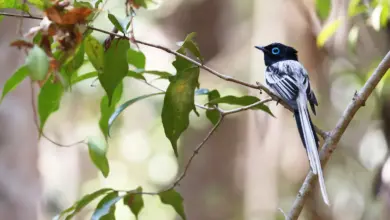
Collared Flycatchers that are breeding males can be identified by their distinctive white collar. The males have jet black upperparts with clean white underparts. They are separated by a striking white collar that wraps around their neck. Other identification features include a large white wing patch and white outer tail feathers. A bold white forehead patch is also present. The high-contrast feathers are important for mate attraction, territorial displays and male identification.
Female, non-breeding and juvenile plumage
Identification becomes difficult outside of the breeding season. The black and white contrasts of breeding males are not present in females, non-breeding males, or juveniles. Instead of black, brownish tones are used, and the white markings become less prominent. Visual identification is difficult because these birds are similar to Pied Flycatchers. The juveniles are particularly cryptic with their mottled brown feathers that provide camouflage in the early stages of life.
Bill Structure and Feeding Adjustments
The black bill is broad and pointed, but has a wide base. This makes it ideal for catching flying insects. It relies more on speed, agility and precision timing than brute strength, like other aerial insectivores. The shape of the bill allows it to quickly snap shut on moving prey. Meanwhile, the bristles and wide gape help funnel insects into the mouth. The Collared Flycatcher is a highly efficient hunter due to its adaptations.
Diet and Feeding Ecology
Collared Flycatchers eat insects and other small invertebrates primarily. The majority of the food is made up of flies, moths and beetles. Caterpillars are also taken from oak leaves. Arachnids, such as spiders and other arachnids, are also eaten. During breeding season, insects rich in protein are vital for the rapid growth of chicks. Before migration in autumn, the bird will also consume small fruits and berries to provide extra energy for its long trip to Africa. According to Bug Guide, this species is well documented.
Hunting Techniques and Behaviour
The Collared Flycatcher is a skilled aerial hunter that uses a technique called “sallying.” From its perch, it launches into the air to catch flying insects. It often returns to the perch afterwards. This behaviour can be repeated several times in a single feeding session. It can quickly adjust its flight path and speed, which allows it to accurately intercept moving prey. It also hunts insects on leaves and branches. This is especially true when there are many caterpillars. According to iNaturalist, this species is well documented.

Breeding Seasons and Territorial Behaviour
When Collared Flycatchers migrate from Africa back to Europe, the breeding season begins in spring. The males are the first to arrive, and they establish territories that they vigorously defend through song and display. The song is composed of trills and slow whistles that are quite different from the Pied Flycatcher’s. The song is used to both attract females and warn rival males. It can be heard resonating through a deciduous forest during the breeding season.
Nest Building and Egg Laid
Nest building begins once a female has selected a male’s territory. The Collared Flycatcher nests in cavities. It uses holes in trees and nest boxes that humans provide. The female builds a cup-shaped home from grasses and moss. She usually lays 4 to 6 pale blue eggs that are often marked with darker marks. Nests are typically located at a moderate level above the forest floor to reduce the risk of predators.
Incubation and chick rearing
The male brings food to the female during the incubation period. Both parents are responsible for protecting and feeding the chicks after hatching. Nestlings are fueled by an abundance of insects to grow quickly. In a matter of weeks, young birds leave the nest and begin to learn how to fly. After a brief period, the family stays together before the young birds become independent and start preparing for migration.
Migration to Africa, Seasonal Movements
Collared Flycatchers migrate to sub-Saharan Africa after the breeding season. They spend the winter there in habitats that are rich in insects. The migration phase is one of the most demanding and dangerous phases in a species’ life cycle. It requires precise timing, energy reserves and a high level of risk tolerance. The species’ appearance in Western Europe occasionally during migration highlights navigation challenges and the impact of weather patterns on migration routes.
Vocalizations & Communication
The song of the Collared Flycatcher can be used to identify it, especially in areas where there are other species that look similar. The vocalisations of this species consist of trills and whistles that are slow but slightly straining. They lack the rapid and varied phrases of the Pied Flycatcher. Calls can be used to communicate between mates or alert other birds of potential threats. The vocal behaviour is important in maintaining territorial boundaries and ensuring breeding success.
Conservation Status and Threats
Less Concern is the current International Union for Conservation of Nature classification for Collared Flycatchers, with stable populations. The species is still threatened by habitat fragmentation and deforestation, as well as changes in forest management in Eastern Europe. Climate change can also impact migration timing and the availability of food. Despite these challenges, the species has proven resilience and has benefited from conservation measures like protected forests and nest boxes.

Conservation and Habitat protection are important
To protect the Collared Flycatcher, it is important to preserve mature deciduous forests as well as promote sustainable forestry practices. Conservation efforts are also focused on monitoring migration routes and maintaining natural tree cavities. Conservationists can help to ensure the long-term existence of this species, as well as many others that share its ecosystem, by protecting habitats on both breeding grounds and wintering grounds.
The Forests of Europe: A Symbol for Biodiversity
Collared Flycatchers are a striking bird and an important symbol of the deciduous forest in Europe. Birdwatchers and nature lovers love its elegant plumage and melodious song. It also makes an impressive migration. We can ensure future generations will continue to enjoy the beauty of the Collared Flycatcher, a small bird that plays a major role in nature.