The **Cerulean Cuckooshrike** (Coracina temminckii) is a striking bird species endemic to the Indonesian archipelago, known for its vivid blue coloration and elusive behavior. This medium-sized passerine inhabits the lush subtropical and tropical moist lowland and montane forests of Indonesia, where it plays a subtle but important role in the ecosystem. Often overlooked due to its shy nature and dense forest habitat, the Cerulean Cuckooshrike remains a fascinating subject for birdwatchers and ornithologists alike, offering insights into the rich biodiversity of Southeast Asia.
Taxonomy & Classification
The Cerulean Cuckooshrike belongs to the family Campephagidae, which encompasses a diverse group of birds commonly referred to as cuckooshrikes due to their superficial resemblance to both cuckoos and shrikes. Its scientific name, Coracina temminckii, honors the Dutch ornithologist Coenraad Jacob Temminck, who contributed significantly to early avian taxonomy. Within the genus Coracina, the Cerulean Cuckooshrike is one of several species distinguished by their predominantly blue or grey plumage and insectivorous diet.
This species was first formally described in the early 19th century and has since been recognized as a distinct species due to its unique coloration and vocalizations. Taxonomically, cuckooshrikes are part of the order Passeriformes, the largest bird order that includes perching birds and songbirds. Despite their name, cuckooshrikes are not closely related to true shrikes (family Laniidae) or cuckoos (family Cuculidae), but rather form their own distinct lineage within the passerines.






Geographic Range & Distribution
The Cerulean Cuckooshrike is endemic to Indonesia, primarily found on the islands of Sulawesi and several surrounding smaller islands. Its range is restricted to this part of Wallacea, a biogeographical zone known for high levels of species endemism due to its isolation between the Asian and Australian continental plates. Within these islands, the Cerulean Cuckooshrike favors subtropical or tropical moist lowland forests as well as montane forests at elevations ranging from sea level up to approximately 1,800 meters.
Its habitat preference includes dense, primary forests and sometimes mature secondary forests, where canopy cover is thick and insect prey is abundant. The bird’s distribution is patchy and localized, often limited by the availability of suitable forest habitats. While it is not known to migrate long distances, it may undertake short altitudinal movements seasonally in response to food availability or breeding demands.
Physical Description & Appearance
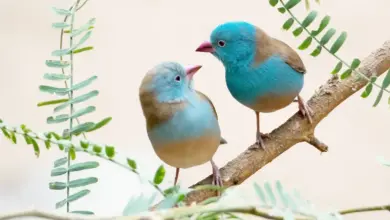
The Cerulean Cuckooshrike is a medium-sized bird, measuring approximately 24 to 27 centimeters in length, with a wingspan that typically ranges between 35 and 40 centimeters. Adult males are notable for their brilliant cerulean blue plumage, which covers the head, back, and wings, contrasting with paler underparts. Females tend to display a duller blue or greyish-blue coloration with subtle barring on the belly, providing camouflage within the shaded forest canopy.
This species has a slender build with a slightly hooked bill characteristic of the cuckooshrike family, adapted for its insectivorous diet. The eyes are dark, and the legs are strong, suited for perching on branches as it forages. Juvenile birds often show mottled grey and blue plumage until their adult colors develop. The overall sleek and streamlined appearance aids in maneuvering through dense foliage and makes the Cerulean Cuckooshrike a visually distinctive species within its habitat.
Behavior & Diet
The Cerulean Cuckooshrike is primarily insectivorous, feeding on a wide variety of insects and other arthropods found in the forest canopy. It forages by gleaning insects from leaves and branches, occasionally making short sallies to catch flying prey mid-air. Its diet includes caterpillars, beetles, ants, and occasionally small lizards or fruits, though insects remain the primary food source. This foraging behavior plays an important role in controlling insect populations within its ecosystem.
Typically a shy and reserved bird, the Cerulean Cuckooshrike is most often heard rather than seen. Its vocalizations consist of soft, melodious whistles and trills that carry through the forest understory, serving as communication between mates or territorial signals. It usually forages alone or in pairs, but can sometimes be observed joining mixed-species feeding flocks, particularly during non-breeding seasons, which helps reduce predation risk and increases foraging efficiency. According to RSPB, this species is well documented.
Breeding & Reproduction
Breeding behavior of the Cerulean Cuckooshrike is not extensively documented, but like other cuckooshrikes, it is believed to be monogamous with pairs forming strong bonds during the breeding season. Nests are typically constructed high in the forest canopy, built with twigs, leaves, and other plant materials. The female usually lays two to three eggs that are pale with subtle speckling, blending well into the nest environment to avoid predation. According to eBird, this species is well documented.
Both parents are involved in incubating the eggs and feeding the chicks once hatched. The incubation period lasts approximately 14 to 16 days, and fledging occurs about two weeks after hatching. Nestlings are altricial, born blind and featherless, requiring significant parental care. Breeding seasons appear to coincide with periods of increased insect abundance, often during or following the rainy season, ensuring ample food supply for growing chicks.
Conservation Status
The Cerulean Cuckooshrike is currently listed as **Least Concern** on the International Union for Conservation of Nature (IUCN) Red List. Although the species faces habitat loss due to logging, agricultural expansion, and infrastructure development within Indonesia, its relatively wide range and presence in several protected areas contribute to its current stable population status.
Nonetheless, ongoing deforestation and habitat degradation pose potential threats, particularly as lowland forests are cleared more rapidly. Conservation efforts emphasizing forest preservation and sustainable land use are vital to maintaining healthy populations of this species. Monitoring population trends and habitat conditions remains a priority to detect any future declines early. The Cerulean Cuckooshrike serves as an indicator species for the health of Indonesian forest ecosystems, highlighting the importance of conserving these biodiverse habitats.
Interesting Facts
The Cerulean Cuckooshrike’s vibrant blue color is not only striking to human observers but also plays a role in intraspecies communication, particularly during courtship displays. Unlike many birds whose colors are derived from pigments, the cerulean hue comes from the microscopic structure of the feathers, which refract light in a way that produces the vivid blue shade.
Despite its name, the Cerulean Cuckooshrike is neither a true cuckoo nor a shrike. The term “cuckooshrike” reflects the bird’s intermediate appearance and feeding habits but is a reminder of the complex evolutionary relationships among passerine birds. Additionally, this species is an important part of the ecosystem, helping control insect populations and contributing to the forest’s ecological balance.
Birdwatchers prize the Cerulean Cuckooshrike for its elusive presence and beautiful plumage, often considering a sighting a highlight of their Indonesian birding experiences. Its shy nature and preference for dense forest canopy make it a challenging but rewarding species to observe and photograph. Furthermore, its existence underscores the rich avian diversity of Wallacea, a region that continues to fascinate scientists and nature lovers alike.
In conclusion, the Cerulean Cuckooshrike (Coracina temminckii) is a remarkable bird emblematic of Indonesia’s forest biodiversity. Its unique coloration, specialized diet, and discreet behavior make it an intriguing subject for study and appreciation. While currently not threatened, ongoing conservation of its forest habitats is essential to ensure that future generations can continue to enjoy and learn from this beautiful species. By understanding and protecting birds like the Cerulean Cuckooshrike, we contribute to preserving the intricate web of life that sustains tropical forest ecosystems.