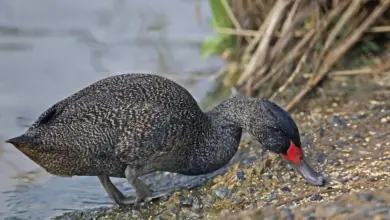
The Mexican Duck (Anas diazi) is a distinctive species of dabbling duck native to the southwestern United States and Mexico. Often overshadowed by its close relative, the Mallard, this species holds a unique place in North American waterfowl diversity. Mexican Ducks are medium-sized ducks that resemble female Mallards but possess subtle differences in coloration and vocalizations. While many individuals remain resident year-round, some populations undertake seasonal migrations. These ducks inhabit a variety of wetland environments, from rivers and lakes to marshes and ponds, where they feed primarily on plant material. Despite currently being classified as a species of Least Concern by the IUCN, the Mexican Duck faces ongoing threats from habitat loss, hybridization, and hunting pressure. Understanding this species’ taxonomy, ecology, and behavior is crucial for its continued conservation and for appreciating the rich avian biodiversity of the region.
Scientific Classification
The Mexican Duck is classified under the genus Anas, which includes many familiar dabbling ducks such as the Mallard (Anas platyrhynchos) and the American Black Duck (Anas rubripes). Its scientific name is Anas diazi, first described in the 19th century. Historically, the Mexican Duck was considered a subspecies of the Mallard and labeled Anas platyrhynchos diazi, reflecting a time when many “mallardine” ducks were grouped together based on superficial similarities and the ability to hybridize. However, advances in molecular genetics, especially studies analyzing mitochondrial DNA sequences, have clarified its status as a distinct species. These genetic studies reveal that the Mexican Duck is more closely related to the American Black Duck than to the Mallard, suggesting a relatively recent divergence from a common ancestor shared with other North American dabbling ducks.
Hybridization remains a significant factor in the Mexican Duck’s evolutionary story. Although capable of interbreeding with Mallards, Mexican Ducks maintain distinct behavioral and plumage characteristics that reinforce species boundaries under natural conditions. The occurrence of fertile hybrids is an example of incomplete reproductive isolation resulting from relatively recent allopatric speciation, where populations diverged geographically but have not yet developed complete genetic barriers. This complex relationship has led to ongoing debate among ornithologists about classification but firmly supports recognizing the Mexican Duck as a separate species.





Geographic Range & Distribution
The Mexican Duck inhabits a broad geographic range that includes the southwestern United States and much of Mexico. Its core range extends through Arizona, New Mexico, and western Texas in the U.S., southward into the Mexican states of Sonora, Chihuahua, Durango, Zacatecas, and as far south as Oaxaca. It is one of the few duck species endemic to this region, favoring the warmer climates and diverse wetland habitats found there.
Most Mexican Ducks are year-round residents within this range, particularly in areas where permanent water bodies exist. However, northern populations in the United States often migrate southward during winter months, moving into central and southern Mexico to avoid freezing conditions. These seasonal movements are not as extensive or regular as those of some other waterfowl species, reflecting the generally mild winters of much of their range.
Habitats occupied by Mexican Ducks include rivers, lakes, reservoirs, ponds, marshes, and irrigation canals. They prefer shallow wetlands rich in aquatic vegetation, which provide both food and shelter. The species is adaptable to natural and man-made wetlands but is sensitive to significant habitat degradation or loss. Urban expansion, water diversion, and agricultural development threaten wetland quality and availability, impacting local Mexican Duck populations.
Physical Description
The Mexican Duck is a medium-sized dabbling duck measuring approximately 51 to 56 centimeters (20 to 22 inches) in length, with a wingspan ranging from 81 to 94 centimeters (32 to 37 inches). Adults typically weigh between 600 and 900 grams (1.3 to 2 pounds), with males slightly larger than females. Both sexes display similar plumage patterns, making sexual dimorphism subtle but observable upon close examination.
Overall, the Mexican Duck bears a strong resemblance to a female Mallard, with mottled brown body plumage. However, the brown coloration tends to be richer and darker, sometimes showing warmer chestnut tones on the head and neck. The characteristic blue wing patch, or speculum, is bordered with white and becomes prominent during flight or when the bird is at rest with wings folded.
Males typically have a brighter yellow bill, whereas females possess a duller, olive-yellow bill with dark markings. The legs and feet are orange in both sexes. Unlike male Mallards, Mexican Ducks lack the iridescent green head plumage, which helps distinguish them from hybrids in the wild. The eyes are dark brown, framed by subtle facial markings that contribute to their camouflaged appearance in marshy environments.
Behavior & Diet
The Mexican Duck is primarily a dabbling duck, feeding mostly on the surface or just below the waterline rather than diving. It employs a combination of dabbling and grazing behaviors to obtain its diet, which consists mainly of aquatic vegetation, seeds, and occasionally small invertebrates. Common plant foods include pondweeds, sedges, water lilies, and various grasses found in wetland habitats. The species also supplements its diet with insects, crustaceans, and mollusks, especially during the breeding season when protein demands increase.
Mexican Ducks are generally shy and somewhat secretive, often hiding in dense vegetation near water. They tend to be less gregarious than Mallards, usually forming small groups rather than large flocks outside of the breeding season. Their vocalizations differ slightly from Mallards as well; males produce a nasal call, whereas females emit the classic “quack” sound familiar to many duck watchers.
These ducks are strong fliers and capable of short-distance migrations, but they typically remain close to their preferred wetland habitats. They are diurnal, active mostly during daylight hours, feeding in the early morning and late afternoon. Mexican Ducks often forage in shallow water or along muddy banks, using their broad bills to filter food items from the water and mud. According to Cornell Lab of Ornithology, this species is well documented.
Breeding & Reproduction
Breeding season for the Mexican Duck generally occurs in the spring and early summer, varying slightly depending on latitude and local climate. These ducks prefer nesting near water but can sometimes be found nesting farther inland, particularly on riverbanks or in dense vegetation adjacent to wetlands. Nests are typically shallow depressions lined with down and plant material, well concealed to protect against predators. According to BirdLife International, this species is well documented.
Females lay between 6 to 12 eggs per clutch, with an incubation period of approximately 24 to 28 days. Incubation is solely the responsibility of the female, who remains vigilant during this time. Ducklings are precocial, meaning they hatch with their eyes open and are capable of leaving the nest and feeding themselves shortly after hatching. Both parents may be involved in leading ducklings to water, though the female provides most of the care and protection.
Mexican Ducks have a relatively high reproductive success rate in suitable habitats, but nest predation by mammals, birds, and reptiles poses significant risks. Additionally, hybridization with Mallards during the breeding season can affect the genetic integrity of the species, as Mallard males often compete for mates, sometimes resulting in mixed pairs and hybrid offspring.
Conservation Status
The Mexican Duck is currently classified as a species of Least Concern by the International Union for Conservation of Nature (IUCN). Despite this relatively secure status, the species is experiencing a slow but noticeable decline in some parts of its range. The primary threats include habitat loss due to agricultural expansion, urban development, water diversion, and wetland drainage. These activities reduce the availability of suitable breeding and foraging habitats, directly impacting local populations.
Hunting pressure also poses a challenge, particularly as the Mexican Duck is sometimes mistaken for Mallards or hybrids in the field. Overhunting, especially during migration and wintering periods, can exacerbate population declines. Furthermore, the species faces a genetic threat from hybridization with Mallards. Mallards are highly adaptable and thrive in human-altered landscapes, spreading into areas historically dominated by Mexican Ducks. The resulting interbreeding blurs species boundaries, potentially leading to the loss of distinct Mexican Duck populations over time.
Conservation efforts emphasize wetland preservation and restoration as critical to maintaining viable Mexican Duck populations. Protecting natural habitats and managing hunting regulations can help reduce pressure on the species. Some studies suggest that preferential hunting of male Mallards in overlapping areas may help limit hybridization rates. Ongoing monitoring and research are vital to understanding population trends and assessing the effectiveness of conservation measures.
Interesting Facts
The Mexican Duck’s relationship with the Mallard highlights fascinating aspects of avian evolution and species boundaries. Despite frequent hybridization, Mexican Ducks maintain unique behavioral and plumage traits that allow them to persist as a separate species. This dynamic offers an excellent example of how hybrid zones function in nature and the complexities involved in defining species.
Unlike many dabbling ducks, Mexican Ducks often remain in the same general area year-round, demonstrating a strong site fidelity to local wetlands. This behavior makes them important indicators of wetland health in the arid regions they inhabit. Their presence signals functioning aquatic ecosystems, which support a wide array of other wildlife.
Photographers and birdwatchers prize the Mexican Duck for its subtle beauty and elusive nature. Observing these ducks in their natural habitat provides insight into the diverse wetland environments of the American Southwest and Mexico. Their adaptability to both pristine and human-modified landscapes underscores the delicate balance between wildlife and human activity in these regions.
Finally, the Mexican Duck serves as a reminder of the importance of preserving native species and habitats amid expanding human influence. It exemplifies the challenges conservationists face in protecting biodiversity and maintaining ecological integrity in increasingly fragmented landscapes.
In summary, the Mexican Duck is a unique and valuable component of North America’s waterfowl fauna. Its distinctive taxonomy, specialized habitat requirements, and ongoing conservation challenges make it a compelling subject for study and appreciation. Continued efforts to protect wetlands and monitor populations will be key to ensuring that this emblematic species thrives for generations to come.