Overview and Introduction
The Capercaillie (Tetrao urogallus), also known as the Western Capercaillie, is a large and striking species of grouse native to the coniferous forests of Europe and Asia. Renowned for its impressive size, elaborate courtship displays, and distinct call, the Capercaillie is one of the most iconic birds of the boreal and temperate forest ecosystems. It plays an important role in forest biodiversity and has captured the fascination of naturalists, hunters, and birdwatchers alike.
Belonging to the family Phasianidae, which includes pheasants and partridges, the Capercaillie is often considered the largest member of the grouse family. Its presence across a wide range from the Scottish Highlands through Scandinavia, the Baltic states, Central Europe, and into Siberia underlines its adaptability to cold, forested environments. Due to habitat loss and human activities, some populations of this species have become vulnerable, making conservation efforts increasingly important.
Physical Characteristics
The Capercaillie is a robust and heavy bird, with males significantly larger than females. Adult males typically measure between 74 and 85 centimeters (29 to 33 inches) in length and can weigh up to 4.5 kilograms (10 pounds), making them one of the heaviest flying birds in Europe. Females are smaller, measuring around 54 to 64 centimeters (21 to 25 inches) and weighing about 1.5 kilograms (3.3 pounds).


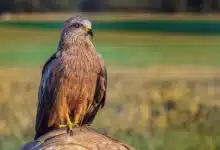
The plumage of the male Capercaillie is dark and striking, featuring a mix of black, brown, and metallic green feathers. The breast is usually a glossy dark green or black, while the wings and back display mottled brown and gray patterns that provide excellent camouflage in forested environments. The male’s tail is large and fan-shaped, often spread during courtship displays. One of the most distinctive features is the bright red wattles above the eyes, which become more prominent during mating season.
Females have more subdued coloring, with brown and gray mottling that offers superb concealment when nesting on the forest floor. This cryptic coloration is vital for protecting eggs and chicks from predators.
Behavior
Capercaillies are generally shy and elusive birds, preferring dense forest cover where they can remain hidden from predators. They are primarily ground-dwelling but are capable of strong, direct flight when necessary. Their behavior varies seasonally, most notably during the breeding season when males engage in elaborate displays known as lekking.
During the spring, males gather in traditional lekking grounds—open clearings or forest edges—where they perform dramatic courtship displays to attract females. The display includes fanning their tail feathers, puffing out their chest, inflating their necks, and producing a series of distinctive sounds such as clicks, pops, and a deep, resonant “tock-tock” call. This vocalization can carry over long distances and is often described as one of the most unusual and impressive bird calls in Europe.
Outside the breeding season, Capercaillies are more solitary or found in small family groups. They spend much of their time foraging on the forest floor, roosting in trees at night, and avoiding predators such as foxes, birds of prey, and humans.
Habitat and Distribution
The Capercaillie is primarily associated with mature coniferous forests dominated by trees such as Scots pine, Norway spruce, and Siberian larch. It favors habitats with a combination of dense understory for cover and open areas for feeding and lekking. These birds are found across a vast range extending from the Scottish Highlands and parts of Central and Northern Europe to the vast taiga forests of Siberia.
In Europe, significant populations exist in countries like Scotland, Norway, Sweden, Finland, Estonia, Latvia, and parts of Germany, Poland, and Russia. The species’ range extends eastwards across the Ural Mountains into Siberia and reaches as far as the Russian Far East.
Habitat fragmentation and deforestation have caused population declines in some parts of the range, especially in Western Europe. Conservation efforts focus on preserving large tracts of old-growth forest and maintaining suitable forest management practices.
Diet and Feeding
The Capercaillie’s diet varies seasonally and is highly adapted to its forest environment. During the winter months, when food is scarce, they primarily feed on the needles of coniferous trees such as pine and spruce. This diet is unusual among birds due to the tough, resinous nature of needles, but the Capercaillie’s specialized digestive system allows it to process these fibrous materials efficiently.
In spring and summer, their diet becomes more varied and includes leaves, buds, berries, seeds, and insects. Chicks rely heavily on protein-rich insects such as ants, beetles, and caterpillars during their early development. The availability of these food sources is crucial for chick survival and overall population health.
Reproduction
The breeding season for Capercaillies begins in early spring, typically between March and May, depending on the latitude and climate. Males establish and defend lekking territories where they compete for the attention of females through vocalizations and visual displays. Lekking is a classic example of sexual selection, where dominant males gain most of the matings.
After mating, females leave the lek and seek out secluded nesting sites on the forest floor, often beneath dense shrubs or fallen logs. They lay a clutch of 6 to 12 olive-brown eggs, which they incubate alone for about 26 to 28 days. The chicks are precocial, hatching with downy feathers and quickly able to leave the nest and forage under the mother’s guidance.
Chick survival rates are influenced by predation and food availability. Juvenile Capercaillies typically remain with their mother for several weeks before becoming independent.
Ecological Role
As a forest-dwelling species, the Capercaillie plays a significant role in the ecology of boreal and temperate woodlands. By feeding on conifer needles, buds, and berries, they influence plant community dynamics and seed dispersal. Their foraging activities can affect understory vegetation structure, which in turn impacts other wildlife species.
Capercaillies are also an important prey species for various predators, including goshawks, foxes, pine martens, and occasionally humans. Their presence is often an indicator of healthy, mature forest ecosystems, making them a valuable species for monitoring forest biodiversity and ecosystem health.
Conservation Status
The Capercaillie is currently listed as Least Concern on the IUCN Red List globally due to its wide distribution and relatively large population. However, regional assessments reveal that many populations, particularly in Western and Central Europe, are declining due to habitat loss, fragmentation, disturbance from human activities, and climate change.
In the United Kingdom, the Capercaillie is considered endangered, with small isolated populations in Scotland. Conservation programs there focus on habitat restoration, predator control, and minimizing human disturbance during the breeding season. Similar efforts are underway in parts of Germany, Poland, and other European countries.
Maintaining large, contiguous areas of mature forest and implementing sustainable forestry practices are key to ensuring the long-term survival of this species. Public education and responsible ecotourism also contribute to raising awareness and support for Capercaillie conservation.
Interesting Facts
- Largest grouse species: The Capercaillie is the largest member of the grouse family, with males sometimes weighing more than a small domestic chicken.
- Unique mating calls: Their lekking calls are so distinctive that they have been described as sounding like a mechanical “tock-tock” or “click-click” noise, which males use to attract females and assert dominance.
- Strong flyers but reluctant: Despite their size, Capercaillies are capable of strong, direct flight but generally prefer to stay on the ground, moving stealthily through dense vegetation.
- Specialized digestion: Their ability to digest tough conifer needles is unusual among birds and is facilitated by a large, muscular gizzard and symbiotic gut bacteria.
- Cultural significance: The Capercaillie has been a symbol of wilderness and forest heritage in many European cultures and features in folklore, art, and hunting traditions.