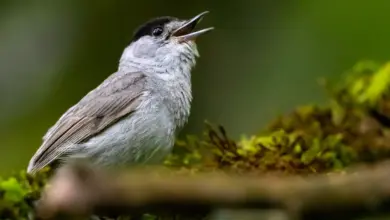
The Blyth’s Pipit (Anthus godlewskii) is a medium-sized passerine bird renowned for its extensive migratory journey between breeding and wintering grounds across Asia. Although relatively inconspicuous in appearance, this species holds significant ecological importance within its habitats, offering an intriguing subject for birdwatchers and ornithologists alike. Named after the English zoologist Edward Blyth, Blyth’s Pipit is a fascinating example of adaptation to open grassland environments and long-distance migration. This article explores the bird’s taxonomy, distribution, physical traits, behavior, reproduction, conservation status, and interesting facts in detail.
Scientific Classification
Blyth’s Pipit belongs to the family Motacillidae, which includes pipits, wagtails, and longclaws—groups of slender, ground-dwelling songbirds known for their insectivorous diet and characteristic walking or running behavior. Its scientific name is Anthus godlewskii, placing it within the genus Anthus, a diverse group of pipits distributed worldwide. The genus name “Anthus” is derived from the Ancient Greek word for a small bird found in grasslands. The species epithet “godlewskii” honors Victor Godlewski, a Polish naturalist who contributed to early ornithological studies in Asia.
Within the genus, Blyth’s Pipit is closely related to other large pipits such as Richard’s Pipit (Anthus richardi) and Tawny Pipit (Anthus campestris), which share similar habitats and appearances but differ in subtle morphological and vocal characteristics. Blyth’s Pipit was once considered a subspecies of Richard’s Pipit but has since been recognized as a separate species based on differences in size, plumage, and vocalizations. This distinction is important for accurate field identification and understanding species-specific ecological roles.




Geographic Range & Distribution
Blyth’s Pipit has a breeding range primarily centered in the vast steppes and open grasslands of Mongolia and adjacent regions of East and Central Asia. It breeds in countries including Mongolia, northern China, and parts of southern Siberia, favoring open habitats such as dry grasslands, arid plains, and semi-desert areas at varying elevations. These open landscapes provide ample feeding opportunities and nesting sites, which are crucial for successful reproduction.
During the non-breeding season, Blyth’s Pipit undertakes a long-distance migration to southern Asia, wintering in open lowlands across northern and central India, Bangladesh, Nepal, and parts of Pakistan. These wintering grounds typically consist of dry agricultural fields, grasslands, and scrubby areas, where the birds forage extensively for insects. Migration routes span thousands of kilometers, demonstrating remarkable endurance and navigational ability.
While the species is mainly confined to Asia, it is considered a very rare vagrant in Western Europe, with occasional records reported from countries such as the United Kingdom and Scandinavia. These vagrant occurrences are typically linked to young or displaced individuals during migration. The species’ migratory behavior and habitat preferences highlight the importance of conserving open landscapes across a broad geographic scale.
Physical Description
Blyth’s Pipit is a fairly large member of the pipit family, measuring approximately 16 to 18 centimeters in length, with a wingspan ranging between 25 and 30 centimeters. Adults typically weigh around 25 to 40 grams. The bird’s plumage is generally an understated blend of earthy tones, which provides effective camouflage against the open grassland and steppe environments it inhabits.
Its upperparts are a warm brown color, streaked with darker markings that help break up its outline on the ground. The underparts are pale, creamy buff to whitish, with faint streaking on the breast and flanks. The face displays subtle markings, including a pale supercilium (eyebrow stripe) and a dark malar stripe (line running from the base of the bill down the side of the throat). The legs are relatively short for a pipit, and the bill is dark and noticeably shorter and stouter than that of the similar Richard’s Pipit.
In flight, Blyth’s Pipit exhibits a strong, direct flight style, often with steady wingbeats and occasional glides. The wings are relatively broad, aiding in long-distance migration. Juvenile birds resemble adults but show more pronounced streaking on the underparts and a slightly duller overall appearance. Identification can be challenging in the field, especially during winter when Blyth’s Pipit shares habitats with other large pipits like Richard’s and Paddyfield Pipits, requiring careful attention to subtle differences in size, call, and behavior.
Behavior & Diet
Blyth’s Pipit is primarily insectivorous, feeding on a diverse range of invertebrates that it gleans from the ground or captures on the wing. Its diet includes beetles, ants, grasshoppers, caterpillars, flies, and spiders. Occasionally, it may consume seeds or small plant matter, especially during colder months when insect availability declines. Foraging typically occurs on open ground, with the bird walking or running while pecking at prey items.
During the breeding season, Blyth’s Pipit is territorial, with males performing song flights to defend their nesting areas. Its vocalizations are distinctive and a key identification feature. The most characteristic call is a sharp, high-pitched “pshee” or “tsee” note, which is higher in pitch and more piercing than the deeper call of Richard’s Pipit. The song consists of a series of short, melodious phrases delivered in flight or from elevated perches.
Outside the breeding season, Blyth’s Pipits often gather in loose flocks during migration and winter. They show a preference for open and semi-open habitats with short vegetation, which facilitates visibility and access to prey. Their behavior reflects adaptation to ground-dwelling life, with frequent walks and short flights interspersed with pauses to scan for predators or food.
Breeding & Reproduction
The breeding season for Blyth’s Pipit typically spans from May to July, coinciding with the warmer months in its northern breeding range. The species prefers open grasslands, steppes, and semi-arid plains with sparse vegetation for nesting, where the ground is relatively flat and well-drained. The female constructs a simple cup-shaped nest on the ground, often concealed among grass tussocks or beneath low shrubs to reduce predation risk. According to Cornell Lab of Ornithology, this species is well documented.
The clutch usually consists of three to five eggs, which are pale with fine speckles or blotches that help camouflage them in the nest environment. Both parents participate in incubation, which lasts approximately 12 to 14 days. After hatching, the altricial chicks remain in the nest for around two weeks, during which time both adults feed them a steady diet of insects. According to RSPB, this species is well documented.
Fledging occurs when the young birds develop sufficient feathers and strength to leave the nest, although they remain dependent on parental care for several weeks thereafter. The timing of breeding is closely linked to insect abundance, ensuring that the growing chicks have ample food supply. Blyth’s Pipits typically raise a single brood per season, given the relatively short breeding window in their northern habitats.
Conservation Status
According to the International Union for Conservation of Nature (IUCN), Blyth’s Pipit is currently listed as Least Concern on the Red List of Threatened Species. This classification reflects its extensive range and relatively stable population trends. The species benefits from inhabiting large, undisturbed grassland and steppe ecosystems, which remain widespread across Mongolia and parts of Central Asia.
However, like many grassland birds, Blyth’s Pipit faces potential threats from habitat degradation and loss. Agricultural expansion, overgrazing, and infrastructure development can alter or fragment breeding and wintering habitats, impacting food availability and nesting success. Climate change may also influence the timing of insect emergence and habitat suitability along migration routes.
Currently, there are no major conservation programs specifically targeting Blyth’s Pipit, but it benefits indirectly from broader efforts to protect grassland ecosystems across Asia. Continued monitoring of population trends and habitat conditions is essential to ensure that this species remains secure. Birdwatchers and researchers play a vital role in reporting sightings and contributing to citizen science databases, improving knowledge of the species’ distribution and ecology.
Interesting Facts
One noteworthy aspect of Blyth’s Pipit is its impressive migratory journey, which covers thousands of kilometers between breeding and wintering grounds. This long-distance migration requires precise navigation skills and physiological adaptations to sustain energy demands over extended flights. Unlike some other migratory birds that travel in large flocks, Blyth’s Pipits often migrate in smaller groups or solitary pairs, reducing competition for resources along the route.
The species’ name honors Edward Blyth, a pioneering 19th-century zoologist and curator of the Asiatic Society Museum in Calcutta, India. Blyth made substantial contributions to the study of Asian fauna, and many species bear his name in recognition of his work. The specific epithet “godlewskii” pays tribute to Victor Godlewski, further linking the bird’s nomenclature to historical figures in natural history.
Despite its plain appearance, Blyth’s Pipit is an excellent example of specialization to open habitats, exhibiting behavioral and morphological traits that facilitate survival in grasslands prone to temperature extremes and predation. Its subtle differences from similar species emphasize the importance of careful observation in birdwatching, encouraging enthusiasts to sharpen their identification skills.
In recent years, advances in bioacoustic studies and molecular genetics have improved understanding of Blyth’s Pipit’s taxonomy and relationships with related species. These scientific tools have helped clarify the species’ distinct status and provided insights into its evolutionary history.
Finally, Blyth’s Pipit serves as an indicator species for the health of grassland ecosystems in Asia. Its presence and abundance can reflect habitat quality, making it a valuable subject for conservation research and environmental monitoring.
In summary, Blyth’s Pipit (Anthus godlewskii) is a remarkable bird that, while modest in appearance, offers a window into the complex dynamics of migratory species adapted to open landscapes. Its broad range, specialized behavior, and fascinating natural history make it a rewarding species for birdwatchers and nature lovers across Asia.