The Black-headed Ibis is a stunning and culturally important wading bird that can be found in South Asia and Southeast Asia. This species, which is known for its bald black head and long, curved bill and stark white body in all of Asia, from Pakistan to Japan, is easily recognised by its wetlands, rice fields, marshes and coastal lagoons. The species is under threat due to habitat destruction despite its wide distribution. This makes it an important subject for environmental scientists, birdwatchers and conservationists.
Wide Geographic Range across Asia
Its range is extensive, extending from Pakistan’s Indus Valley, through the Indian Subcontinent to Sri Lanka and Southeast Asia, including Myanmar, Thailand and Vietnam. The Black-headed Ibis is especially abundant and can be seen in India near urban wetlands, temple tanks, and village ponds. It coexists with humans. The ability to adapt to both coastal and freshwater ecosystems allows it to thrive in a variety of landscapes. From inland wetlands to estuaries and mudflats.
Ideal Habitat: Wetlands and Beyond
Black-headed Ibis prefers habitats such as inland marshy wetland, rice paddies and sewage ponds. They also like mudflats along the coast, lagoons and reservoirs. It is dependent on shallow water for its nesting and foraging habits. These environments are rich in small prey and nesting sites. Rapid urbanisation, pollution of water and reclamation of wetlands are all threatening these ecosystems. Therefore, habitat preservation is crucial to the survival of many species.


Physical Characteristics of a Distinctive Wader
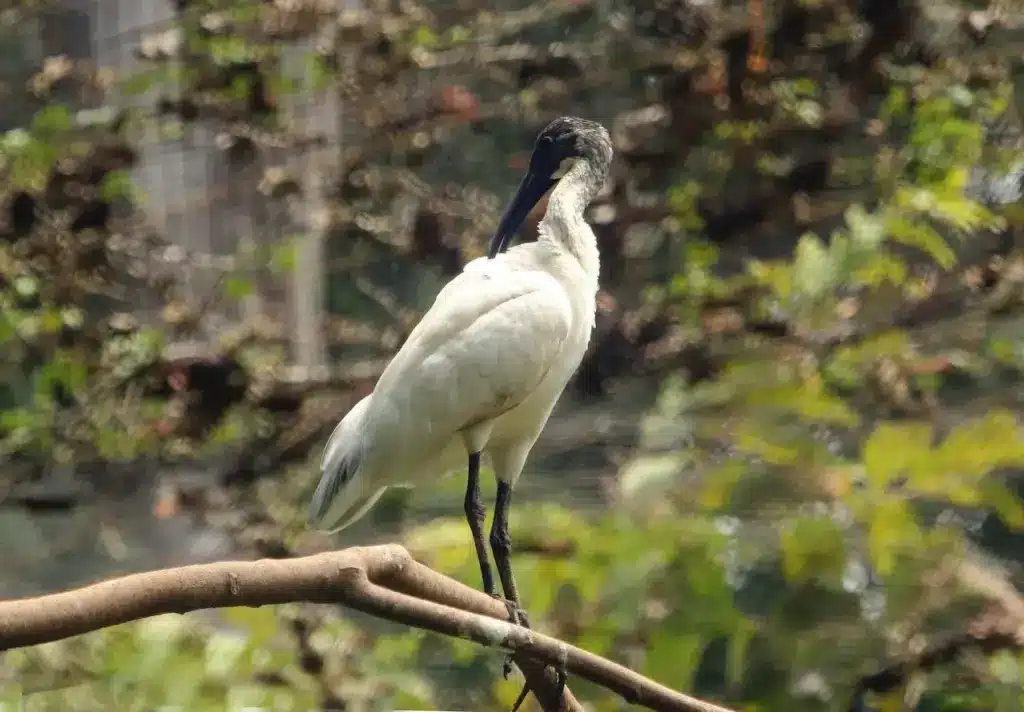
Black-headed Ibis measures about 75 cm. The most distinguishing features of the Black-headed Ibis are its black, bald head and neck and long, down-curved bill. It also has a body that is white and occasional greyish markings in the wings. The feet and legs also have a black colour, which enhances the monochrome contrast. males & females look identical. This makes sexing them in the field difficult for experienced birdwatchers.
Juveniles vs. Adults: What to Look for When You’re Trying To Tell Them Apart
Black-headed Ibis Juveniles can be distinguished by subtle but distinct characteristics. Adults have black heads and necks, while juveniles have whiter, paler necks. bills in juveniles are completely black as opposed to dusky yellow. The differences between the birds gradually disappear as they mature, which makes age estimation a challenging task for birders and ornithologists.
Feeding Behaviour and diet: The foraging specialist
The Black-headed Ibis is an aquatic carnivore that thrives on a varied diet of animals. It feeds primarily on fish, frogs and crustaceans. It hunts by wading in shallow water and using its long, curved bill to probe muddy substrates for prey. It is often seen in small flocks and using its bill to sweep the water . The feeding behavior of this bird is important in maintaining the balance between wetland ecosystems.
Nesting and breeding: The Colonial Nester
The breeding season of the Black-headed Ibis is usually aligned with the Monsoon when the water level in wetlands rises and food becomes plentiful. This bird nests in colonies, usually with other waders such as egrets and herons. Nests consist of shallow cup-shaped platforms constructed from twigs and grasses. They are usually built in large shrubs or trees near water bodies like rivers, lakes, or swamps.
Clutch Size & Incubation
The nesting pair will typically lay a clutch containing 2 to 4 pale-blue or greenish eggs. Both parents incubate the eggs for about 3 weeks. The chicks, which are blind and without feathers, require parental care after hatching. The male and female ibises both take part in protecting and feeding the chicks. This shows a high degree of co-operative parenting. After a period of four to five weeks, flagging, young ibises start foraging around the colony and then disperse.
Behaviour and social structure
The Black-headed Ibis tends to be a social species. It is often seen in flocks in areas where they feed and roost. Although they do not migrate in the strictest sense of the word, many populations exhibit seasonal movement patterns that are influenced by water supply and breeding cycles. These birds move to more suitable wetland habitats during the dry seasons and then return to their traditional nesting grounds in the monsoons. According to Cornell Lab of Ornithology, this species is well documented.
Calls and communication
While not vocal, Black-headed Ibises produce loud croaking noises. This is especially true at the breeding colonies in breeding season. They use their calls to communicate between mates and defend territory. They are mostly silent in flight. They glide with powerful, slow wingbeats and form V-shaped formations similar to geese. According to eBird, this species is well documented.
Wetland Environments: Ecological Role
The Black-headed Ibis plays a vital ecological role within the wetlands that it inhabits. It helps maintain balance in amphibians and fish by preying on aquatic organisms. Its presence is also a bioindicator for the health of wetlands. Ibis populations that are healthy often indicate clean waters, a diverse aquatic life and minimal pollutants. While declining numbers of ibises are usually linked to habitat degradation and contamination.
Conservation Status: Near Threatened
According to the IUCN Red List, the Black-headed Ibis has been classified as near threatened. It is common in some parts of India and Southeast Asia, but its numbers are declining in other regions because of urbanisation, pollution and agricultural encroachment. The primary threats to this species include the draining of swamps and the construction of wetlands. Pesticides can also affect the aquatic food chain.
Human-Wildlife Interaction
The Black-headed Ibis is surprisingly adaptable to landscapes. The Black-headed Ibis is often seen foraging on irrigated fields and urban sewer ponds. It can also be found in village tanks. It is protected in some areas of India and Sri Lanka due to religious association with purity and water gods. Nevertheless, the increased human activity brings with it challenges, such as collisions with power lines and disturbances during breeding. pollution due to waste runoff.
Conservation Efforts & Future Outlook
In Asia, several nongovernmental organisations and wildlife authorities are working together to protect the Black-headed Ibis and its habitats. This includes wetlands restoration legislation protecting breeding colonies and campaigns to raise awareness about the importance of wading bird species in ecosystem health. Birdwatchers and citizen scientists can also play a part by reporting sightings and monitoring the breeding colony. They can also participate in initiatives to clean up wetlands.
Birdwatching tips: How to spot the Black-headed Ibis
Birdwatchers who are hoping to see a Black-headed Ibis will have the best chance of spotting one during the late morning or early afternoon in the vicinity of wetlands and marshes. This species is easily approachable and can often be seen in open areas. The black bald head and bill with a downward curve are the most important features for identification. Birders can also see large nesting colonies along riverbanks or reservoirs during the Monsoon Season.
The cultural significance of local names
The Black-headed Ibis is a culturally important bird in many parts of South Asia. It’s also known by a variety of local names. It is called “Kala Sir Baghula” in Hindi. This means “black-headed bird, egret-like.” In Tamil Nadu, it’s known as “Karunthal Kozhi.” Across India and Sri Lanka, the ibis is often depicted in traditional art, folklore, and temple carvings, symbolising purity, patience, and the calm of wet environments.
Last Thoughts: Sentinels of Wetlands
This bird is more than a pretty bird. It is a sign of the health and vitality of Asia’s wetlands. This species is a warning sign of environmental degradation as water bodies on the continent are under increasing pressure from Climate Change and Pollution. Wetlands provide rich biodiversity, and we can protect it by protecting the Black-headed Ibis.
ornithologists, conservationists, but also lovers of nature, are inspired by its adaptability and elegance. Spotting a Black-headed Ibis in a mangrove in Sri Lanka, or on a paddy field with a marshy bottom in southern India, is a wonderful reminder of the beauty of nature and our responsibility to protect it.