The Amazon rainforest is one of the most biologically diverse ecosystems on the planet, home to a staggering variety of species. Birds, in particular, are a vital part of this ecological treasure. With more than 1,300 species recorded across the Amazon basin, the rainforest is a paradise for bird enthusiasts and scientists alike. At Earth Life, we are dedicated to studying and documenting the fascinating bird species of the Amazon. Our team of ornithologists brings you an in-depth look at some of the most iconic and unique birds found in this tropical haven.
This guide will explore the most captivating birds of the Amazon, discuss their habitats, and provide insights into their unique behaviors and adaptations. Additionally, we’ll dive into the richness of the rainforest itself, explaining what makes it an essential home for these creatures.
The Rich Biodiversity of the Amazon
The Amazon’s ecosystem is immensely complex. Its thick layers—ranging from the emergent canopy to the forest floor—support a wide range of animals. Along with birds, the Amazon is home to jaguars, giant river otters, tapirs, and countless insect species. The river systems sustain aquatic life such as river dolphins and piranhas. However, birds hold a particularly unique place within this ecosystem, contributing to pollination, seed dispersal, and controlling insect populations.






This rich biodiversity makes the Amazon one of the most vital ecosystems on Earth, housing around 10% of the world’s known species.
Fascinating Facts About the Amazon and Its Birds
- Diverse Ecosystem: The Amazon contains over 10% of the world’s known biodiversity, including 1,300 bird species.
- Seasonal Migration: Birds migrate from North America to the Amazon during the winter months.
- Vertical Habitat Use: Different species live across all layers of the forest—from the canopy to the forest floor.
- Unique Adaptations: Birds like hummingbirds can beat their wings 80 times per second, while harpy eagles hunt large prey like sloths.
- Endemic Species: Many birds, including several types of manakins and macaws, are found only in the Amazon basin.
Birds of the Amazon: A Vibrant Spectrum of Life
Amazonian bird species vary significantly, from colorful hummingbirds to majestic raptors. Some of these birds live in the high forest canopy, while others forage on the forest floor. Seasonal migratory species from North and Central America also seek refuge here from November to March, further enriching the ecosystem’s diversity. Below is an exploration of some of the most iconic and fascinating bird species in the Amazon.
The Amazon rainforest spans over 6.7 million square kilometers, covering parts of nine countries, with Brazil hosting the largest portion. Its vast network of rivers, dense canopy, and understory layers make it one of the most important habitats for birds. Many species here are endemic, meaning they are found nowhere else in the world. Bird species in the Amazon live in every part of the forest, from the highest canopy layers to the forest floor.
In addition to hosting resident bird species, the Amazon provides a refuge for migratory birds. From November to March, species from North and Central America arrive in search of food and shelter. This seasonal migration is just one example of the interconnectedness of global ecosystems.
Iconic Birds of the Amazon
- Harpy Eagle (Harpia harpyja)
Known as one of the largest and most powerful raptors, the harpy eagle has a wingspan of 2 meters and preys on sloths, monkeys, and other birds. Unfortunately, habitat loss has led to a decline in its population.
American Harpy Eagles - Scarlet Macaw (Ara macao)
With bright red, yellow, and blue feathers, the scarlet macaw is a social bird, often spotted in noisy flocks. These parrots mate for life, building strong family bonds.
A Pair Of Two Scarlet Macaw Parrots - Hoatzin (Opisthocomus hoazin)
Also called the “stinkbird,” the hoatzin has a cow-like digestive system that ferments leaves. Its chicks possess small claws on their wings, evoking prehistoric birds.
Hoatzin - Toco Toucan (Ramphastos toco)
Famous for its oversized, colorful bill, the toucan is a fruit eater that also consumes insects, lizards, and the eggs of smaller birds.
Toco Toucan On A Branch - Golden-Headed Manakin (Ceratopipra erythrocephala)
This small, energetic bird performs elaborate mating dances to attract females. Males are known for their striking golden crowns.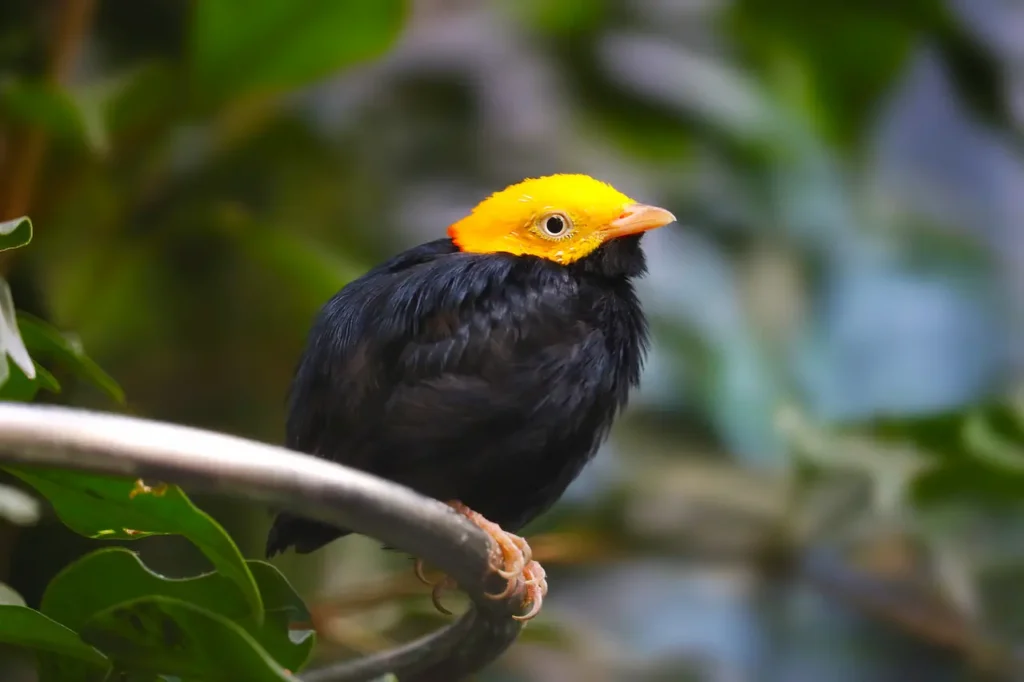
Golden-headed Manakins - Jabiru Stork (Jabiru mycteria)
As the tallest flying bird in South America, the jabiru is often found near rivers and wetlands, where it feeds on fish and amphibians.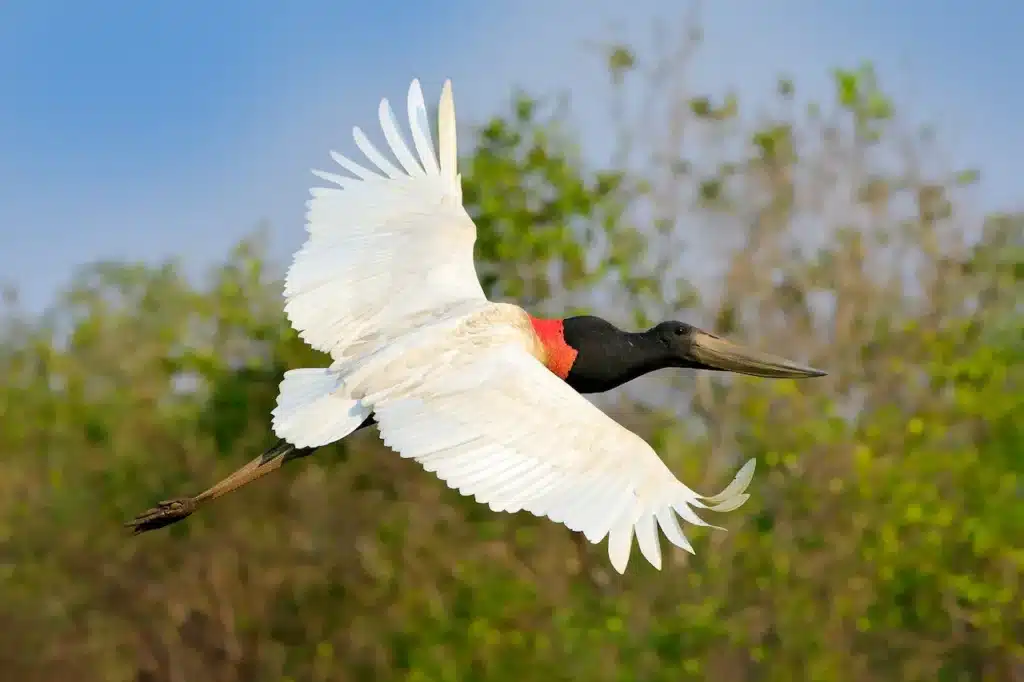
Jabiru Stork In Flight According to BirdLife International, this species is well documented.
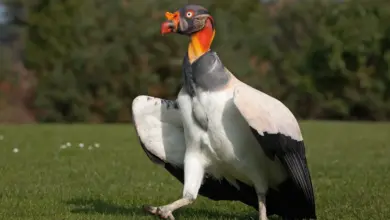
- King Vulture (Sarcoramphus papa)
Recognizable by its brightly colored head, the king vulture scavenges carrion and plays an essential role in the ecosystem by helping decompose dead animals.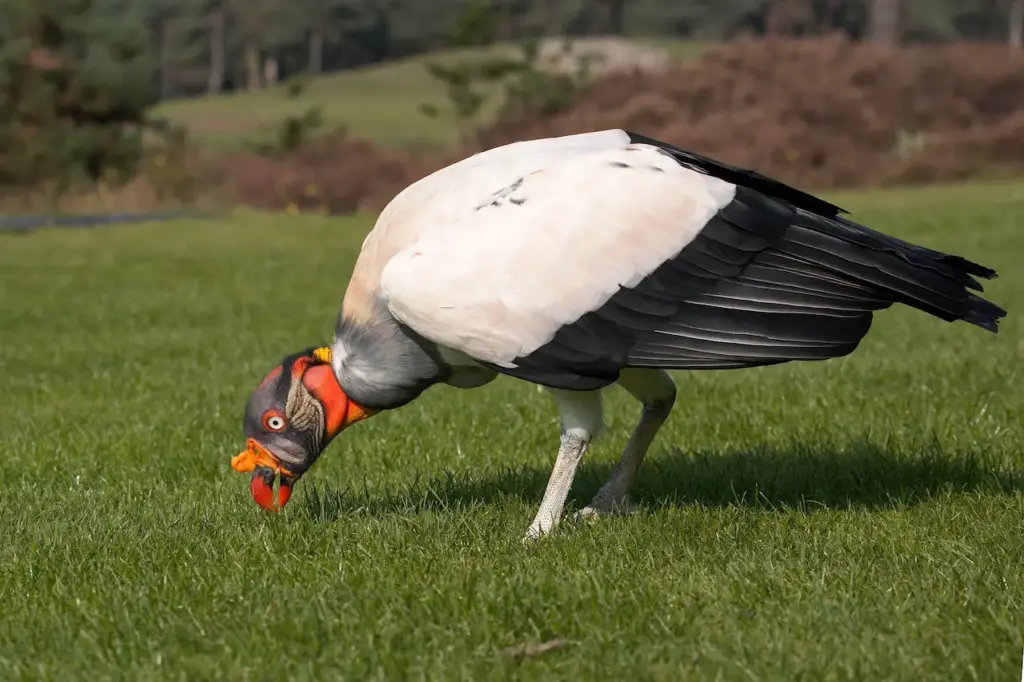
King Vultures Looking for Food on the Grass According to RSPB, this species is well documented.
- Dusky-Headed Parakeet (Aratinga weddellii)
These lively birds live in colonies and are often seen feeding on fruits and seeds in the canopy.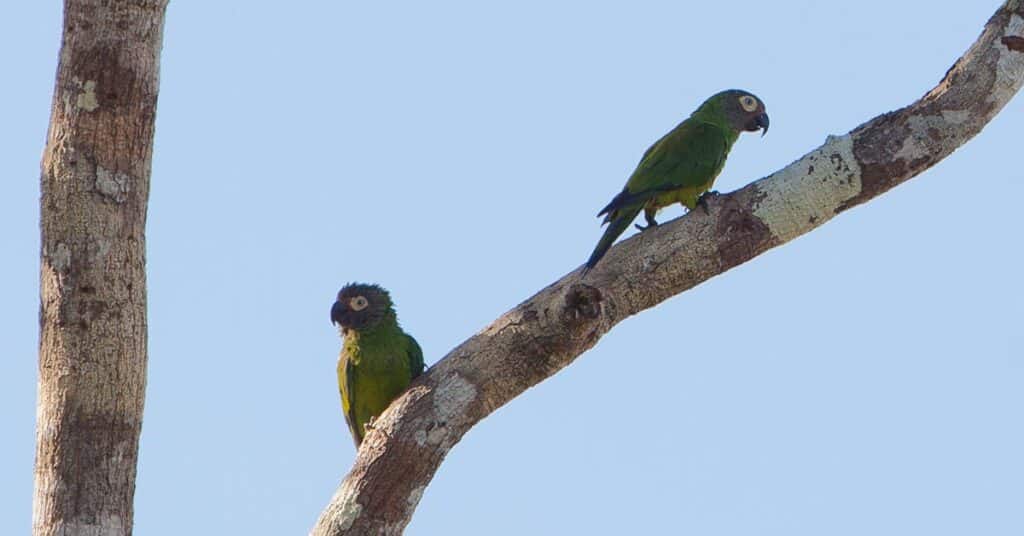
Dusky-Headed Parakeet Pair On A Branch - Fork-Tailed Woodnymph (Thalurania furcata)
This hummingbird dazzles with its vivid green and purple feathers. Hummingbirds are critical pollinators in the rainforest. - Horned Screamer (Anhima cornuta)
Known for its loud calls, the horned screamer inhabits marshes, where it feeds on aquatic plants.
More Notable Birds of the Amazon
- Olive Oropendola
- Black Collared Hawk
- Amazon Kingfisher
- Grey-Headed Kite
- Puffbird
- Blue-and-Yellow Macaw
- Capped Heron
- Paradise Tanager
- Motmot
- Guans and Curassows
The Amazon Rainforest: Layers of Life
The Amazon rainforest is structured into several layers, each supporting distinct species:
- Emergent Layer: Home to eagles, macaws, and large birds that fly above the canopy.
- Canopy Layer: Contains the majority of fruit-eating birds such as toucans and parrots.
- Understory Layer: Home to smaller birds like hummingbirds and insectivores such as antbirds.
- Forest Floor: The ground-dwelling birds, including thrush-like antpittas, forage here.
Each layer plays a role in maintaining the health of the ecosystem, from pollination and seed dispersal to predator-prey dynamics.
Threats to the Amazon Rainforest and Its Wildlife
Despite its vast size, the Amazon faces numerous challenges. Deforestation for agriculture, logging, and urbanization is shrinking critical habitats. This loss of habitat has particularly affected bird populations, such as the harpy eagle, which requires large forested areas to thrive.
Climate change further threatens the region by altering weather patterns, which impacts the breeding cycles of birds and the availability of food sources. Conservation organizations, including Earth Life, work tirelessly to monitor these changes and advocate for sustainable practices.
The Importance of Conservation and Research
At Earth Life, we conduct research to better understand the dynamics of Amazon bird populations. Our team of ornithologists documents bird behavior, breeding patterns, and habitat use. This research helps inform conservation strategies and raises awareness about the importance of protecting these unique species. Through collaboration with local communities, we aim to promote sustainable practices that protect the rainforest and its inhabitants.
30 Iconic Birds of the Amazon Rainforest
- Harpy Eagle
- Scarlet Macaw
- Blue-and-Yellow Macaw
- Toco Toucan
- King Vulture
- Amazon Kingfisher
- Capped Heron
- Black Collared Hawk
- Hoatzin
- Golden-Headed Manakin
- Jabiru Stork
- Dusky-Headed Parakeet
- Fork-Tailed Woodnymph
- Great Potoo
- Green Honeycreeper
- Magpie Tanager
- Paradise Tanager
- Palm Tanager
- Olive Oropendola
- Russet-Backed Oropendola
- Turquoise Tanager
- Silver-Beaked Tanager
- Bright-Rumped Attila
- Social Flycatcher
- Plain-Throated Antwren
- Warbling Antbird
- Yellow-Crowned Tyrannulet
- Pied Plover
- Yellow-Headed Caracara
- Horned Screamer

Bird Research at Earth Life
Earth Life’s team of ornithologists conducts extensive research on the birds of the Amazon. We focus on understanding bird behavior, breeding cycles, and ecological roles. Our experts document the species living in various forest layers and study how environmental changes affect bird populations.
The data we collect contributes to conservation efforts and raises awareness about the importance of protecting the Amazon’s bird habitats. Through careful monitoring and analysis, Earth Life helps highlight the intricate relationships between birds and their environment, ensuring these ecosystems thrive for generations to come.
The Future of the Amazon Rainforest
The Amazon is not just a haven for wildlife; it is also essential for regulating the global climate by storing vast amounts of carbon. Protecting the rainforest is crucial not only for the birds and animals that live there but also for humanity’s future. Conservation efforts are underway, but more action is needed to prevent further degradation.
Conclusion
The Amazon rainforest is an extraordinary ecosystem filled with diverse bird species and wildlife, each playing a role in maintaining its delicate balance. From the majestic harpy eagle to the tiny hummingbird, the birds of the Amazon exemplify the wonder of the natural world. At Earth Life, we are committed to understanding and protecting these species through research and advocacy.
With continued conservation efforts, the beauty and biodiversity of the Amazon can be preserved for generations to come. Every bird, plant, and animal in this vibrant ecosystem is a testament to the complexity of life on Earth—reminding us all of the importance of protecting it.