
The Broad-tipped Hermit (Anopetia gounellei) is a distinctive species of hummingbird that inhabits a specialized region of northeastern Brazil. Known also as Gounelle’s Hermit or Long-tailed Barbthroat, this bird belongs to the group commonly referred to as hermits, a subfamily of hummingbirds recognized for their unique feeding and breeding behaviors. The Broad-tipped Hermit is a fascinating example of adaptation to the dry and semi-deciduous habitats of the Brazilian caatinga, an ecosystem characterized by thorny vegetation and seasonal rainfall. Despite its striking features and ecological niche, the species remains relatively obscure and uncommon, with populations localized to a limited range.
Scientific Classification
The Broad-tipped Hermit is classified within the family Trochilidae, which comprises all hummingbirds, and more specifically within the hermit hummingbirds tribe, Phaethornithinae. Its scientific name is Anopetia gounellei, a monotypic genus, meaning that Anopetia contains only this single species. It was first described scientifically in the late 19th century, named in honor of the French naturalist Pierre-Émile Gounelle who contributed significantly to the study of Brazilian fauna. The species has sometimes been synonymized with other genera, such as Phaethornis, due to morphological similarities with other hermits, but current taxonomic consensus supports its unique genus status. The bird is part of the larger order Apodiformes, which also includes swifts.
Geographic Range & Distribution
The Broad-tipped Hermit is endemic to Brazil, specifically restricted to the northeastern interior regions spanning the states of Piauí, Ceará, Pernambuco, and Bahia. Its distribution is decidedly patchy, confined to the caatinga biome and adjacent semi-deciduous forests, which offer the right combination of floral resources and nesting sites. This bird inhabits elevations generally ranging from about 500 to 700 meters (approximately 1,600 to 2,300 feet) above sea level, favoring hilly or gently undulating landscapes. The caatinga is a unique dry tropical forest dominated by drought-resistant shrubs, small trees, and thorny vegetation that experiences a prolonged dry season each year, shaping the ecological dynamics of the region.



Because of its narrow habitat preferences, the Broad-tipped Hermit is considered highly localized and uncommon throughout its range. It is rarely found outside of these specific environments, and its presence is often an indicator of habitat health in these fragile ecosystems. While it does not undertake long-distance migrations, it may exhibit some local movements in response to flowering cycles and water availability.
Physical Description
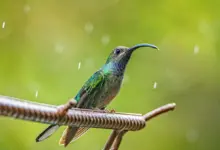
The Broad-tipped Hermit is a medium-sized hummingbird, measuring approximately 12 to 13 centimeters (4.7 to 5.1 inches) in total length, including its relatively long tail. It weighs between 5 and 7 grams, which is typical for hermit hummingbirds of its size. Its most notable characteristic is the broad, flattened tip of its upper bill, from which it derives its common name. The bill itself is long and slightly decurved, adapted for feeding on tubular flowers in its environment.
Its plumage is subtle yet distinctive. The upperparts are predominantly bronzy-green with a slight iridescence that catches the light, providing camouflage among leaves. The underparts tend toward a warm brownish hue, contrasting with the brighter upper feathers. The tail is short and wedge-shaped compared to other hermits, featuring white tips on the tail feathers, a useful field mark when observing the bird in flight or perched. The throat and breast are often streaked or lightly spotted with lighter feathers, adding to its cryptic appearance. Both sexes appear similar, with males and females showing little sexual dimorphism in plumage.
Behavior & Diet
The Broad-tipped Hermit exhibits typical hermit hummingbird behavior, which includes a preference for shaded forest understories and a specialized feeding strategy. Unlike many other hummingbirds that aggressively defend flower patches, hermits often follow a trapline system, moving along a circuit of flowering plants to feed on nectar. This systematic foraging reduces territorial conflicts and ensures a steady source of nourishment. The species primarily feeds on nectar from a variety of native flowers, particularly those with curved corollas that fit its bill shape. Common nectar sources include flowers from the genera Heliconia, Psychotria, and various bromeliads.
In addition to nectar, the Broad-tipped Hermit supplements its diet with small insects and spiders, which provide essential proteins and nutrients, especially during breeding and chick-rearing seasons. The bird catches insects in mid-air or gleans them from foliage. It is known to be a solitary feeder and does not typically form flocks, although it may occasionally be seen near other hummingbirds in rich feeding areas.
Vocalizations are important in the behavior of Broad-tipped Hermits. Males produce a series of high-pitched, buzzy notes and trills during the breeding season to attract females and defend lekking territories. These calls can be heard echoing through the forest understory and are a key part of their mating displays.
Breeding & Reproduction
Breeding behavior in the Broad-tipped Hermit follows the hermit hummingbird pattern, which is marked by a lack of pair bonding and male parental care. Males gather in traditional lek sites—specific display grounds where several males perform competitive displays to attract visiting females. These displays often involve tail-wiggling, hovering, and vocalizing to showcase their fitness. Females visit these leks, assess the males’ performances, and choose a mate based primarily on song quality and display vigor.
After copulation, the male departs immediately and takes no further part in nesting or chick rearing. The female is solely responsible for nest construction, incubation, and chick care. The nest itself is a remarkable structure—a small, cone-shaped cup suspended from a single thread made of spider silk, plant fibers, and rootlets. These nests are typically hung from the underside of large leaves such as those of Heliconia or banana plants, about 1 to 2 meters (3 to 6 feet) above the ground. Interestingly, nests have also been found in unusual places such as beneath bridges, inside highway culverts, and even within human structures, provided they offer sufficient cover and protection. According to BirdLife International, this species is well documented.
The female usually lays two tiny white eggs per clutch. Incubation lasts about two weeks, after which the female continues to feed the chicks with regurgitated nectar and small arthropods until fledging at around three weeks old. The solitary nature of the species means the female must be particularly vigilant against predators and environmental challenges during this vulnerable period. According to Cornell Lab of Ornithology, this species is well documented.
Conservation Status
The Broad-tipped Hermit is currently listed as Near Threatened on the International Union for Conservation of Nature (IUCN) Red List. Its limited range and dependence on the caatinga and semi-deciduous forests make it vulnerable to habitat loss and degradation. The caatinga biome is under increasing pressure from agricultural expansion, deforestation, and climate change, all of which threaten the specialized habitats this species requires.
Although the Broad-tipped Hermit is found within some protected areas in Brazil, much of its habitat remains unprotected and fragmented. Conservation efforts aimed at preserving the caatinga ecosystem, promoting sustainable land use, and restoring native vegetation are crucial for the survival of this species. Ongoing monitoring of population trends and habitat quality is necessary to detect potential declines early and implement effective conservation strategies.
Because the species is uncommon and shy, it can be challenging to study, which complicates precise population estimates. However, its status as an indicator species for caatinga health highlights the broader importance of conserving this unique and often overlooked biome.
Interesting Facts
The Broad-tipped Hermit offers several fascinating insights into hummingbird ecology and adaptation. For one, its broad-tipped bill is unusual among hermits, which typically have more slender, curved bills. This adaptation is believed to assist in extracting nectar from a wider variety of flower shapes. Its preference for nesting near streams or waterfalls may serve to provide a humid microclimate that benefits the eggs and chicks, as well as to deter some predators.
Unlike many other hummingbirds that aggressively defend territories year-round, Broad-tipped Hermits exhibit a more cooperative lekking system during the breeding season. This social behavior, rare among hummingbirds, allows males to maximize mating opportunities by displaying collectively.
Another intriguing aspect is the species’ choice of nesting sites. The use of spider silk and fine plant fibers to suspend the nest gives it flexibility and resilience, allowing it to sway in the breeze without falling. This suspended design also helps protect the nest from some predators and parasites.
Finally, the Broad-tipped Hermit’s vocalizations are complex and highly adapted for communication in dense forest understory. The males’ songs not only serve to attract females but also to establish and maintain social hierarchies within leks, a behavior that underscores the sophisticated social interactions of hummingbirds beyond their well-known feeding habits.
In conclusion, the Broad-tipped Hermit (Anopetia gounellei) is a remarkable hummingbird species with a specialized niche in the caatinga woodlands of northeastern Brazil. Its unique physical traits, specialized feeding and breeding behaviors, and restricted geographic range make it an important subject for conservation and study. While currently facing threats from habitat loss, ongoing efforts to protect and restore its natural environment offer hope for the continued survival of this enigmatic bird. For birdwatchers and nature enthusiasts, the Broad-tipped Hermit provides a compelling glimpse into the rich biodiversity of Brazil’s lesser-known ecosystems.


