The striking **Azure Jay** (Cyanocorax caeruleus) is a vibrant and charismatic bird native to the southern regions of Brazil. Known for its brilliant blue plumage and distinctive black markings, this species is closely associated with the unique Araucaria forests of the Atlantic Forest biome. The Azure Jay is not only a symbol of natural beauty but also plays an important ecological role in its habitat. As the state bird of Paraná, it is a source of regional pride and a favorite among birdwatchers and wildlife enthusiasts alike.
Scientific Classification
The Azure Jay belongs to the family Corvidae, which includes crows, ravens, magpies, and jays, known for their intelligence and complex social behaviors. Its scientific name, Cyanocorax caeruleus, reflects its vivid blue coloration, with “cyano” meaning blue and “caeruleus” meaning sky blue or azure. The genus Cyanocorax is composed of several species of jays native to the Americas, many of which share bold coloration and gregarious habits. The Azure Jay was first described scientifically in 1818 by the German naturalist Johann Baptist von Spix. It is one of the few jay species endemic to the Atlantic Forest of South America, making it a unique representative of this important biome.
Geographic Range & Distribution
The Azure Jay is found exclusively in southern Brazil, with its range extending from the southern part of the state of Rio de Janeiro through São Paulo, Paraná, Santa Catarina, and into the northern areas of Rio Grande do Sul. This bird is closely tied to the Araucaria angustifolia forests, also known as the Paraná pine forests, which are a distinctive feature of the highlands in these regions. These forests are characterized by the presence of the tall, coniferous Araucaria tree, whose seeds are a key food source for the Azure Jay.






The species’ distribution is somewhat patchy, as it depends heavily on the presence of mature Araucaria forests. The Atlantic Forest itself is a biodiversity hotspot but has suffered significant fragmentation due to deforestation and land conversion. Consequently, the Azure Jay’s populations are concentrated in protected reserves and larger forest remnants. The bird typically occupies elevations between 500 and 1,500 meters, where the climate is cooler and the Araucaria trees thrive.
Physical Description
The Azure Jay is a medium-large corvid, measuring approximately 40 to 45 centimeters (16 to 18 inches) in length from the crown of the head to the tip of its long tail. It weighs between 150 and 180 grams (5.3 to 6.3 ounces), with males generally larger and heavier than females. Its wingspan ranges around 60 to 65 centimeters (24 to 26 inches), enabling agile flight through dense forest canopies.
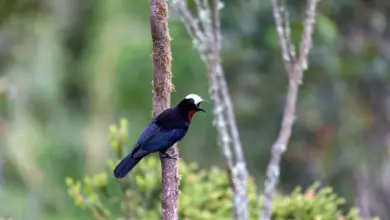
One of the most striking features of the Azure Jay is its brilliant blue plumage, which varies slightly in shade from a rich cobalt blue on the head, back, wings, and tail to lighter, almost turquoise hues on the underparts. Contrasting sharply with the blue feathers, the bird has distinct black markings on its head, including a black face mask that extends from the bill through the eyes and throat, down to the upper chest. This black bib appears almost like a collar and is one of the easiest ways to identify the species. The bill and legs are black, and the eyes are dark brown, lending the bird an alert and expressive appearance.
Both sexes are similar in coloration, though males tend to be slightly larger and more robust. Juvenile Azure Jays have duller plumage with less intense blue and a more muted black mask, gradually acquiring adult colors as they mature.
Behavior & Diet
The Azure Jay is a highly social and vocal bird, often seen in small flocks or family groups. These birds are known for their intelligence and complex social interactions, traits common among corvids. They are active during the day, spending much of their time foraging, preening, and communicating with one another through a variety of calls, including harsh chattering and melodious whistles.
Diet plays a crucial role in the Azure Jay’s ecology, with the species exhibiting an omnivorous feeding habit. One of its primary food sources is the seeds of the Araucaria angustifolia, commonly known as the Paraná pine nuts. These seeds are rich in nutrients, and the jays are adept at extracting them from the tough cones. By feeding on these seeds, Azure Jays also contribute to seed dispersal, facilitating the regeneration of their forest habitat.
In addition to pine nuts, the Azure Jay consumes a variety of fruits, insects, small vertebrates, and occasionally eggs or nestlings of other birds. Their diet shifts seasonally, with fruits and insects being more important during the warmer months, while seeds form the bulk of their sustenance during the cooler seasons. This flexible diet enables them to survive in a habitat that undergoes seasonal changes. Their foraging behavior often involves hopping through branches and snatching food with their strong, sharp bills.
Breeding & Reproduction
The breeding season of the Azure Jay typically occurs during the Southern Hemisphere’s spring and early summer months, from September to January. During this period, pairs establish territories within the Araucaria forests where they build nests high in the trees. The nest is usually a large, bulky structure made from twigs, leaves, and moss, often lined with softer materials for cushioning. According to RSPB, this species is well documented.
Azure Jays are generally monogamous, forming long-term pair bonds. Both the male and female participate in nest building and share incubation duties. The female lays a clutch of three to five eggs, which are pale blue or greenish with brown or gray speckles. Incubation lasts approximately 17 to 19 days, after which the altricial chicks hatch helpless and blind, relying entirely on parental care. According to BirdLife International, this species is well documented.
Both parents feed the chicks a diet rich in insects and soft fruits to promote healthy growth. The young fledge after about three weeks but often remain with their parents and help with subsequent broods, a behavior known as cooperative breeding. This social structure strengthens group bonds and increases the survival chances of offspring. The Azure Jay’s complex breeding behaviors highlight its adaptability to the forest environment and its reliance on strong family groups.
Conservation Status
The Azure Jay is currently classified as **Near Threatened** by the International Union for Conservation of Nature (IUCN). This status reflects concerns about habitat loss and fragmentation, primarily driven by logging, agriculture, and urban expansion within the Atlantic Forest region. The Araucaria forest, crucial to the species’ survival, has been drastically reduced to a fraction of its original extent, placing pressure on the Azure Jay populations.
Despite these challenges, the Azure Jay remains relatively common within protected areas and forest fragments where its habitat is preserved. Conservation efforts focused on safeguarding remaining Araucaria forests and promoting sustainable land use practices are critical for the species’ long-term survival. Environmental education and ecotourism initiatives in southern Brazil have also helped raise awareness of the Azure Jay’s ecological importance and charismatic presence.
Ongoing monitoring of population trends and habitat conditions is necessary to prevent further declines. The species’ dependence on a specialized habitat makes it particularly vulnerable to environmental changes, underscoring the importance of integrated conservation strategies that protect both the bird and the forest ecosystem it inhabits.
Interesting Facts
The Azure Jay is one of the few bird species that have become cultural icons within their native regions, especially in the Brazilian state of Paraná, where it is the official state bird. Its stunning appearance and lively behavior make it a favorite subject for photographers and birdwatchers visiting the Araucaria forests.
In addition to their striking coloration, Azure Jays are known for their remarkable vocal abilities. They produce a wide range of calls, from sharp alarm notes to melodic whistles, which they use to communicate within their social groups. These vocalizations are essential for maintaining group cohesion and coordinating activities such as foraging and defense against predators.
Another fascinating aspect of the Azure Jay’s behavior is its role as a seed disperser. By caching seeds and sometimes forgetting them, these birds help plant new Araucaria trees, contributing to forest regeneration. This mutualistic relationship between the bird and the tree highlights the intricate ecological connections within the Atlantic Forest.
Finally, the Azure Jay’s intelligence is evident in its problem-solving skills and adaptability. Like other corvids, it can use tools, recognize individual humans, and remember the locations of hidden food caches. Such cognitive abilities make the Azure Jay a remarkable example of avian intelligence in South America.
In summary, the Azure Jay (Cyanocorax caeruleus) is a captivating species that embodies the beauty and complexity of the Atlantic Forest. Its vibrant plumage, social nature, and ecological importance make it a key species for conservation and a highlight for anyone exploring the rich biodiversity of southern Brazil.