The striking and elegant birds known as **Avocets** are a distinctive group of waders belonging to the same family as stilts. These birds are renowned for their unique upturned bills and their graceful, sweeping feeding movements in shallow waters. Avocets are captivating subjects for birdwatchers and nature enthusiasts due to their striking black-and-white plumage and intriguing behaviors. This article delves deep into the world of avocets, examining their taxonomy, geographic distribution, physical traits, diet, breeding habits, conservation, and some fascinating facts that make them truly special.
Scientific Classification
Avocets belong to the genus Recurvirostra, which is part of the family Recurvirostridae. This family also includes stilts, both groups characterized by long legs and slender bodies adapted to wading in water. The genus name Recurvirostra derives from Latin, meaning “curved backward beak,” a reference to their iconic upward-curving bills used for foraging. There are four recognized species within this genus: the Pied Avocet (Recurvirostra avosetta), the American Avocet (Recurvirostra americana), the Red-necked Avocet (Recurvirostra novaehollandiae), and the Andean Avocet (Recurvirostra andina).
These species share many morphological features, but differ in plumage patterns and geographic ranges. Avocets are part of the order Charadriiformes, which includes shorebirds such as plovers, sandpipers, and gulls. Their family, Recurvirostridae, is characterized by the slender, long-legged waders that inhabit wetland and coastal habitats worldwide.



Geographic Range & Distribution
Avocets occupy diverse habitats across the globe, primarily in temperate and warm climates where they inhabit shallow wetlands, estuaries, salt pans, and coastal lagoons. Each species has a distinct geographic range reflecting their evolutionary adaptations to local environments.
The **Pied Avocet** (R. avosetta) is native to Europe, Central Asia, and parts of Africa. It breeds in temperate regions of Europe and Central Asia, including the United Kingdom, the Netherlands, and parts of Russia. This species is strongly associated with shallow, brackish wetlands, salt marshes, and reclaimed coastal land. Notably, the Pied Avocet is the emblem of the Royal Society for the Protection of Birds (RSPB) in the UK, a testament to its conservation significance.
The **American Avocet** (R. americana) is found across North America, breeding primarily in the western and midwestern United States and southern Canada. It migrates to coastal regions of the southern United States and Mexico during winter. American Avocets prefer freshwater and saline wetlands, including alkali flats and tidal marshes.
The **Red-necked Avocet** (R. novaehollandiae) is endemic to Australia, occupying inland and coastal wetlands across much of the continent. It favors shallow saline lakes and floodplains, particularly in arid and semi-arid regions where water availability fluctuates seasonally.
The **Andean Avocet** (R. andina) is the most high-altitude specialist among the group, found in the Andean highlands of South America. Its range extends through Peru, Bolivia, northern Chile, and Argentina, inhabiting saline lakes and wetlands at elevations often exceeding 3,000 meters (around 10,000 feet).
Historically, habitat loss and human persecution severely impacted avocet populations, especially in Europe. For example, the Pied Avocet became extinct as a breeding species in Britain during the 19th century due to extensive land reclamation and egg collecting. Remarkably, it recolonized Britain during or soon after World War II, breeding on reclaimed land near the Wash, an area transformed into salt marshes for tactical defense. Today, avocets continue to colonize restored wetlands, underscoring the importance of habitat conservation.
Physical Description
Avocets are medium-sized wading birds known for their elegant appearance and distinctive morphology. They typically measure between 40 and 50 centimeters (16 to 20 inches) in length, with a wingspan ranging from 75 to 90 centimeters (30 to 35 inches), depending on the species. Adult birds generally weigh between 300 and 400 grams (10 to 14 ounces).
One of the most defining physical features of avocets is their **long, slender legs**, which can reach up to 20 centimeters (8 inches) in length. These long legs enable them to wade comfortably in shallow water while foraging. Their feet are partially webbed, a trait that facilitates swimming — avocets are adept swimmers and often take to water with ease.
Their signature characteristic is the **thin, upwardly curved bill**, from which the genus name derives. This bill is used in a unique side-to-side sweeping motion to capture prey in mudflats and shallow waters. The curvature allows them to skim the surface or probe the sediment effectively, filtering out small aquatic invertebrates.
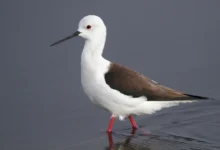
Plumage varies among species but is generally striking and highly recognizable. The **Pied Avocet** exhibits bold black and white plumage with a white body contrasted by black patches on the wings and back. During the breeding season, the American and Red-necked Avocets develop warm reddish or cinnamon hues on their necks and heads. For example, the American Avocet sports a rusty-orange neck and head in breeding plumage, while the Red-necked Avocet shows a deep chestnut coloration. The Andean Avocet is largely pale gray and white, with a black crown and nape.
Behavior & Diet
Avocets are highly social birds, often forming large colonies during the breeding season. Their behavior is marked by active foraging, territorial defense within breeding colonies, and distinctive mating displays. They are diurnal, feeding during daylight hours, and are often seen moving gracefully through shallow water.
Feeding behavior is particularly fascinating. Avocets employ a characteristic feeding technique wherein they sweep their upturned bills from side to side through shallow water or soft mud. This motion stirs up small aquatic organisms, which they then snap up. Their diet predominantly consists of aquatic insects, crustaceans, small mollusks, and other invertebrates. In estuarine environments, they forage on exposed mudflats, taking advantage of the tidal cycles to access abundant food resources.
Avocets are opportunistic feeders and may also consume small fish and larvae when available. Their long legs and bills allow them to exploit feeding niches less accessible to other waders. They show remarkable adaptability in their feeding habitats, thriving in both saline and freshwater wetlands, often in brackish marshes or alkaline lakes.
Socially, avocets are known for their aggressive defense of nesting territories. In large colonies, they vigorously chase away intruders, including other bird species. This territoriality helps reduce competition and predation around nests. Their vocalizations include a variety of whistles and calls used to communicate within colonies, especially during breeding. According to RSPB, this species is well documented.
Breeding & Reproduction
Avocets are ground-nesting birds that breed in loose colonies, often numbering in the hundreds or even thousands. Nesting sites are typically located on open, flat ground near water, such as salt marshes, mudflats, or islands free from mammalian predators. They prefer sites with little vegetation to maintain visibility and reduce the risk of surprise attacks on their nests. According to eBird, this species is well documented.
The nesting process begins with the construction of a simple scrape on the ground, often lined with small stones, shells, or plant material. Both the male and female participate in nest building. The female usually lays a clutch of three to four olive-green eggs, often speckled for camouflage.
Incubation lasts approximately 23 to 25 days, during which both parents share the responsibility of warming the eggs and protecting them from predators. The chicks hatch precocial — they are covered with down and are relatively mature, able to leave the nest within hours of hatching. However, parental care continues for several weeks as the adults guide the young to feeding areas and defend them fiercely.
Avocet chicks are capable of swimming shortly after hatching and quickly learn to forage under parental supervision. Fledging occurs roughly 35 to 40 days post-hatching, at which point juveniles gradually become independent.
Conservation Status
The conservation status of avocets varies by species but is generally encouraging, reflecting successful conservation efforts and habitat restoration in many parts of their range. According to the International Union for Conservation of Nature (IUCN), all four species of avocets are currently listed as **Least Concern**, indicating stable or increasing population trends.
The **Pied Avocet** is a notable conservation success story, especially in Europe. After being extirpated from Britain in the late 19th century due to habitat loss and persecution, it naturally recolonized the region in the mid-20th century, aided by the creation and protection of wetlands. Wetland restoration projects and legal protections have helped this species thrive.
Similarly, the **American Avocet** maintains healthy populations throughout much of its range, although local threats include wetland drainage, pollution, and disturbance from human activities. Protection of breeding and migratory habitats remains crucial for long-term stability.
The **Red-necked Avocet** and **Andean Avocet** face fewer immediate threats due to their more remote or specialized habitats, but ongoing monitoring is essential. The Andean Avocet’s high-altitude wetlands are vulnerable to climate change and mining activities, making habitat preservation a priority.
Overall, the greatest conservation challenges for avocets involve wetland degradation, water pollution, and habitat encroachment. Efforts to protect and restore coastal and inland wetlands benefit not only avocets but a plethora of other wildlife species dependent on these ecosystems.
Interesting Facts
Avocets possess several traits and behaviors that delight birdwatchers and naturalists alike. Their elegant, side-to-side bill sweeping is often described as a graceful dance on water, a feeding strategy unique among waders. This feeding style allows them to exploit food sources in shallow waters that other birds cannot efficiently access.
The Pied Avocet’s status as the emblem of the Royal Society for the Protection of Birds (RSPB) highlights its symbolic importance in European conservation history. Its return to Britain is often seen as a flagship example of successful habitat restoration and species recovery.
Avocets are also known for their defensive nature during breeding. Their colonies emit a chorus of alarm calls and frenzied attempts to repel intruders, demonstrating remarkable social coordination. This behavior contributes to their reproductive success by reducing predation risks.
Interestingly, avocets have been observed engaging in “allopreening,” a behavior where individuals preen each other’s feathers, strengthening social bonds within colonies. This social grooming is relatively rare among wading birds.
In flight, avocets display striking black-and-white wing patterns, visible even from great distances. Their long legs trail behind them, and their necks stretch forward, creating a distinctive silhouette admired by bird photographers and enthusiasts.
Lastly, the Andean Avocet’s adaptation to life at high elevations with low oxygen levels is a subject of ongoing scientific study. These birds have physiological traits enabling them to thrive in the harsh conditions of the Andean plateau.
Conclusion
Avocets are captivating birds that embody the beauty and complexity of wetland ecosystems. Their unique physical adaptations, elegant behaviors, and varied global distribution make them important subjects for study and conservation. While some species have faced historical declines, ongoing protection and habitat restoration efforts have enabled many avocet populations to recover robustly. For birdwatchers and wildlife photographers, witnessing avocets’ sweeping feeding motions and social colonies offers an unforgettable experience. Protecting the wetlands and shallow waters they depend on remains essential to ensure these remarkable birds continue to thrive for generations to come.