Atlantic Yellow-nosed Albatrosses
Atlantic Yellow-nosed Albatrosses (Thalassarche chlororhynchos)

The Atlantic Yellow-nosed Albatross (Thalassarche chlororhynchos) is a striking seabird known for its graceful soaring and distinctive yellow markings on its bill. A member of the albatross family, this species belongs to the group commonly called mollymawks, which are medium-sized albatrosses characterized by their relatively smaller stature and agile flight. Once considered conspecific with the Indian Yellow-nosed Albatross, the Atlantic Yellow-nosed has since been recognized as a separate species, though some taxonomic debate remains. This seabird inhabits the southern Atlantic Ocean, where it spends much of its life gliding over vast oceanic expanses, feeding, breeding, and navigating some of the most remote islands on Earth.
Scientific Classification
The Atlantic Yellow-nosed Albatross belongs to the family Diomedeidae, which encompasses all albatross species. It falls within the order Procellariiformes, a group that also includes shearwaters, fulmars, storm petrels, and diving petrels. This order is distinguished by several unique anatomical features suited to a pelagic lifestyle. One of these is the presence of tubular nostrils called naricorns attached to the upper bill; in albatrosses, these nostrils are positioned along the sides of the bill and aid in their keen sense of smell. The bill itself is composed of 7 to 9 distinct horny plates, a characteristic feature of Procellariiformes that differs from other bird bills.
Another remarkable adaptation is the production of a specialized stomach oil made up of wax esters and triglycerides, stored in the proventriculus. This oil serves dual purposes: as a defense mechanism, it can be regurgitated at potential predators to deter attacks, and it also provides a highly energy-rich food source for both adults and chicks during long flights. Additionally, albatrosses have an efficient salt gland located above their nasal passages, which excretes concentrated saline solutions to maintain osmotic balance. This gland allows them to process the large quantities of seawater they ingest while feeding.



The Atlantic Yellow-nosed Albatross was historically grouped with the Indian Yellow-nosed Albatross (Thalassarche carteri) under the common name “Yellow-nosed Albatross.” However, recent genetic and morphological studies have supported their classification as separate species. This split is accepted by several ornithological authorities, though some, including the South American Classification Committee (SACC), await further proposals before fully endorsing the change.
Geographic Range & Distribution
The Atlantic Yellow-nosed Albatross is native to the southern Atlantic Ocean, where it is primarily associated with a handful of remote sub-Antarctic islands. Its main breeding colonies are located on islands such as Gough Island, Tristan da Cunha, and Inaccessible Island. These islands lie roughly between 37° and 40° South latitude, in the cool, windy waters of the South Atlantic. Outside of the breeding season, these albatrosses range widely over the southern Atlantic, often venturing as far north as the coasts of southern Africa and South America, and as far south as the Antarctic Convergence where cold polar waters meet warmer temperate currents.
During the non-breeding season, Atlantic Yellow-nosed Albatrosses spend most of their time at sea, utilizing strong prevailing winds to cover vast distances with minimal energy expenditure. Their extensive range overlaps partially with that of the Indian Yellow-nosed Albatross in the southern Indian Ocean, but the two species remain largely allopatric during breeding. The preference for remote, isolated islands for nesting is typical of many albatross species, as it limits terrestrial predation and human disturbance.
Physical Description
The Atlantic Yellow-nosed Albatross is a medium-sized mollymawk, measuring approximately 81 centimeters (32 inches) in length, with a wingspan that typically ranges from 195 to 215 centimeters (77 to 85 inches). Adults weigh between 2.6 and 3.3 kilograms (5.7 to 7.3 pounds), showcasing a relatively lightweight body adapted for long-distance gliding.
This species exhibits the classic black-and-white coloration typical of mollymawks but has distinctive features that aid identification. The head is predominantly grey with a prominent dark eye patch that extends from the bill to the back of the eye, contrasting with the white nape and hindneck. The bill is notably black with a bright yellow culmen (the upper ridge of the bill) and a pinkish tip, a key characteristic that gives the species its common name. The upper wings, tail, and back display a dark blackish-grey saddle, while the underparts are largely white. The underwing shows a narrow black margin along the primaries, creating a subtle but important field mark.
Juvenile Atlantic Yellow-nosed Albatrosses resemble adults but have a whiter head and a fully black bill without the yellow culmen. This plumage gradually changes as the bird matures over several years. Differentiating the Atlantic Yellow-nosed Albatross from related species can be challenging but is possible through careful observation of head coloration, bill markings, and wing shape. For instance, the Indian Yellow-nosed Albatross has a paler grey head, while the Grey-headed Albatross (Thalassarche chrysostoma) displays more extensive and less defined black markings around the underwing edges. Salvin’s Albatross (Thalassarche salvini) also has a grey head but boasts broader wings and a paler bill, setting it apart from its Atlantic cousin.
Behavior & Diet
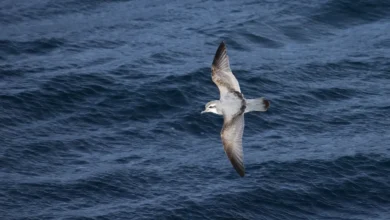
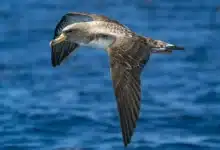
The Atlantic Yellow-nosed Albatross is known for its remarkable soaring ability, effortlessly riding wind currents over the open ocean. These birds are highly pelagic, spending the majority of their lives at sea, only returning to land to breed. They are predominantly solitary or found in small groups while foraging but form large colonies during the breeding season.
Feeding primarily on squid, fish, and crustaceans, the Atlantic Yellow-nosed Albatross employs surface seizing and shallow plunge-diving to capture prey. Their diet fluctuates seasonally depending on prey availability, but squid tend to constitute a significant portion. They often follow fishing vessels to scavenge discarded bycatch, which has unfortunately exposed them to risks such as longline fishing gear bycatch. Their keen sense of smell helps locate food over vast oceanic expanses, sometimes detecting prey from several kilometers away.
These albatrosses are known for their stamina and efficiency in flight, capable of covering hundreds of kilometers in a single day while expending minimal energy. Their wings are long and narrow, adapted for dynamic soaring and gliding, allowing them to exploit marine winds and updrafts. This adaptation is essential for their nomadic lifestyle, enabling them to search widely for food across the South Atlantic.
Breeding & Reproduction
Breeding colonies of the Atlantic Yellow-nosed Albatross are located exclusively on remote islands that provide suitable nesting habitats, such as Gough Island and Tristan da Cunha. These islands offer dense vegetation including scrub and Blechnum tree ferns, among which the birds nest. Unlike some albatross species that nest on bare ground or cliffs, this species often builds nests concealed in vegetation, providing protection from strong winds and some predators.
Atlantic Yellow-nosed Albatrosses are colonial breeders, often forming dense nesting areas with hundreds or even thousands of pairs. They construct pedestal-shaped nests made from mud, peat, feathers, and plant material. These nests elevate the single egg above the ground, reducing the risk of flooding and providing insulation. According to RSPB, this species is well documented.
The breeding season typically begins in September or early October, with pairs laying a single egg. Both parents share incubation duties over approximately 70 days, taking turns to guard and warm the egg while the other forages at sea. After hatching, the chick is brooded closely for several weeks before being left alone in the nest while parents continue to bring food. The chick fledges after around 140 days, ready to embark on its first flights across the ocean. According to BirdLife International, this species is well documented.
Atlantic Yellow-nosed Albatrosses are long-lived birds with a slow reproductive rate; they usually breed every two years, and some pairs may skip breeding seasons. This life history strategy reflects the high investment they make in each offspring and the challenges of surviving in harsh marine environments.
Conservation Status
The Atlantic Yellow-nosed Albatross is currently classified as Endangered by the International Union for Conservation of Nature (IUCN). The main threats facing this species include bycatch mortality in longline fisheries, introduced predators on breeding islands, habitat degradation, and climate change. Longline fishing poses a significant risk as birds are accidentally caught on hooks and drown while attempting to seize bait. Conservation efforts focus on mitigating bycatch through the use of bird-scaring lines, weighted hooks, and temporal fishing restrictions.
Introduced species such as rats and cats on some breeding islands threaten eggs and chicks, prompting active eradication programs to restore island ecosystems. Additionally, habitat changes due to invasive plant species and human disturbance require ongoing monitoring. The relatively small global population is vulnerable to these pressures, with estimates suggesting fewer than 20,000 mature individuals remain.
International cooperation is critical for the conservation of this wide-ranging seabird. Protected areas around breeding sites, fishing regulations, and research into population trends continue to be important components of conservation strategy. Awareness campaigns and involvement of local communities on islands like Tristan da Cunha also play vital roles in ensuring the species’ survival.
Interesting Facts
The Atlantic Yellow-nosed Albatross is a master of the skies, capable of flying thousands of kilometers across the open ocean without resting. Their wingspan, reaching up to 2.15 meters (over 7 feet), allows them to glide effortlessly for hours, saving energy by harnessing wind currents.
One fascinating adaptation is their ability to produce stomach oil, which they can eject as a defensive spray against predators. This oil is highly flammable and sticky, making it a surprisingly effective deterrent. Moreover, the oil serves as a rich food reserve, sustaining both adults and chicks during long foraging trips.
These birds have an extraordinary lifespan, often living for 40 years or more in the wild. Their slow reproductive rate and longevity are common traits among albatrosses, which makes population recovery a slow process if numbers decline.
Despite their remote habitats, Atlantic Yellow-nosed Albatrosses have been observed interacting with human activities, especially fisheries. While this interaction can be harmful, it has also provided researchers with opportunities to study them more closely, gaining insights into their behavior and needs.
Lastly, their long-distance migrations and ability to navigate across featureless oceans remain subjects of scientific intrigue. It is believed they use a combination of magnetic fields, olfactory cues, and celestial navigation to find their way back to nesting sites year after year.
Overall, the Atlantic Yellow-nosed Albatross embodies the resilience and grace of seabirds, a vital part of the marine ecosystem and a symbol of the wild, open oceans.
In conclusion, the Atlantic Yellow-nosed Albatross is a captivating species that plays a crucial ecological role in the southern Atlantic Ocean. Understanding its taxonomy, distribution, physical traits, behavior, breeding habits, and conservation challenges provides valuable insight into the lives of pelagic birds. Protecting this endangered albatross demands continued research, international cooperation, and effective conservation measures to ensure that future generations can witness its remarkable oceanic journeys.