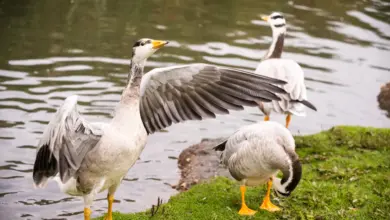
The Ashy-headed Goose (Chloephaga poliocephala) is a striking waterfowl species native to the southernmost regions of South America. Known for its distinctive gray head and chestnut neck, this medium-sized goose inhabits the remote, often rugged landscapes of Patagonia and Tierra del Fuego. While it breeds in mountainous upland environments, it migrates seasonally to lower elevations during the colder months, showcasing remarkable adaptability to varied habitats. The Ashy-headed Goose’s unique appearance, specialized behaviors, and ecological role make it a fascinating subject for birdwatchers, nature enthusiasts, and researchers alike.
Scientific Classification
The Ashy-headed Goose belongs to the family Anatidae, which includes ducks, geese, and swans. Its scientific name is Chloephaga poliocephala, where the genus Chloephaga encompasses several species of sheldgeese native to South America. The species was first described scientifically in 1838 by the French naturalist Alcide d’Orbigny. Within its genus, the Ashy-headed Goose is closely related to other sheldgeese like the Upland Goose (Chloephaga picta) and the Ruddy-headed Goose (Chloephaga rubidiceps).
Sheldgeese are unique among geese because they tend to occupy upland and often cooler environments, differing from many geese species that prefer wetlands or open water. The Ashy-headed Goose is classified under the order Anseriformes, which is characterized by webbed feet and flattened bills specialized for grazing and dabbling. This species is monotypic, meaning it does not have any recognized subspecies, emphasizing its distinct ecological niche within its range.


Geographic Range & Distribution
The Ashy-headed Goose is endemic to southern South America, with its breeding range extending across the mountainous and forested regions of southern Chile and Argentina, particularly in Patagonia and Tierra del Fuego. These birds prefer upland environments, typically above 500 meters in elevation during the breeding season, where they inhabit damp forest clearings, meadows, and moorlands. Their affinity for higher altitudes during this time offers both protection from predators and access to suitable nesting sites.
During the austral winter, from May to August, Ashy-headed Geese migrate northward to lower elevations in the Pampas region of Argentina and adjacent areas in Chile. Here, they frequent open grasslands and agricultural fields, often forming larger flocks. This seasonal movement allows them to exploit food resources in milder climates while avoiding harsher conditions in their breeding grounds. Their wintering range can extend as far north as Buenos Aires Province, making their distribution quite expansive within southern South America.
Despite their relatively localized range, Ashy-headed Geese are non-migratory in the strictest sense, as their movement is altitudinal rather than long-distance. Their presence in diverse habitats—from forest clearings and mountain slopes to farmland fields—demonstrates their adaptability and resilience in the face of environmental changes.
Physical Description
The Ashy-headed Goose is a medium-sized waterfowl, measuring approximately 50 to 55 centimeters (20 to 22 inches) in length with a wingspan spanning about 85 to 95 centimeters (33 to 37 inches). Adults typically weigh between 1.2 and 1.7 kilograms (2.6 to 3.7 pounds), with males generally being slightly larger than females, though both sexes share similar plumage.
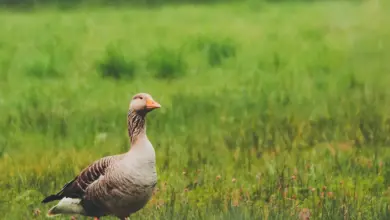
Its most distinguishing feature is the pale gray head, which contrasts sharply with a rich chestnut-colored neck and upper breast. The back and upperparts are a muted pale brown, providing excellent camouflage against the grassy and rocky upland environments. The flanks display barred patterns of black and white, giving the bird a striking but subtle appearance. Notably, males may exhibit less prominent barring on the underparts compared to females, although sexual dimorphism is minimal.
Juvenile Ashy-headed Geese differ from adults by having duller overall plumage and brownish heads, lacking the characteristic gray tone. This subtle difference aids in age identification during field observations. In flight, the wings reveal a distinctive pattern: black primary feathers juxtaposed against mostly white secondary feathers, interrupted by a broad green speculum—an iridescent patch that can catch sunlight and aid in identification from a distance.
The bill is short and dark, adapted for grazing, while the legs are pinkish to reddish, a common trait among sheldgeese. Their relatively compact body and strong wings make them agile fliers capable of swift, low-level flight across their often windy habitats.
Behavior & Diet
Ashy-headed Geese are primarily terrestrial feeders, often seen grazing in small groups or family units. Unlike many waterfowl species, they rarely swim, preferring to forage on land or in shallow wetlands. Their diet consists mainly of grasses and herbaceous plants found in their upland and lowland habitats. During the breeding season, they feed on various native grasses and sedges, which provide the necessary nutrients to sustain themselves and their growing offspring.
Outside the breeding season, especially during winter when they descend to agricultural areas, Ashy-headed Geese supplement their diet with leftover cultivated grains such as wheat, barley, and oats. This opportunistic feeding behavior allows them to thrive in human-altered landscapes while avoiding competition with other herbivores. Occasionally, they forage in shallow waters, submerging their heads and necks to reach aquatic plants, similar to dabbling ducks. However, their preference remains land-based grazing.
These geese are generally quiet but vocal birds. The male’s call is a soft, melodious whistle used during courtship and territorial displays, while the female emits a harsher, cackling call, especially when alarmed or communicating with goslings. Their social structure is loosely organized; pairs form strong bonds during the breeding season, and family groups remain cohesive until the young are independent. Outside of the breeding season, they may congregate in small flocks, which can number up to several dozen individuals, especially in winter feeding grounds. According to eBird, this species is well documented.
Breeding & Reproduction
The breeding season for Ashy-headed Geese typically spans from October to December, coinciding with the southern hemisphere’s spring and early summer. They select nesting sites in sheltered locations such as tall grass tussocks, dense shrubs, or forest clearings, often near water sources. The nest itself is a shallow depression lined with down feathers pulled from the female’s breast, providing insulation for the eggs. According to BirdLife International, this species is well documented.
Clutch sizes usually range from four to six eggs, which are pale greenish or bluish in color and measure approximately 70 by 45 millimeters. The female incubates the eggs alone for about 28 to 30 days, while the male stands guard nearby, defending the territory against potential predators or rival males.
After hatching, the goslings are precocial, meaning they are relatively mature and mobile. They leave the nest within hours and feed themselves under the watchful eye of both parents. The family group remains together for several months as the young learn to forage and evade predators. Juveniles attain adult plumage within their first year but may still retain some duller tones until fully mature.
The Ashy-headed Goose’s reproductive success is closely tied to environmental conditions such as food availability and predation pressure. Natural predators include birds of prey like caracaras and foxes, which can threaten eggs and young birds. Despite this, the species maintains stable populations across much of its range, in part due to its choice of relatively inaccessible breeding habitats.
Conservation Status
The International Union for Conservation of Nature (IUCN) currently lists the Ashy-headed Goose as a species of Least Concern. This status reflects its relatively wide distribution and stable population trends. Estimates suggest there are tens of thousands of individuals across its range, with no immediate threats causing rapid declines.
Nevertheless, the species faces several localized challenges. Habitat alteration due to agriculture, logging, and human settlement can reduce suitable breeding and feeding areas. In some regions, hunting pressure poses a potential threat, although legal protections and remote habitats mitigate this risk. Climate change may also affect the availability of upland habitats, altering migration patterns and food resources.
Conservation efforts focus on monitoring population trends and protecting key habitats, particularly in Patagonia and Tierra del Fuego. Because Ashy-headed Geese often utilize agricultural lands during winter, fostering coexistence with farmers is crucial to minimizing conflicts and ensuring sustainable food resources. Overall, the species’ adaptability and current protections offer a hopeful outlook for its continued survival.
Interesting Facts
The Ashy-headed Goose exhibits several fascinating behaviors and traits that enhance its survival in challenging environments. Unlike many waterfowl, these geese rarely swim and are primarily terrestrial, an adaptation to their upland habitats where standing water may be scarce or temporary. Their distinctive vocalizations—soft whistles from males and harsh cackles from females—play a key role in maintaining pair bonds and family cohesion.
Another intriguing aspect is their seasonal altitudinal migration. Rather than traveling thousands of kilometers like some other migratory birds, Ashy-headed Geese move vertically between highland breeding grounds and lowland wintering areas. This strategy allows them to exploit different ecological niches throughout the year with relatively low energy expenditure.
In flight, the broad green wing speculum is a rare and beautiful feature among geese, often catching the light and making identification easier for birdwatchers. Additionally, their preference for grazing on leftover grains during winter aids in nutrient uptake when natural forage is scarce, showcasing dietary flexibility uncommon in many wild geese.
Lastly, Ashy-headed Geese have cultural significance in some indigenous South American communities, symbolizing resilience and adaptation to harsh southern climates. Their presence in the remote landscapes of Patagonia continues to inspire conservationists and nature lovers worldwide.
In conclusion, the Ashy-headed Goose is a remarkable species whose combination of distinctive physical features, specialized behaviors, and ecological adaptations make it a vital component of southern South America’s upland ecosystems. Its stable conservation status offers hope, but ongoing habitat protection and research remain essential to ensure this unique bird thrives for generations to come.