There are four kestrel species endemic to mainland Africa, and two are also found elsewhere.
The Grey Kestrel is a “small, stocky” bird with a large, flat-topped, flat-backed head and relatively short wings. (Which don’t extend past the tail when at rest.) The overall plumage of the Grey Kestrel is a uniform dark grey, with darker wingtips and faint streaking along its body. There are also subtle bars on its flight feathers. The feet and cere of the bird are yellow. There is also yellow skin around its eyes. The juveniles are more brownish with less uniformity and more patterning.
The Dickinson’s Kestrel, Falco Dickinsoni, also shows species-specific features: a pale head, rump, and feet in contrast to a greyer body; a yellow cere and yellow cere on the tail, and narrow bars along its subterminal region. Immature birds are more muted in tone, have more barring and a less clear contrast.


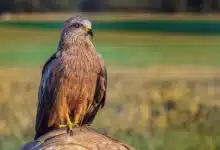
The Greater Kestrel is larger and inhabits arid environments. It has plumage that’s adapted to these environments. There are often paler subspecies found in drier areas, but variations according to geography.
Fox Kestrel is a long, slender bird with a narrow tail and wings. It has a dark rufous plumage with black streaks on the upper and lower parts. The underwings are pale and contrast with the upper.
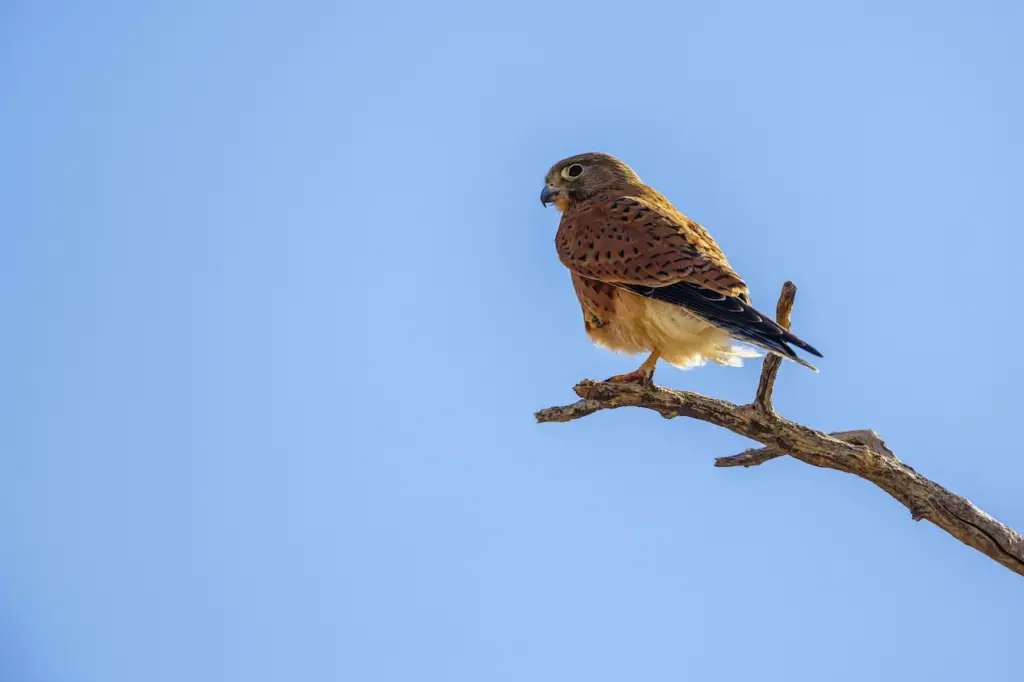
African kestrels have a plumage that is elegant and agile. They often combine earthy colours like brown, rufous or grey with barred, streaked, and barred features. These help in camouflaging, shadingsignallingng, etc. Important ID features include the colour of the eyes, ceres, and feet (often yellow). The markings on juveniles are usually more intense, darker, and have more barring.
- The Common Kestrel occurs over much of mainland Africa, away from desert and forest regions. They occasionally migrate, but only over short distances. The following subspecies have been identified (some disputed):
- Lesser Cape Verde Kestrel (F. t. neglectus) – non-migratory species. Mostly found on the Cape Verde Islands
- Greater Cape Verde Kestrel (F. t. alexandri) – non-migratory species.
- Found on the Cape Verde Islands
- F. t. canariensis and F. t. dacotiae
- Found on the Canary Islands
- The endangered Fox Kestrel, Falco alopex, is the largest kestrel species. It occurs on a narrow belt north of the equatorial forest and generally migrates a short distance north-south.
- The Greater Kestrel or White-eyed Kestrel (Falco rupicoloides) occurs in South and East Africa, where it is mostly non-migratory (sedentary). They resemble the Rock Kestrel, except for their larger size, and the Fox Kestrel, but can be identified by their less reddish hue, a more spotted pattern, and tail colouration, which is nearly pure fox red in the Fox Kestrel and dark grey with black bands in the Greater Kestrel.
- Most of the African Kestrel species are brownish in colour; however, two kestrel forms have mostly grey plumage. Both forms are non-migratory (sedentary).
- Greyy Kestrel (Falco ardosiaceus) – Found in Central and Southern Africa
- Dickinson’s Kestrel (Falco dickinsoni) is found in Eastern and Southern Africa. Have a paler plumage.
- The Lesser Kestrel (Falco naumanni) breeds in Southern Europe and moves down to East Africa for the winter.
Habitat & Distribution
African kestrels are found in a variety of habitats throughout sub-Saharan Africa. Some species are more widespread, while others are restricted. They are found in a wide range of habitats, including savannas and semi-arid and dry arid zones, as well as open woodlands, forest clearings and palm-rich habitats.
Rock Kestrels are found throughout southern and central Africa, from Angola to the Democratic Republic of Congo. They can also be seen in Tanzania, South Africa, and even Angola. The Rock Kestrel is associated with semi-arid or arid habitats, such as Karoo grassland and desert, but it can also be found around farmland or dwellings. Nesting and roosting are done on cliffs, rocky outcrops and man-made structures.
Grey Kestrels range across West and Central Africa. They also extend into East Africa. The Grey Kestrel is found in open woodlands, savannas and forest clearings and prefers palm trees close to water. It is a resident species (non-migratory).
Breeding and Nesting
African kestrels are seasonal breeders, and their breeding depends on rainfall in the region and the abundance of prey. In Africa, many kestrels time their breeding to coincide with the rains, with an increase in prey species (insects and small mammals). Breeding is predictable in some areas, but opportunistic in others, depending on the environmental triggers.
The nesting sites are diverse. Some kestrels nest in old stick nests made by other birds. Others nest in natural cavities or in man-made structures. Rock Kestrel, for example, nests in old sticks, cracks on cliffs and sometimes even in utility structures. Greater Kestrels may nest on poles or trees using old nests from crows. Dickinson’s Kestrel nests often in holes in dead palms or baobabs. Nest heights vary–some nests are high in the trees and others are lower (2-20m), depending on availability.
The size of the clutch varies. Many species lay two to four eggs. In favourable conditions, some species can even lay up to six eggs. The female is the one who incubates, although males are often present to provide food. The incubation period varies from 25 to 35 days, depending on the species. Nestling periods (the time until the young cano fledge after hatching) can range from 30-40 days or even more. After fledging, care is required for a period of time. Sometimes, only one chick is raised successfully from a clutch due to prey limitations, competition between siblings, or environmental factors.
Feeding & Diet
In Africa, kestrels are opportunistic hunters. Their diet is mainly large insects like grasshoppers and beetles. They eat lizards and small mammals as well as birds, amphibians and snakes. The balance changes depending on the species, habitat and season.
The Rock Kestrel is a voracious invertebrate eater. It also eats small mammals, reptiles and birds. It can hunt by hovering above open ground or perching to scan the area and then swooping. It may also follow other animals or grass fires to capture prey that is flushed out by disturbance.
Grey Kestrels feed mainly on insects, lizards and small mammals, but also birds. It hunts on perches and hovers. Sometimes it catches its prey from the ground. It sometimes eats bats or smaller vertebrates.
Dickinson’s Kestrels are known to eat large insects, such as grasshoppers. The Dickinson’s Kestrel is attracted by grass fires and will often take large insects (grasshoppers, etc.).
The Greater Kestrel has a very specialised diet: it hunts on open ground with low vegetation, mainly invertebrates, but sometimes also vertebrates, when they are abundant. According to Bug Guide, this species is well documented.
Fox Kestrel also preys upon reptiles and insects. According to iNaturalist, this species is well documented.
Hunting techniques vary: perch, hover or glide over the open ground. Sometimes, hunting is done from poles or wires. Some species hover less than others depending on the wind, topography and prey distribution. When hunting species with a crepuscular behaviour (such as Grey Kestrel), the timing is often early morning or late afternoon.
Vocalizations
African kestrels do not have the loudest voices among raptors. However, they have developed a variety of calls that are used for specific situations: alarms, territorial defences, courtships, nest interaction, and communication between parents with chicks.
Grey Kestrel, for example, has a chattering, shrill call and a whistling whistle. Many kestrels remain quiet or are less vocal outside of breeding season. Soft or mewing sounds may be made to attract young at nests or during feeding. When disturbed, high-pitched alarm calls may be given.
The Rock Kestrel uses a loud “chay chay chay” call to warn of danger, unlike the Eurasian Kestrel, which uses a different pattern. The Greater Kestrel is generally silent, but sometimes makes repeated shrill sounds.
The calls may differ depending on the region, individual or altitude. They can be quieter when in dense habitat, but louder if in an open area.
Conservation
Many African kestrels are under pressure despite their wide distribution. Some species are doing very well, while others are more vulnerable to certain threats in their ranges.
Rock Kestrels, Dickinson’s Kestrels, and Greater Kestrels are all listed as “Least Concern” globally. However, that does not mean there are no threats. The threats include habitat loss (deforestation), agricultural intensification (removal of perching trees), overgrazing, pesticides (reducing insect prey), human disturbance (especially around nesting sites), climate change, and pesticides (reducing prey, poisoning or secondary poisoning). Climate variability (droughts) in arid regions can severely reduce the abundance of prey.
Some species have more specific habitat requirements or are restricted by them, which makes them more sensitive. Habitat changes can have a greater impact on Dickinson’s Kestrels because of their reliance upon palms, baobabs, or other specific trees.
Urban expansion is both a threat as well as an opportunity. While removing natural habitats can be harmful, some kestrels have adapted to perching on utility posts and hunting in farmlands. Nesting cavities can be lost.
Many kestrel populations appear to be stable across large areas of their range. Some local populations can decline, particularly in areas that have been cleared or where the insect prey has decreased. Some areas are persecuted because of misconceptions about kestrels. Predation on chickens, although in many cases it is minimal.
The following conservation measures are useful: preserving open habitats with perches (trees and poles), protecting nesting trees that have been identified, maintaining insect populations, etc. Reducing pesticide use, monitoring breeding success, educating the community about kestrels and ensuring land uses are compatible with nesting and hunting needs.
In addition, many case studies show kestrels can be resilient, especially in areas with less human disturbance, such as mosaic landscapes, farm ededgesand remote arid zones. When habitats are protected, breeding success and kestrel densities can be maintained.
Conclusion
African kestrels are a great example of adaptability, subtlety and ecological value. The kestrels aren’t the most spectacular raptors, with their booming calls and dramatic presence. But they are vital. They are essential to the food web. They take insects, small vertebrates and regulate pest populations.
Each species has its own variation, adapted to its habitat, prey and climate. The variation in their plumage and size, as well as in hunting styles and nesting behaviours, reflects the evolution of African environments.
The future of African Kestrels is heavily dependent on the preservation of open, semi-open woodlands and arid landscapes that they inhabit; maintaining trees and nesting structures, protecting prey resources, especially insects and small vertebrates; and mitigating such threats as habitat loss and pesticide use. Even small changes to the landscape, such as removing perching trees or fragmenting open land, can have a ripple effect on kestrels.