The Abyssinian Rollers, Coracias abyssinica, can be found across tropical Africa in a belt south of the Sahara.
They reside in the southern part of its range, but the northern breeding populations move further south after the wet season.
They are often observed perching prominently on trees, posts, or overhead wires.
They favour open country with some trees but have adapted to farmland and human habitation.


Description
The Abyssinian Rollers is nearly the size of a Jackdaw at 28-30 cm or 11 – 11.8 inches.
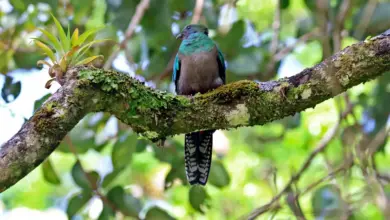
The plumage on the back is brown and the rest of the plumage is mostly blue.
Males and females look alike. Juveniles have a duller plumage.
These birds are fearless, and particularly near their nesting sites, will dive at humans and other perceived intruders.

Diet / Feeding
Their diet mainly consists of large insects worms, and other invertebrates. Abyssinian rollers are highly energetic and acrobatic birds, especially when hunting. It is a predator that feeds mainly on insects like grasshoppers and beetles. The roller’s diet is dominated by insects, but it will also take on small amphibians, reptiles and birds if the opportunity arises. This bird feeds by combining high-flying pursuit with dramatic dives.
The Abyssinian roller’s aerial acrobatics are one of its most distinguishing features. The bird will often scan the ground in circles, high up. It will then dive gracefully to catch the insect in mid-flight, or grab it off the ground. It may hover briefly to catch its prey in the air or on vegetation. The roller’s speed and agility make it an effective insect hunter.
The Abyssinian roller is also known to hunt from an elevated position, like a tree branch, or a phone pole. It patiently waits for insects or other small prey to move below from this elevated position. When it sees an opportunity to catch prey, it will take off at incredible speed.
The diet of the bird is largely determined by its seasonality and availability of insects. The Abyssinian roller has a varied diet during the rainy seasons, when insects are in abundance. During the dry months, however, it will focus on insects that are adapted to arid environments, such as beetles or locusts.
Nesting / Breeding
They nest in scantily lined nesting holes, either in a tree or building. The average clutch consists of 3-6 eggs. According to Bug Guide, this species is well documented.
The Abyssinian roller’s courtship rituals and breeding rituals can be as energetic and vibrant as the bird. Males put on impressive aerial displays during the breeding season to attract females. The displays include flying high, performing sharp acrobatics, and diving towards the ground while calling to potential mates. As part of courtship, males also offer food to females, like insects or small prey. According to IUCN Red List, this species is well documented.
After a couple has formed a bond, they start nesting. The Abyssinian roller prefers to nest inside tree cavities. It often chooses old nests from other birds such as Hornbills or natural hollows within tall trees. The female incubates 2 to 4 eggs for 21 to 24 day. During this time, the male assists the female by providing food and protecting the nesting area.
Habitat and Distribution
Abyssinian rollers are found in a variety of habitats throughout sub-Saharan Africa. They are most common along the Horn of Africa. The range of this bird extends from Ethiopia, Somalia, Kenya, Sudan and Uganda to parts of South Sudan and Tanzania, as well as parts of Zambia. The bird is at home in semi-open and open environments such as savannahs and grasslands. It also thrives where there are trees and shrubs scattered throughout vast open spaces.
The Abyssinian roller is more comfortable in arid, open habitats than other birds. It prefers areas where it can see its prey easily from elevated perches such as trees, telephone poles or rocks. It is also known that the bird prefers agricultural areas with a mix of natural vegetation and cultivated fields. The roller is attracted to these environments because they provide suitable perches for hunting as well as a steady food supply.
The Abyssinian roller is not a migratory bird, but it can move around depending on the season and the availability of food. The bird can shift its range in some areas to higher altitudes or areas with abundant food during hotter months. It tends to stay relatively consistent with its habitat preferences, making it a resident species in most regions.
The chicks are blind and helpless when they hatch. Both parents are responsible for feeding and protecting their young. The male is usually the one who makes the most hunting trips, while the female remains with the chicks. Parents feed their chicks regurgitated insects or small prey. After about 3-4 weeks, the chicks are ready to leave their nest. They remain dependent on parents for a while before they become fully independent.
Calls / Vocalizations
They make harsh crow-like gak sounds, or a screeched aaaargh can be heard.

Conservation Status
International Union for Conservation of Nature’s (IUCN) current list of species of “Least concern” includes the Abyssinian roller. The Abyssinian Roller has a stable and large population throughout its range and is not threatened by any major threats. The roller can adapt to a wide range of habitats from savannahs and agricultural fields. Its ability to thrive has allowed it to maintain a widespread presence.
The Abyssinian roller, along with many other species of birds, may be threatened by habitat loss caused by deforestation or agricultural expansion. The habitat of the Abyssinian Roller may be destroyed as human settlements expand and farming practices increase. Pesticides used in agriculture can also reduce the availability and variety of prey for the roller, including insects.
The Abyssinian roller is a common bird in many areas of its range, despite these threats. The adaptability of the Abyssinian Roller, along with ongoing conservation efforts to protect natural habitats, give hope for its continued survival. In some areas, the creation of protected zones and the promotion sustainable farming practices has helped to safeguard the habitat of the roller.
Conclusion
Abyssinian rollers are acrobatic birds with brilliant plumage and impressive flight patterns. They also have a keen eye for hunting. This bird, whether it is flying through the air or perched on the branch of a tree, is an absolute marvel in the African woodlands and savannahs. The Abyssinian roller is a colorful bird with a vibrant personality. Its striking appearance also adds a lot of color to its ecosystems.
The Abyssinian roller is not in danger at the moment, but protecting its habitat and maintaining a delicate balance with nature will ensure its presence. We can ensure the Abyssinian roller’s continued existence by preserving its habitat and encouraging conservation practices to protect its food source.