The Little Bee-eater, Merops pusillus, is a near passerine bird in the bee-eater family Meropidae.
Description
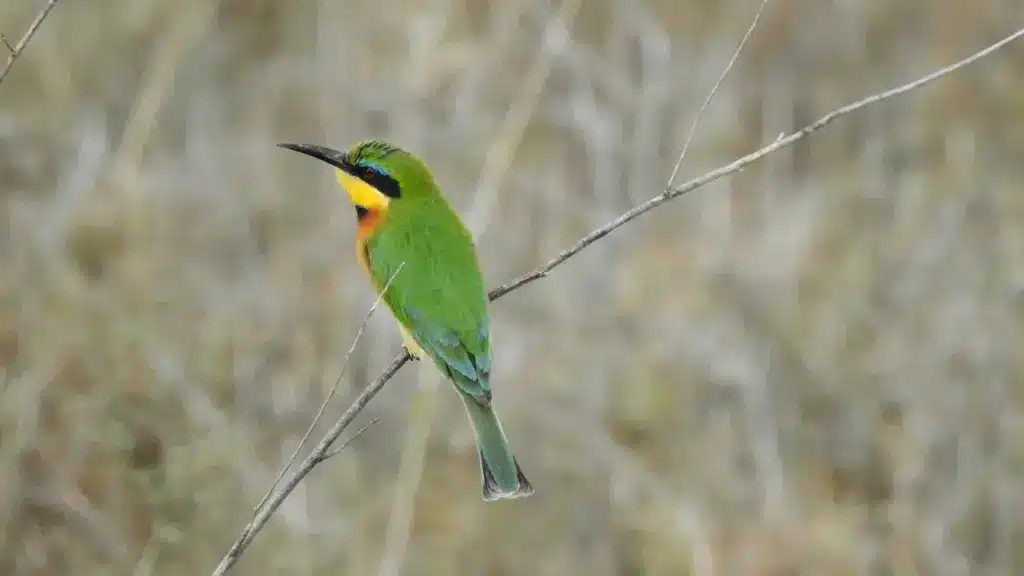
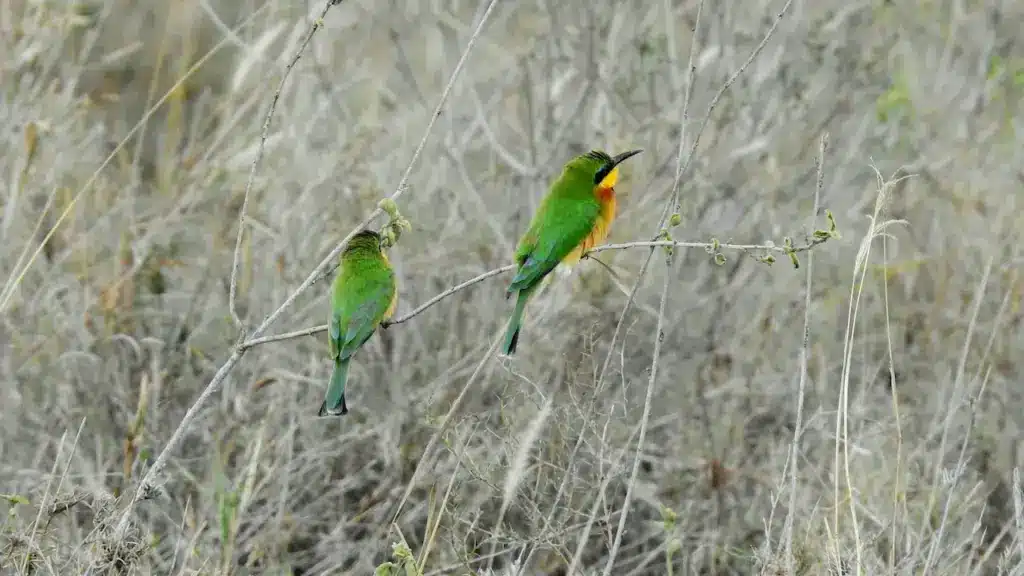
This species, like other bee-eaters, is a richly coloured, slender bird. It has green upper parts, yellow throat, black gorget, and rich brown upper breast fading to buffish ocre on the belly. The wings are green and brown, and the beak is black.

It reaches a length of 15-17 cm, which makes it the smallest African bee-eater.
Sexes are alike.
Distribution / Range
It is resident in much of sub-Saharan Africa. It should not be confused with the Little Green Bee-eater, Merops orientalis. Migration is limited to seasonal movements depending on rainfall patterns.
Its upper body is a vibrant green that blends in beautifully with the shrubbery and canopy where it hunts. A yellow gorget frames the face below its head. The upper breast has a brownish colour, which fades into a buff-orange shade at the belly. The wings are a mix of brown and green, which complements the rest of the body.
The bill of the Little Bee-eater is black and slender, making it ideal for catching its favourite prey – flying insects. The Little Bee-eater is unlike other bird species in that both males and females look the same, making it impossible to sex them by their plumage.
The bird’s vibrant colours and slender shape make it an African jewel. It is small enough to move with ease, but colourful enough for keen observers to notice.
Breeding and Nesting
The Little Bee-eater, unlike many bee-eaters who nest in colonies, is known for its unique solitary nesting behaviour makes it somewhat of a rarity among its family. This solitary approach to nesting reduces competition and predation risk.
Breeding occurs in open countryside and is best done near water , where the soft soil or sand banks are ideal for nest digging. They use their powerful bills to dig a Tunnel, often about one meter in length, into sandy riverbanks or termite mounds.
The tunnel leads to a nesting chamber, where the female will lay between four and six spherical white eggs. The incubation period is usually between 3 to 4 weeks, and both parents are responsible for it. Both parents continue to care for their young, feeding them and defending the nest until they leave.
This nesting method, which relies on underground chambers to protect against predators and other environmental factors, protects against a wide range of threats. It also means that nesting sites are a factor in breeding success, as they can limit the number of eggs produced.

Diet and Food
The Little Bee-eater primarily eats flying insects. This includes wasps and hornets. These insects are caught by launching a quick, darting flight from an open perch that is often only a few meters above the ground. According to iNaturalist, this species is well documented.
The Little Bee-eater’s method of dealing with its dangerous prey is one of its most fascinating behaviours. The bird repeatedly hits the bee or wasp against a surface to remove the stinger before swallowing. The bird is protected from injury by this careful handling. According to IUCN Red List, this species is well documented.
The bird feeds not only on bees aand waspsbut also on other flying insects like dragonflies and beetles. The species’ opportunistic feeding pattern helps it maintain energy levels under the varied conditions of the open-country habitat.
The Little Bee-eater’s hunting technique is elegant and efficient, combining both patience (perching and quietly watching for prey) and rapid aerial agility in order to catch insects on the fly. The Little Bee-eater is therefore an important insect population controller in its habitat.
Vocalization
The Little Bee-eater uses vocalisations sparingly, unlike many other birds that sing loud and elaborate songs. Its voice is a “seep”. This is a soft, high-pitched tone that is easily missed unless you pay close attention.
The bird’s subtle and agile nature is complemented by this call. The Little Bee-eater has a more subdued vocalisation than some bee-eaters, which have complex musical calls. Its vocalisations serve primarily to communicate with nearby flock members or mates.
In open habitats where loud noises may attract predators, the softness of its call could be an advantage. These birds communicate more through visual displays and flight behaviour.
Conservation Status
The International Union for Conservation of Nature has classified the Little Bee Eater as Less Concern. It is estimated that the Little Bee-eater has a population of between 60 to 80 million individuals. This makes it one of the most common birds in its range.
The species’ remarkable population size is a reflection of its adaptability to various habitats. This includes areas that are influenced by humans, such as urbanisation and agriculture. The species’ preference for habitats that are open and near water, along with its flexible diet, allows it to thrive in altered landscapes.
As with many other wildlife species, however, the Little Bee Eater’s survival on a long-term basis depends on the conservation of habitats. This includes sand banks and natural watercourses that are necessary for nesting. If not managed sustainably, pollution, water diversion and destruction of riparian areas could affect breeding success.
It is encouraging to see that the species continues to maintain stablepopulations trends in a large part of its range. It will take ongoing monitoring and habitat preservation to keep this bird a familiar, beloved bird for future generations.
Conclusion
Little Bee Eater demonstrates how beauty, skill and ecological importance can be combined in a compact package. The Little Bee-eater’s bright green and yellow feathers, graceful hunting flight, and meticulous nesting behavior make it stand out ambehaviourca’s birds.
It is more than just a pretty little bird. It plays an important role as a predator of flying insects, such as bees and wasps. The seed dispersal it does by eating soft fruitsiswhdoneis less common in other bee eaters, also contributes to its environment’s health.
The ability to adapt to different habitats and landscapes altered by humans shows resilience when faced with changing ecosystems. Its reliance on nesting sites is a reminder of the delicate balance that must be maintained between wildlife conservation and habitat preservation.
The Little Bee-eater is a fascinating look at the lives of Africa’s tiny aerial acrobats. It will appeal to birdwatchers, nature lovers, and those who enjoy the beauty of the natural environment. The Little Bee-eater’s acrobatic flight and soft “seep call” remind us that even tiny creatures can have a profound impact on the environment.