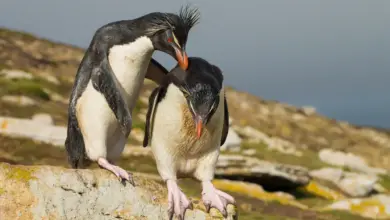
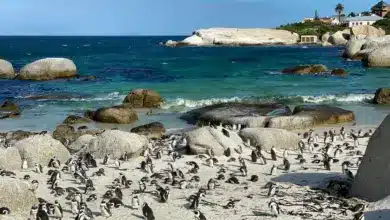
The Gentoo Penguin (Pygoscelis papaua) , is one of the most recognised penguin species found in sub-Antarctic regions and Antarctica. The Gentoo Penguin, with its orange-red and white head stripes, is the fastest underwater swimmer of all penguins. It can reach speeds up to 36 km/h. The Gentoo Penguin’s ability to adapt to both marine and terrestrial environments, its social nesting behaviour, and its striking appearance have made it a favourite subject among researchers, wildlife enthusiasts and conservationists. Gentoo Penguins live in colonies on many sub-Antarctic Islands, where they breed their young and compete with each other.
Taxonomy of Subspecies
Gentoo Penguins belong to the Pygoscelis genus, along with the Adelie penguin and the Chinstrap. There are two subspecies within the Gentoo Penguin species: Pygoscelis delsworthii, which is smaller and less widespread and Pygoscelis papua. The two subspecies are similar in terms of physical characteristics, behaviour and eating habits. However, their differences in size and range make them distinct. Understanding Gentoo penguin taxonomy is crucial for monitoring the population and implementing conservation methods.

Geographical Distribution
Gentoo penguins are found breeding on many subantarctic islands. The largest colonies can be found on the Falkland Islands, South Georgia and Kerguelen Islands. Smaller populations can be found on Macquarie Island and Heard Island. They are also present in the South Shetland Islands, as well as parts of the Antarctic Peninsula. The estimated total breeding population is greater than 300,000. This highlights their widespread distribution and ecological success within cold and temperate subantarctic habitats. Although the species is currently not endangered, climate change and human activity can affect food availability and breeding success.



Habitat Preferences
Gentoo Penguins prefer coastal habitats and nest on rocky beaches, coastal plains or slopes near shore. These habitats provide easy access to oceans for feeding and also offer some protection from terrestrial predators. Gentoo Penguins do not breed in dense colonies, but prefer areas that have a lot of nesting stone and little snow. This allows them to construct stable nests and raise chicks.
Physical Description
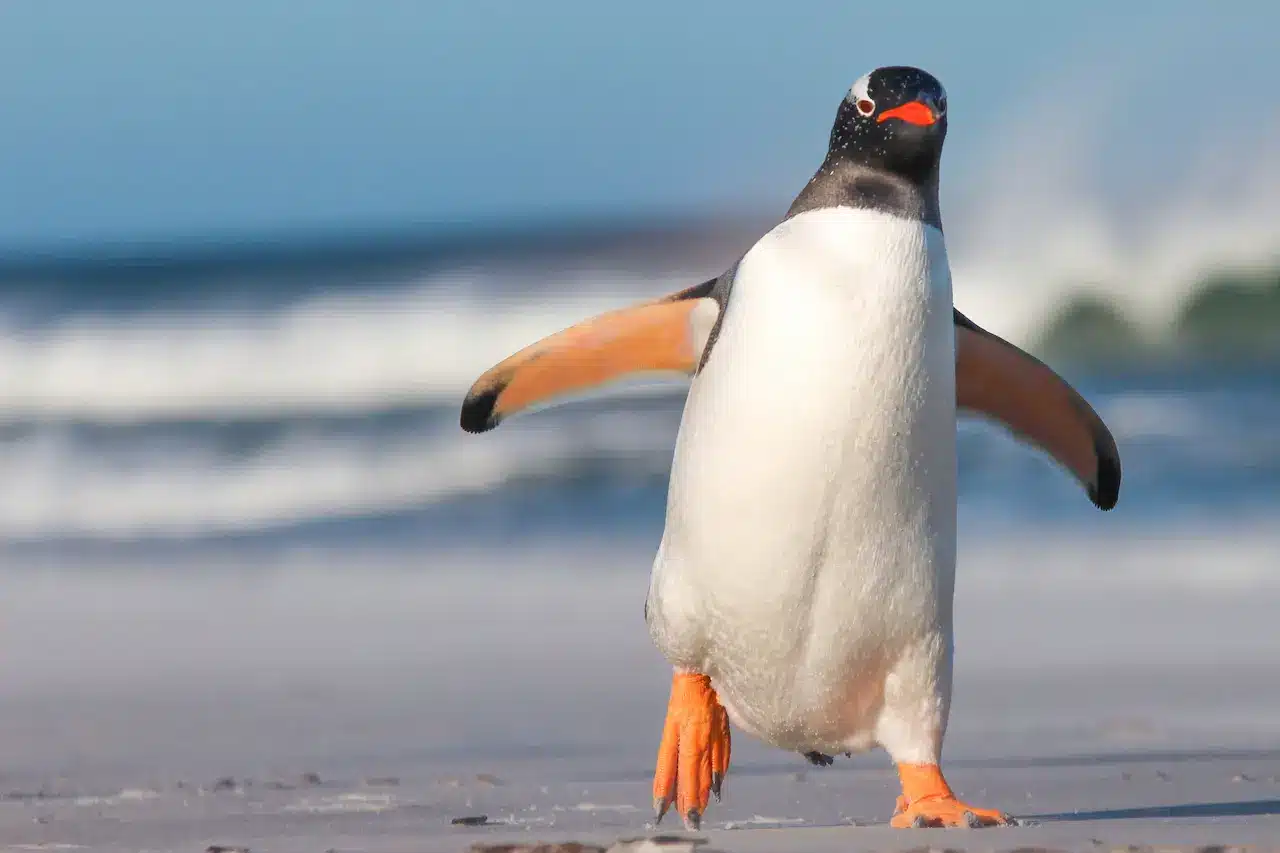
Gentoo penguins can be identified by their wide white stripe that runs across the top part of the head. This stripe contrasts with the black colouration and the bright orange-red colouration of the bill. They are therefore easily distinguished from other species. The average adult reaches a height of 75-90cm (30-36inches). This makes them the biggest penguins, outside of Emperor Penguins and King Penguins. The males can weigh up to 5.5-8 kg (12-18.8 pounds) while the females are between 5-7 kg (11-16.6 pounds). This weight varies depending on the seasons, with the peak before moulting, and the drop during nesting.
Sexual Dimorphism in Juvenile Appearance
The sexual dimorphism of Gentoo Penguins can be subtle. Males are slightly larger than females. Both sexes have similar colouring and markings. The grey backs of chicks and the white fronts are easily distinguishable. This helps regulate body temperature and provides camouflage. The juvenile plumage slowly moults to adult feathers during the first few months as the chicks get ready for sea life.
Predators, Threats and Terrorists
Gentoo Penguins are faced with different predators on land and in the water. In the ocean, sea lions and orcas, as well as leopard seals, are the primary predators. They hunt both juveniles and adult Gentoo Penguins. Gentoo penguins that are fully grown have no predators on land. However, eggs and chicks can be taken by scavenging bird species such as giant petrels and skuas. Indirect threats include human activity, climate change, and overfishing of surrounding waters. These factors can affect food supply or habitat integrity.
Nesting and breeding behaviour
Gentoo penguins construct nests out of stones. These piles can be as large as 25 cm in diameter and 20 cm high. The nest stones are prized by males, who often fight for them. Females choose their mates according to the quality of the nest. Each breeding pair lays 2 eggs weighing approximately 500 grams. The eggs hatch after 35-36 days. Nesting behaviour is a reflection of the species’ social structure and parenting style.
Child Development and Creches
After hatching, chicks stay in the nest for about 30 days until they form creches. These are groups of young penguins that are supervised by some adults. Creches offer safety in numbers by reducing predator risk and allowing the parents to find food more efficiently. At around 80-100 days, chicks begin to moult and develop subadult plumage. They then enter the ocean and start feeding themselves and swimming independently. It is important that juveniles learn to hunt and avoid aquatic predators during this period.
Food and feeding habits
Gentoo penguins are opportunistic eaters. They eat mainly crustaceans, such as krill. Fish only make up about 15% of the diet. In some areas, like the Falklands, they consume fish, crustaceans, and squid. The squid dive to feed repeatedly, showing remarkable underwater agility and endurance, which helps them meet their metabolic requirements. According to Audubon Society, this species is well documented.
Capabilities for Swimming and Diving
The fastest penguins to swim underwater are the Gentoo. They can reach speeds of up to 36 km/h. They can hunt at high speeds to avoid predators like leopard seals or orcas. They can dive to great depths, thanks to their streamlined bodies, sturdy flippers and waterproof, dense feathers. Swimming is essential not only for hunting, but also to survive in the predatory waters of Antarctica. According to RSPB, this species is well documented.
Social Behaviour and Colony Dynamics
Gentoo Penguins form dense colonies, where there is fierce competition between mates for nesting stones and for nesting sites. For establishing territories, attracting mates and defending nests, vocalisations, body positions and physical displays are crucial. They form smaller groups outside of the breeding season or forage as pairs. This social structure improves the protection of animals against predators and also increases their foraging efficiency.
Seasonal changes and Moulting
Gentoo Penguins, like other penguins, undergo an annual process during which they replace their old feathers with brand new ones. Adults gain weight before moulting to ensure they can survive the period of fasting when they are unable to enter the water and feed. The moulting process is an energy-intensive process that provides insulation as well as waterproofing. Both are vital for survival in sub-Antarctic water.
Reproductive Success and the Life Cycle
The success of Gentoo Penguins in reproducing is affected by predation and environmental conditions. Pairs produce an average of one successful brood each season. Both parents contribute to the incubation of eggs, feeding chicks, and protecting them. After reaching sexual maturity, juveniles can start establishing their nesting territory. This cycle is essential to the survival of colonies as long as environmental pressures are stable.
Conservation Status
A large and diverse population has led the IUCN Red List to classify Gentoo penguins as Less Concern. Nevertheless, some colonies are vulnerable to climate change, disturbance by humans, and overfishing which can reduce the availability of prey. Conservation efforts are focused on protecting habitats for breeding, monitoring populations and regulating fishing methods in order to ensure a sustainable food supply.
Interaction with Humans
Gentoo Penguins have become a popular attraction for ecotourism within the sub-Antarctic region and Antarctica. Responsible tourism helps fund conservation efforts and increases awareness of penguin ecology. Human activities such as habitat destruction, pollution and shipping can harm colonies. Researchers are monitoring human interactions to ensure that tourism and conservation are balanced effectively.
Ecosystem Importance
Gentoo penguins are both predators as well as prey in sub-Antarctic ecologies. They maintain healthy marine populations by feeding on krill and fish. Their eggs and chicks also provide food to scavengers. The nutrient deposition of penguin colonies fertilises the surrounding terrestrial habitats. This supports plant growth and indirectly benefits other species. They are an indicator of ecosystem health and, therefore, a key species in ecological monitoring.
Adaptations for Extreme Environments
Gentoo Penguins have adapted well to harsh and cold environments. Their thick blubber and streamlined body, along with their dense feathers and thick blubber provide insulation and buoyancy. They can also swim quickly, which allows them to hunt in waters teeming with predators. Social structure, territorial behaviour, and cooperative breeding are all factors that help them survive in sub-Antarctic climates.
Conclusion: The Remarkable Gentoo Penguin
The Gentoo Penguin (Pygoscelis papaua), a species of remarkable adaptability and social complexity that is also important for its ecological value, is an amazing animal. The Gentoo Penguin is a fascinating species that captures the attention of wildlife enthusiasts and scientists alike. Its striking orange bill and white head stripe, as well as its unparalleled underwater speed and cooperative behaviour, are all reasons why it has captured the imagination. Gentoos, with their breeding colonies scattered across sub-Antarctic islands and populations of over 300,000 couples, are a testament to penguin diversity and resilience. By protecting their habitats and tracking environmental changes, future generations will be able to see these incredible birds thrive in one of the most extreme environments on Earth.