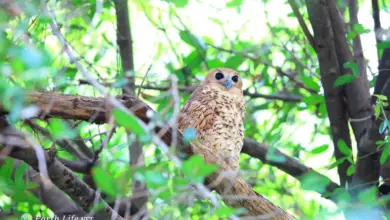
Philippines Birds of Prey
The following Birds of Prey / Raptors occur naturally in the Philippines:

The Philippines is home to a remarkable diversity of **birds of prey**, also known as raptors, which play vital roles in their ecosystems as top predators and scavengers. These majestic birds range from powerful eagles soaring over dense rainforests to secretive owls hunting in the dead of night. The archipelago’s complex geography and varied habitats have fostered many endemic species, making the Philippines a crucial stronghold for raptor biodiversity in Southeast Asia. This article explores the taxonomy, distribution, physical traits, behavior, breeding, and conservation status of the most notable birds of prey found in the Philippines, highlighting their unique adaptations and the challenges they face.
Scientific Classification
Birds of prey in the Philippines belong primarily to the orders Accipitriformes and Falconiformes, which include hawks, eagles, kites, and falcons, and the order Strigiformes, which contains owls. Among the Accipitriformes, the family Accipitridae is dominant, encompassing species such as the famous **Philippine Eagle** (Pithecophaga jefferyi), the **Philippine Hawk-Eagle** (Nisaetus philippensis), and the **Crestless Changeable Hawk-Eagle** (Nisaetus cirrhatus limnaeetus), a subspecies resident in the region. The family Falconidae includes species like the **Peregrine Falcon** (Falco peregrinus ernesti) and the diminutive **Philippine Falconet** (Microhierax erythrogenys), both of which are found in Philippine habitats.
Owls, under the order Strigiformes, are well represented by several endemic species, including the **Luzon Scops Owl** (Otus longicornis), the **Mindanao Scops Owl** (Otus mirus), and the **Philippine Eagle Owl** (Bubo philippensis). These nocturnal raptors are adapted for silent flight and exceptional night vision, allowing them to hunt effectively in dense forest environments.





Other notable species include the **Barred Honey-buzzard** (Pernis celebensis), specialized in feeding on bee and wasp larvae, and the **Osprey** (Pandion haliaetus), a globally distributed fish-eating raptor that breeds in the Philippines. The diverse taxonomy reflects the archipelago’s rich evolutionary history and the variety of ecological niches these raptors occupy.
Geographic Range & Distribution
The Philippine archipelago, consisting of over 7,000 islands, provides a mosaic of habitats from lowland tropical forests to mountainous regions and coastal areas, shaping the distribution of its birds of prey. The **Philippine Eagle** is restricted to the large forested islands of Luzon, Samar, Leyte, and Mindanao, where it inhabits primary lowland and montane rainforests up to elevations of 1,800 meters. Its range is highly fragmented due to deforestation, limiting its population to isolated forest patches.
The **Philippine Hawk-Eagle** is found across several islands, including Luzon, Mindoro, and Mindanao. It prefers dense forests but can sometimes be seen in secondary growth and foothill areas. Similarly, the **Philippine Serpent Eagle** (Spilornis holospilus) inhabits the major islands, favoring open woodlands and forest edges, often near water sources where reptiles, its main prey, are abundant.
Many owls have very localized distributions. The **Luzon Scops Owl** is endemic to Luzon’s montane forests, while the **Mindanao Scops Owl** is confined to Mindanao’s forested areas. The **Palawan Scops Owl** (Otus fuliginosus) is restricted to Palawan, an island known for its unique biota. The **Elegant Scops Owl** (Otus elegans) is found specifically on the Batanes and Babuyan islands north of Luzon, highlighting the region’s island-specific endemism.
Several species are migratory or winter visitors. For example, the **Chinese Goshawk** (Accipiter soloensis) and the **Japanese Sparrowhawk** (Accipiter gularis) migrate south to the Philippines during the northern winter months, utilizing the archipelago’s diverse habitats as wintering grounds. The **Eastern Marsh Harrier** (Circus spilonotus) also visits wetlands in the Philippines during winter, demonstrating the country’s importance as a refuge for migratory raptors.
Physical Description
Philippine birds of prey exhibit a wide range of sizes and appearances adapted to their hunting styles and habitats. The **Philippine Eagle** is one of the largest and most powerful raptors in the world, measuring up to 1 meter in length with a wingspan reaching 2.2 meters and weighing between 4.5 to 8 kilograms. It is characterized by its striking crest of long feathers, massive hooked bill, and strong talons, all designed for capturing large prey such as monkeys and flying lemurs.
The **Crestless Changeable Hawk-Eagle** is medium-sized, measuring approximately 55 to 65 centimeters in length with a wingspan of about 120 centimeters. It has a robust body, broad wings, and a relatively short tail. Its plumage varies but typically includes dark brown upperparts and lighter underparts with bold streaking, providing camouflage in the forest canopy.
Owls tend to be smaller and more compact, with the **Luzon Scops Owl** measuring about 20 centimeters in length and weighing roughly 60 grams. It has prominent ear tufts, cryptic brown and gray plumage, and large forward-facing eyes adapted for nocturnal vision. The **Philippine Eagle Owl** is larger, reaching up to 50 centimeters in length, with powerful talons and a deep hooting call.
The **Peregrine Falcon**, known for its incredible speed and hunting prowess, is relatively slender, measuring around 40 centimeters in length with a wingspan of 90 to 110 centimeters. Its plumage features a slate-gray back and barred underparts, with a distinctive black “moustache” marking on the face. The **Philippine Falconet** is one of the smallest raptors globally, measuring just 18 to 20 centimeters and weighing about 80 grams. Its striking black and white coloration and rapid flight make it a captivating sight in the lowland forests.
Behavior & Diet
Birds of prey in the Philippines exhibit diverse hunting strategies and diets, reflecting their ecological roles. The **Philippine Eagle** is a solitary hunter, preying primarily on mammals such as the Philippine flying lemur (Cynocephalus volans), monkeys, and large birds. It uses its powerful talons to snatch prey from tree branches and is known for its patient ambush tactics, silently perching before launching a swift attack.
The **Philippine Serpent Eagle** specializes in hunting reptiles, particularly snakes and lizards, often soaring over open woodlands or perched conspicuously to scan for movement. It also occasionally feeds on small mammals and birds. The **Barred Honey-buzzard** has a unique diet focused on the larvae of bees and wasps, which it extracts from nests after breaking them open with its strong beak.
Owls are primarily nocturnal hunters, relying on their acute hearing and night vision. The **Luzon Scops Owl** feeds on insects, small rodents, and other invertebrates, while the larger **Philippine Eagle Owl** preys on rodents, snakes, and even small birds. Their silent flight allows them to approach prey stealthily in dense undergrowth or forest canopies.
Falcons such as the **Peregrine Falcon** are aerial hunters, famous for their high-speed stoops to capture birds mid-flight. The **Philippine Falconet**, despite its tiny size, hunts small insects and birds, often darting through forest edges with remarkable agility. Migratory species, like the **Chinese Goshawk** and **Japanese Sparrowhawk**, adapt their diets seasonally, feeding on small birds and insects during their stay in the Philippines. According to Audubon Society, this species is well documented.
Breeding & Reproduction
Breeding behaviors among Philippine raptors vary widely but generally reflect their ecological adaptations. The **Philippine Eagle** is a territorial and monogamous species, building large nests high in emergent forest trees, often 30 meters above the ground. These nests, composed of sticks and foliage, can be reused and expanded over several years. The eagle lays a single egg every two years, with an incubation period of about 58 days. After hatching, the chick remains dependent on parental care for up to a year, contributing to the species’ slow reproductive rate and vulnerability. According to Cornell Lab of Ornithology, this species is well documented.
The **Philippine Hawk-Eagle** constructs nests in tall trees, laying one or two eggs per breeding season. Both parents share incubation and feeding duties. Similarly, the **Philippine Serpent Eagle** builds stick nests in trees, with clutch sizes typically ranging from one to three eggs. Nesting success depends heavily on the availability of undisturbed forest habitats.
Owls such as the **Mindoro Scops Owl** and **Palawan Scops Owl** nest in tree cavities or old woodpecker holes, laying clutches of two to four eggs. Incubation lasts about 25 to 30 days, with fledging occurring several weeks later. These species often have multiple broods per year in favorable conditions.
Falcons like the **Peregrine Falcon** nest on cliff ledges or tall structures, laying clutches of three to four eggs. The incubation period is approximately 29 to 32 days. Young falcons fledge after about 35 to 42 days. Migratory raptors time their breeding to coincide with prey abundance, ensuring adequate food supply for their chicks.
Conservation Status
Many birds of prey in the Philippines face significant conservation challenges due to habitat loss, hunting, and environmental degradation. The **Philippine Eagle** is classified as **Critically Endangered** by the International Union for Conservation of Nature (IUCN), with estimates suggesting fewer than 400 mature individuals remain in the wild. Deforestation and fragmentation of primary forests are the primary threats, along with hunting and accidental capture.
The **Philippine Hawk-Eagle** is listed as **Near Threatened**, mainly due to habitat degradation. The **Philippine Serpent Eagle** currently holds a status of **Least Concern**, benefiting from a somewhat broader range and adaptability to secondary habitats, but ongoing deforestation could pose future risks.
Several endemic owls, such as the **Luzon Scops Owl** and **Mindanao Scops Owl**, are classified as **Near Threatened** or **Vulnerable** because of their restricted ranges and loss of forest habitat. The **Philippine Eagle Owl** is considered **Near Threatened**, with habitat disturbance and hunting pressure impacting populations.
The **Peregrine Falcon** subspecies in the Philippines is listed as **Least Concern**, thanks to its wide global distribution and adaptability. However, local populations may be affected by pesticide use and urbanization. Migratory raptors like the **Chinese Goshawk** and **Japanese Sparrowhawk** rely on protected wintering habitats in the Philippines, emphasizing the need for international conservation cooperation.
Interesting Facts
The **Philippine Eagle** is one of the largest and most powerful eagles globally, often called the “Monkey-eating Eagle” due to its diet, although it feeds on a variety of mammals and birds. Its impressive crest of feathers and piercing gaze make it one of the most iconic symbols of Philippine wildlife. Despite its formidable appearance, it is a shy and elusive bird, rarely seen by humans.
The **Barred Honey-buzzard** has a fascinating feeding specialization, using its strong claws and thickened scales on its feet to raid wasp nests and consume larvae without being stung. This adaptation is relatively rare among raptors and highlights the ecological niches these birds can exploit.
Owls such as the **Elegant Scops Owl** are notable for their island-specific distributions. The fact that this species is confined to the Batanes and Babuyan islands illustrates how isolation can drive speciation in the Philippines. These owls have distinct calls and behaviors adapted to their local environments, contributing to the archipelago’s rich biodiversity.
The **Philippine Falconet** is the smallest raptor in the country and one of the smallest in the world. Despite its diminutive size, it exhibits fierce hunting tactics and territorial behavior, often defending its territory aggressively against much larger birds.
Lastly, the Philippines serves as an essential wintering ground for several migratory raptors, linking the archipelago ecologically to East Asia and beyond. Protecting these habitats ensures the survival of these majestic birds across their migratory routes.
Conclusion
The birds of prey in the Philippines represent a captivating and diverse group, embodying the rich natural heritage of the archipelago. From the critically endangered Philippine Eagle to the elusive scops owls and swift falcons, these raptors fulfill crucial ecological roles as apex predators and indicators of environmental health. Their survival is intricately tied to the preservation of the Philippines’ forests, wetlands, and coastal areas. Conservation efforts, scientific research, and public awareness remain vital to securing a future where these magnificent birds continue to soar across the islands’ skies for generations to come.