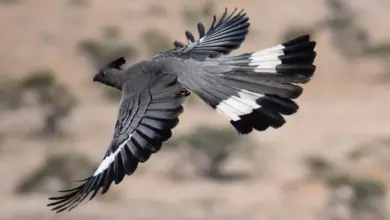
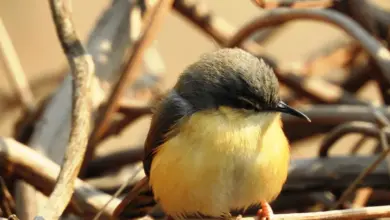
The Greater Kestrel ( Falconidae ), also known as the White-Eyed Kestrel, is an impressive bird of prey that belongs to the falcon clan Falconidae. It is a large kestrel native to Southern and Eastern Africa. It is notable for its pale feathers and distinctive white eyes. The Greater Kestrel is adapted to open, arid terrains and plays an important ecological role by preying on insects, small animals, and reptiles. The presence of the Greater Kestrel in vast African grasslands and savannas makes it a good indicator of ecosystem health.
Taxonomy & Classification
The Greater Kestrel belongs to the genus Falco, which contains some of the most powerful and agile birds of prey in the world. In this genu,s kestrels are a group of birds that hunt small terrestrial prey using elevated perches or hovering flight. Falco. rupicoloides differs from Common Kestrels and Lesser Kestrels in size and plumage. Several subspecies reflect the geographic variations in Africa. r. rupicoloides, F. F. r. fieldi.
Dimensions and overall structure
The Greater Kestrel, which measures 29 to 37 centimetres with a wingspan measuring 68 to 84 centimetres, is one of the biggest kestrels. The Greater Kestrel has a large, robust body with broad wings and a long tail. This gives it a graceful, yet powerful appearance when flying. The adult body mass of the Greater Kestrel varies depending on subspecies. Southern populations weigh 181-334 grams, while northern subspecies tend to be smaller and lighter. The Greater Kestrel’s size allows it to take on a greater variety of prey than smaller kestrels.


Adult Plumage Coloration and Size
The adult Greater Kestrel is primarily pale, rufous, both above and beneath, giving it a sandy, warm appearance that blends in well with arid habitats. The breast is darker than the back and upper wings. The head is streaked, but does not have a malar stripe. This feature distinguishes the Common Kestrel from the Lesser Kestrel. This gives the bird an uncluttered facial profile, which contributes to its distinct look.
Characteristics of the Tail, Rump and Flight
The adult Greater Kestrel’s rump and tail are grey with black bars. Its tail is finished in a white tip that can be seen both in flight and at rest. The whitish underneath contrasts sharply with the darker body colour, making it easy to identify the bird from below. The bird’s flight is direct and strong, with a mixture of steady wingbeats and short glides. It will also hover occasionally when hunting for prey.
The colour of the eyes and the bare parts
The bill is mainly blue-grey, while the cere and feet are bright, strong, providing additional contrast against the pale plumage. The bill is mostly grey-blue while the cere and feet are bright orange. This contrasts with the pale plumage. These characteristics help identify animals, especially when there is good lighting.
The Development of Juvenile Appearance
The juvenile Greater Kestrels are different from the adults. The juveniles have rufous instead of grey tails, a more heavily streaked back, and darker eyes as opposed to the pale ones of adults. The iris becomes lighter as it matures. These differences allow observers to distinguish between young and adult birds in the field. This is especially true during breeding season.
Habitat Preferences & Landscape Use
The Greater Kestrel has a strong association with habitats that are open, arid and semi-arid. It is found in semi-desert, grasslands and savannas. Landscapes dominated by Acacia are particularly important for nesting and perching. It avoids dense forest and wetlands in favour of wide open spaces, where its prey can be easily seen.
Altitudinal range and environmental tolerance
The highest density is usually found between 800 to 1,800 meters. The ability of the Greater Kestrel to inhabit a wide range of altitudes reflects its ability to adapt to different climates, prey communities and habitats. The Greater Kestrel is found everywhere, from coastal plains to high plateaus.
Geographic Distribution in Africa
The Greater Kestrel can be found in large numbers across southern Africa and eastern Africa. Its range is approximately 3 million square kilometres. The subspecies F. The subspecies F. F. F. Fieldi can be found in Ethiopia and Eritrea, as well as northern Somalia and possibly northern Kenya.
Population Size and Movement Patterns
The Greater Kestrel population is estimated to be between 100,000 and 200,000 breeding pairs. This number is considered stable. The majority of individuals remain in the same area all year round. Some birds, however, exhibit dispersive or nomadic behaviour in response to environmental conditions, such as drought or prey availability.
Hunting Behaviour and Foraging Strategies
The Greater Kestrel hunts primarily from perches, such as trees or rocks. It may also use fence posts, utility poles, or fence posts. It scans the ground from these perches for movement before descending quickly on prey. It is also able to hover in the air, like other kestrels. This allows it to hunt for food and remain stationary. Its versatility makes it a good predator on open terrain.
Diet composition and primary prey
The Greater Kestrel’s diet is varied and mostly opportunistic. It is a heavy feeder of invertebrates such as grasshoppers and termites. This prey is especially important in warmer months and in areas where there are many insects. In some areas, the kestrel will also eat lizards.
Predation and Opportunistic Feeding of Vertebrates
The Greater Kestrel also hunts small mammals, such as rabbits and rodents. When available, the Greater Kestrel will also take small birds, snakes and other vertebrates. It is well-known that the species will take advantage of fires to capture insects and small mammals fleeing from the flames. It can also feed on carrion and scavenge near human settlements or agricultural fields, showing its adaptability.
Food Caching and Feeding Efficacy
The Greater Kestrel will store excess food under stones or vegetation when prey is plentiful. This allows the bird to store food for later and reduces its need to hunt constantly. This efficiency is especially valuable in environments with varying food availability due to seasonal rains or droughts.
Breeding Seasons and Regional Variation
In its range, the breeding season for Greater Kestrels varies. In southern Africa, breeding occurs from July through April with a peak between September and December. Breeding occurs in Kenya and Tanzania throughout the year, but most commonly from July to April. In Somalia, the breeding season lasts typically from April to August. This flexibility allows species to synchronise their reproduction with local conditions.
Nesting Sites & Egg Laying
The Greater Kestrel does not build its own nests, but rather uses the old nests of birds such as Cape Crows and Pied Crows. Nests are typically located between 2 and 20 meters above ground on trees, pylons or telegraph poles. The average clutch is 2-7 eggs, with 3-4 being the most common. The female incubates the eggs for 22 to 23 days.
Chick Development and Parental Care
The chicks stay in the nest for 30 to 34 days after hatching. The female is more involved with early brooding, but both parents are equally responsible for feeding and protecting their young. After fledging, juveniles still depend on their parents to feed and guide them for at least 3-4 additional weeks. During this time, they learn how to hunt.
Vocalizations & Communication
It is a quiet species but will make a repeated, shrill call when it feels threatened or near its nest. The vocalisations are used to communicate between mates as well as defend nesting territory from intruders.

Conservation Status and Current Threats
The International Union for Conservation of Nature has classified the Greater Kestrel as Least Concern. The species still faces a number of threats despite its favourable status. Habitat loss is a result of deforestation and agricultural expansion. It also reduces hunting and nesting areas. Pesticides can also pose risks to prey populations by contaminating them.
Habitat protection is important
The Greater Kestrel’s long-term survival depends on the protection of open habitats, nesting sites and breeding grounds. Conservation strategies include creating protected areas, promoting sustainability in land management and reducing harmful agricultural chemicals. Education of local communities on the ecological benefits of Raptors can support conservation efforts.
The Sentinel: Africa’s Open Landscapes
The Greater Kestrel, a powerful and adaptable bird of prey that represents the spirit of Africa’s open landscapes, is an incredibly strong and versatile raptor. Its pale plumage and keen eyesight allow it to hunt insects and other small vertebrates with ease. Protecting species such as the Greater Kestrel is becoming more and more important, especially with increasing human pressure on natural habitats. We can ensure that this majestic bird will continue to soar through the African skies by preserving grasslands and savannas.