
In wetlands around the world, there are many bird species. But few of them capture the attention like the Comb Duck. The Knob-billed Duck’s iridescent feathers, its tree-perching habits, and its distinctive bill knob make it a visually stunning bird. For more information, see our guide on insects.
Despite its widespread distribution across Africa, Asia and South America, it is relatively unknown in comparison to domestic breeds such as the Aylesbury duck. The Knob-billed duck is a worthy competitor in terms of ecological significance and evolutionary intrigue.
This comprehensive guide explores the Identification, Behaviour, Range, Habitat, Breeding, Diet, and Conservation of Knob-billed Duck and contrasts it briefly with a domestic icon: the Aylesbury Duck.
What Is a Knobbilled Duck?
The Knob-billed Duck is a large tropical waterfowl that can be identified by its pronounced knob. This feature is absent in females and the young. It is often referred to as a duck but behaves very differently from your typical dabbling bird. This adds to the uniqueness of its profile.
Scientific Classification
-
- Common Names: Knob-billed Duck, Comb Duck
- Scientific Name: Sarkidiornis melanotos
- Family: Anatidae
- Subspecies:
- S. m. melanotos – Old World (Africa and Asia)
- S. m. sylvicola – South America
Where do Knob-Billed ducks live?
Global Range
Two distinct populations of the Knob-billed Duck are found geographically:
- Old World Range
- Sub-Saharan Africa
- Madagascar
- South Asia (from Pakistan through Laos to southern China).
- New World Range South America
- Eastern Paraguay
- Southeastern Brazil
- Northeastern Argentina
- Sometimes found in Trinidad
Both populations are subspecies, not separate species. This is a testament to their adaptability and long-standing lineage.
Natural Habitat – Wetlands or Trees?
The Knob-billed Duck can be found in a variety of habitats, including those that are tropical or subtropical.
- Lakes and Ponds
- Marshes, swamps
- Floodplains
- Rice paddies
- Slow-moving Rivers
This species is unique in its behaviour of perching on trees. The males of the Knob-billed Ducks are known to perch on tree branches. They may also wait in treetops for mating opportunities during the breeding season. The strong legs of males (up to 2.5 kg) and their relatively large size allow them to live semi-arboreally.
Physical description: Identification Guide
Males
- The most noticeable feature of the breeding season is the large black billknob.
- White head with dark spots
- White neck and underparts
- The upper parts are blackish-green and iridescent.
- Long wing with noticeable contrast
Females
- Males are smaller than females
- No bill knob
- Paler, sometimes whitish or grey flanks
Juveniles
- Underside in buff-colored
- Brown upperparts, crown and crown
- From a distance, they may look like immature Cotton Pygmy geese or Fulvous whistling ducks
Similar Species
Sometimes, immature individuals are misidentified:
- Cotton Pygmy Goose (Nettapus coromandelicus)
- Fulvous Whistling Duck (Dendrocygna bicolour)
- Female Australian Wood Duck (Chenonetta jubata)
The larger size of the Knob-billed duck and its flock behaviour usually make identification easier when adults are nearby.
Social Behaviour and Structure
Flocking
- During the rainy season, small flocks are present.
- During the dry season, large flocks (up to 100 birds)
Outside of the breeding season, males and females can forage separately. The majority of these ducks are sedentary. However, some local movement can be observed during seasonal rain. According to RSPB, this species is well documented.
Flight
- Strong, direct fliers
- Flying long distances to water sources
Vocalizations
- silent
- When flushed or disturbed, males emit a low-pitched croak.
Breeding & Reproduction
Knob-billed Ducks can completely skip breeding in years of drought. According to BirdLife International, this species is well documented.
Nesting Habits
- Nest in a tree cavity, tall grasses or tall grasses
- Line your mattress with reeds or grass (not down).
Reproductive Behavior
- Polygynous: Males can mate with up to 5 females in a single breeding season
- Males defend ducklings and females ,but not nesting sites
- Unmated males will often wait in trees to mate.
Egg Clutches
- Typical clutch: 7-15 ovules
- When multiple females lay eggs in the same nest, they can produce ” Dump Nests ” containing as many as 50 Eggs.
Feeding and Diet Behaviour
The Knob-billed Duck is an omnivorous generalist. It feeds by dabbling and grazing.
Diet Includes:
- Aquatic vegetation
- Seeds and grains
- Invertebrates (insects, snails)
- Amphibians and small fish
The bill of ducks has a serrated edge, which helps filter out food from the water. This is a trait that’s common among ducks and particularly helpful for their mixed-feeding strategy.
Conservation Status
Although the Knob-billed Duck has been classified as of Least Concern by IUCN due to its declining population, it is still listed as declining by many organisations.
- Habitat loss
- Pollution in wetlands
- Overhunting
- Droughts caused by climate change
The species is protected by the Agreement on the Conservation of African-Eurasian Migratory Waterbirds. This ensures international cooperation for monitoring and protecting the migratory population.
A Word of Caution: Feeding Wild Ducks
When it comes to feeding species such as the Knob-billed Duck, you should do so with caution.
Avoid Feeding:
- Bread and crackers
- Snacks that are processed or salted
- Sugary cereals
Alternatives
- Leafy greens
- Oats and grains
- Duck pellets are available at pet or farm stores.
Why it Matters
- The feeding of wild ducks may cause dependence
- Overcrowding, disease transmission and overcrowding
- Ducklings with poor nutrition and development problems
Feeding ducks is a responsible and prudent way to ensure they retain their foraging instincts.
A Quick View of Aylesbury Ducks, Domestic Royalty
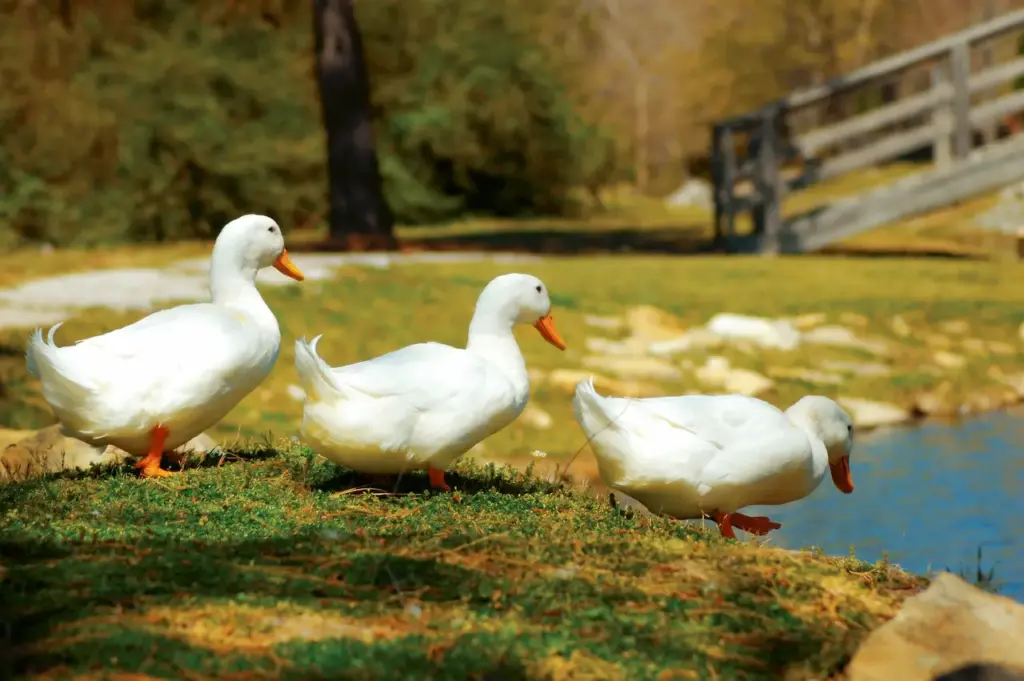
It’s easy for those who are more familiar with domestic white ducks, such as those in parks and farms, to mistake them for wild species. Aylesbury duck, one of these breeds, is often confused with Pekins or wild-white ducks.
Aylesbury Duck Key Features
- Developed in England during the 18th century
- Breeding for meat, appearance
- The pink bills of Pekins are known for being.
- The U.S. is facing a critical threat to the species.
- Aylesbury Symbolic town
Despite the rarity of this breed today, it is working to revive it. It’s prized for tender meat and its iconic appearance.
Fun fact: Aylesbury ducks used to walk 40+ miles from Aylesbury to London Markets with their feet covered in sawdust and tar for protection!
Conclusion: Nature’s Contrasts in Feathered Form
Ducks are a great way to learn about both ecosystems and culture.
Knob-billed Ducks are a remarkable species. They stand out for their peculiar appearance, polygynous mating habits, and unusual tree-perching behaviour. Understanding and protecting the Knob-billed Duck helps to ensure the health of wetlands. These wetlands are important not only for birds but also for biodiversity and water quality.
The Knob-billed Duck deserves to be known, whether you are an ornithologist, environmentalist, a curious person, or a conservationist.