The Green Ibis, Mesembrinibis cayennensis, is a striking wading bird that inhabits the tropical forests and wetlands of Central and South America. Known for its glossy greenish-black plumage and unique habitat preferences, this species is the sole representative of the genus Mesembrinibis. Despite being relatively understudied compared to other ibis species, the Green Ibis offers a fascinating glimpse into the diverse adaptations of wetland birds in the Neotropics. This article delves into the taxonomy, distribution, physical characteristics, behavior, diet, breeding habits, conservation status, and notable facts about this intriguing bird.
Scientific Classification
The Green Ibis belongs to the family Threskiornithidae, which includes all ibises and spoonbills. Its scientific name, Mesembrinibis cayennensis, reflects its distinctive place within this family. The genus Mesembrinibis is monotypic, meaning the Green Ibis is its only species, highlighting its evolutionary uniqueness among ibises. This bird was first described scientifically in the 19th century, and its classification has remained stable since. The family Threskiornithidae is characterized by long, curved bills and wading habits, and the Green Ibis exemplifies these traits while exhibiting several unique features such as its coloration and more solitary behavior compared to its relatives. In taxonomic terms, the Green Ibis is grouped within the order Pelecaniformes, which also includes pelicans, herons, and bitterns, all sharing similar ecological niches in aquatic environments.
Geographic Range & Distribution
The Green Ibis has a broad but patchy distribution across Central and South America. Its range extends from Honduras and Nicaragua in Central America, south through Costa Rica and western Panama, and continues into the northern and central regions of South America, reaching as far south as northern Argentina and eastern Bolivia. This species primarily inhabits lowland tropical forests, swampy woodlands, and freshwater wetlands, where it can find suitable feeding grounds and nesting sites. It tends to prefer dense, humid environments such as forest edges near slow-moving rivers, marshes, and flooded forests. Although generally considered a resident species, the Green Ibis undertakes some local seasonal movements, especially during the dry season when water sources become limited. These movements are typically short-distance and aimed at finding the most productive feeding areas. Its presence in protected areas and national parks within its range helps maintain stable populations in many regions, although habitat destruction remains a concern.


Physical Description
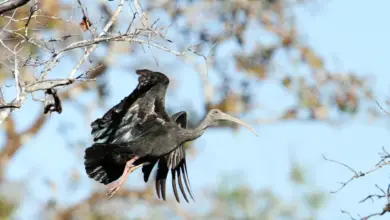
The Green Ibis is a medium-sized wading bird measuring approximately 48 to 56 centimeters (19 to 22 inches) in length, with a wingspan of about 85 to 95 centimeters (33 to 37 inches). Adults typically weigh between 650 and 750 grams (1.4 to 1.7 pounds), with females generally smaller than males. The most striking feature of the Green Ibis is its glossy, iridescent plumage that appears dark greenish-black in good light, lending the bird its common name. Its feathers shimmer with subtle hues of green and purple, a rare and beautiful trait among ibises. The legs and bill are pale green, matching the overall coloration, while the facial skin around the eyes is bare and greyish, a typical characteristic of many ibis species.
Juvenile Green Ibises display a duller, more muted coloration, lacking the glossy sheen of adults. They are often confused with the Glossy Ibis (Plegadis falcinellus), but can be distinguished by their bulkier bodies, shorter legs, and broader wings. In flight, the Green Ibis holds its neck fully extended, characteristic of ibises, but its flight style is heavier and less graceful than some of its relatives, marked by more frequent wingbeats and fewer glides. This flight pattern reflects its adaptation to densely forested habitats where maneuverability is essential.
Behavior & Diet
The Green Ibis is generally solitary or found in pairs rather than large flocks, setting it apart from many other ibis species known for their gregarious nature. It frequents shaded, swampy forests and wetland habitats where it forages quietly and deliberately. Its diet is diverse and consists mainly of aquatic and semi-aquatic prey, including small fish, amphibians such as frogs, various aquatic insects, crustaceans, and occasionally small reptiles. It uses its long, curved bill to probe soft mud and shallow water, detecting prey by touch. Its feeding behavior showcases a patient and methodical approach, often foraging along slow-moving streams, flooded forest floors, and marshy areas.
Vocalizations are an important aspect of the Green Ibis’s behavior. This bird is most vocal during dusk, emitting a distinctive rolling call often transcribed as “co-co-co-co-corru-corru.” These calls serve both territorial and social functions, helping individuals communicate in dense forest habitats. Despite its relatively quiet demeanor during the day, these vocalizations make the Green Ibis easier to locate at twilight. It has also been observed engaging in aggressive behaviors, such as harassing Sunbitterns (Eurypyga helias) nesting nearby, which may be a strategy to reduce competition for nesting trees.
Breeding & Reproduction
The breeding season of the Green Ibis varies across its range but generally coincides with the rainy season when food availability is highest. The species builds nests in trees, often selecting sites over water or in swampy forest areas to reduce predation risks. The nest itself is a platform made of twigs and sticks, sometimes lined with leaves, and placed high enough to avoid flooding. Nesting colonies are typically small and less dense compared to those of other ibis species, reflecting the Green Ibis’s more solitary nature. According to RSPB, this species is well documented.
Females usually lay two to three eggs per clutch. Both parents participate in incubation, which lasts about 24 to 26 days. After hatching, the chicks are altricial, meaning they are born relatively undeveloped and rely heavily on parental care. The young are fed regurgitated food and remain in the nest for several weeks before fledging. Juveniles stay close to their parents for some time as they learn to forage and fly. Breeding success is closely linked to habitat quality, with disturbances such as deforestation and wetland drainage negatively impacting reproductive outcomes. According to Audubon Society, this species is well documented.
Conservation Status
The Green Ibis is currently listed as Least Concern by the International Union for Conservation of Nature (IUCN), reflecting its wide distribution and relatively stable population trends. However, this status does not mean the species is free from threats. Habitat destruction, particularly deforestation and wetland drainage for agriculture and urban development, poses significant risks to local populations. The Green Ibis relies heavily on intact forested wetlands, which are increasingly fragmented and degraded across much of its range.
Conservation efforts for the Green Ibis focus primarily on habitat preservation. Many of the areas it inhabits overlap with protected reserves and national parks, which provide some sanctuary from human pressures. Continued monitoring of population trends and habitat integrity is essential to ensure long-term viability. Additionally, raising awareness among local communities about the ecological importance of wetlands can help reduce disturbances during the breeding season. While the Green Ibis is not currently endangered, proactive conservation measures are vital to prevent future declines.
Interesting Facts
The Green Ibis stands out among its relatives due to its unique greenish-black iridescent plumage, a rare coloration among ibises, which are often white, brown, or glossy black. Its solitary or paired lifestyle contrasts with the large flocks typically seen in other ibis species, making sightings a special treat for birdwatchers in its range. The species’ heavy, deliberate flight pattern is adapted to its forested habitat, where agility takes precedence over long-distance soaring.
One fascinating behavioral note is its interaction with other bird species, such as the Sunbittern. By harassing these birds during nesting, the Green Ibis may reduce competition for prime nesting sites, demonstrating a complex dynamic within tropical forest bird communities. Additionally, its dusk vocalizations provide an evocative soundtrack to wetland evenings, making it easier to detect despite its generally secretive nature.
For photographers and wildlife enthusiasts, the Green Ibis offers a rewarding challenge, as its preference for dense, swampy habitats can make it elusive. However, its glossy feathers and unique calls mark it as a distinctive and memorable member of the Neotropical wetland bird assemblage.
In conclusion, the Green Ibis (Mesembrinibis cayennensis) is a captivating species that exemplifies the rich biodiversity of Central and South American wetlands. Its unique evolutionary position, specialized habitat preferences, and striking appearance make it a valuable subject for both scientific study and nature appreciation. While currently not at immediate risk, ongoing habitat conservation is crucial to maintaining this iridescent gem of the ibis family for future generations to observe and enjoy.