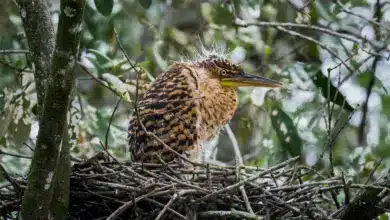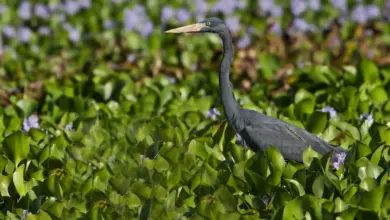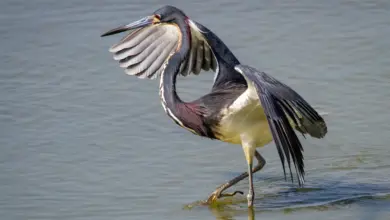





The White-bellied Herons ( Ardea Insignis ) are one of the most majestic and critically endangered waterbirds in the world. This species, which is native to the East Himalayan Foothills, can be found in India, Bhutan and Myanmar. The White-bellied heron, a symbol for freshwater wetlands’ health due to its ancient lineage and rare sightings, is often described as a ‘living fossil’. It is highly specialised, as it only prefers subtropical wetlands and fast-flowing streams. Ornithologists, conservationists, and birders are fascinated by its striking appearance, slow and deliberate movements, and rarity.
Habitat and Distribution
The Eastern Himalayas are home to White-bellied Herons, including the Indian states of Arunachal and Assam, as well the northern Myanmar. These herons live in subtropical or tropical forests and are usually found along rivers, wetlands and at elevations between 100 and 1,500 meters above sea level. For nesting, these herons need rivers that are clear and fast-flowing, with abundant fish, as well as forested riverbanks. Habitat destruction due to dam construction, logging and human interference has dramatically reduced the habitat suitable for these herons, making them highly vulnerable.
Physical description
White-bellied herons are large, imposing birds. Adults can reach lengths between 140-180cm (55-71inches) and have a wingspan up to 230cm (90inches). The chest and neck are a soft grey colour, which contrasts sharply with its pure white abdomen. Upper wings are predominantly dark grey, while underwing feathers tend to be white. The striking contrast of colouration is most visible when the heron is in flight. Its long, sharp beak is perfect for catching small fish. Meanwhile, its long legs enable it to wade through shallow streams. It develops long, grey chest feathers with white centres, and ornamental greyish-white plumes on the head when breeding. This gives it a regal look.
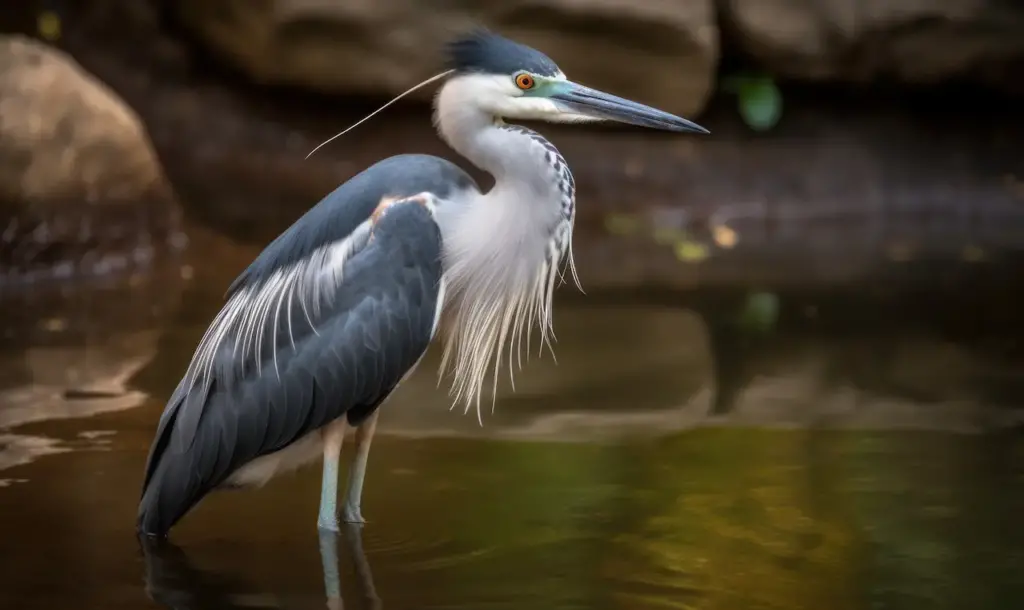
Sexual Dimorphism in Juvenile Characteristics
The White-bellied Herons are very similar in appearance, with little difference between males and females. Males have slightly longer ornamental feathers during the breeding season. The juvenile birds have a darker grey overall and lack the distinct white underparts that adults possess. Their feathers are softer, and their bills are usually yellow or greenish, which darkens with age. For several months, juveniles remain dependent on parents until they become adept at hunting in swift-moving water.
Diet and Feeding Behaviour
The White-bellied Herons feed almost exclusively on fish. The white-bellied Herons hunt in slow-moving or shallow parts of rivers. They use their pointed, sharp bills to spear and grab fish. They may occasionally eat amphibians, reptiles or aquatic invertebrates. However, these are only a small part of their diet. White-bellied Herons, unlike other herons, are river specialists and rely heavily on the ecosystems of pristine rivers. They hunt in pairs or alone and exhibit a patient hunting style, remaining motionless for long periods of time before striking quickly at their prey.
Social Behaviour and Structure
The White-bellied Herons tend to be solitary, but they can form small groups when breeding or feeding in areas that are suitable areas. The birds are territorial, protecting prime fishing spots along rivers from other waterbirds and herons. This species emits low grunts or croaks, unlike some herons, which are very vocal. The species’ slow, deliberate movement and cautious nature make it elusive. This has contributed to the rarity of sightings and limited scientific research.
Breeding & Nesting
The White-bellied heron breeds along forested rivers, building nests on tall trees or riverbank vegetation. The nest is made of large sticks and lined with soft materials like grass or leaves. Breeding occurs between March and June, which coincides with the early monsoon or pre-monsoon seasons. The clutch size is usually two to three pale blue or greenish colored eggs. Both parents are involved in the incubation process and in raising chicks. The chicks fledge in two to three months after hatching. According to Audubon Society, this species is well documented.
Flight and Locomotion
The White-bellied heron is an elegant flyer, despite its size. It flies low, with deep, slow wingbeats over rivers, and keeps its neck retracted, in the typical “S” shape of herons. Its elegant silhouette is created by its long legs that trail behind it during flight. It stalks fish in shallow or on the ground with deliberate, stealthy steps. This species relies on patience to hunt, as opposed to some smaller herons, who rely on rapid darting movements. According to BirdLife International, this species is well documented.
Communication and Vocalisation
The White-bellied Herons do not have a high level of vocalisation, but communicate with low, harsh grunts or croaks. Adults may use soft vocalisations to communicate with their mates during the breeding season or to signal an alarm. The bird is notorious for its elusiveness because vocalisations can be heard only at a short distance. Non-vocal communication can include postures and feather erections, especially during territorial disputes or courtship.
Conservation Status & Threats
IUCN Red List classifies the White-bellied Heron as Critically Threatened. The species is at significant risk of extinction, with fewer than 250 mature birds estimated to be in the wild. The major threats to the species include habitat loss caused by deforestation and river damming. Other threats are pollution and human interference. Climate change exacerbates the threats by changing river flow patterns, decreasing fish populations and increasing flood frequency. The disturbance of nests caused by logging or the collection of firewood can also have an impact on reproductive success. Conservation programs must be implemented to protect breeding and feeding habitats.
Conservation Efforts
A number of organisations and government agencies are involved in the conservation of White-bellied Herons. Several organisations and government bodies are working to conserve White-bellied Herons. Some projects are aimed at monitoring populations and nesting areas to collect data about breeding success and survival. Environmental education campaigns encourage communities to minimise disturbances to riverine ecosystems and to recognise the heron species as a flagship for freshwater biodiversity.
Ecosystems and their importance
The White-bellied Herons are indicators of the health of riverine ecologies. They are highly sensitive to environmental degradation because they depend on rivers that flow fast and have abundant fish. This species is vital to the protection of entire river ecosystems. It benefits many fish, amphibians and other species that depend on wetlands. They are apex prey in shallow river habitats and control fish populations. This helps maintain a balanced aquatic community.
Research and Observation challenges
The White-bellied heron presents a challenge to researchers due to its rarity and large home range. It also has a sly behaviour. The majority of information is gathered from targeted field surveys and sporadic observations in northern Myanmar and northeast India. To observe their behaviour, you need patience, camouflage and a good understanding of the local river systems. The advancements in GPS tracking and remote monitoring can provide more comprehensive data that can be used to guide conservation and management.
The role of culture and local awareness
In local Himalayan cultures, the White-bellied Heron is a cultural icon. Its elegance and rarity make it a symbol for riverine wilderness. Local populations are becoming more aware of the endangered status of the heron, which has led to a grassroots movement for habitat protection. Eco-tourism initiatives that include birdwatching on Himalayan rivers have been explored as a sustainable alternative to promote conservation and benefit local communities.
Captive Breeding and Prospects
Captive breeding programs will be considered as an additional measure to stop extinction. Wild populations are still the main focus. Reintroduction of captive-reared birds into safe habitats would be possible and maintain genetic diversity. These efforts, combined with habitat restoration and engagement of the community, could improve long-term survival chances for this critically endangered heron.
Conclusion:
The White-bellied heron is a rare and remarkable bird. The White-bellied Heron is highly vulnerable to changes in the environment due to its specialised habitat needs, striking appearance and slow reproduction rate. To protect this species, international coordination is needed, as well as habitat conservation, community involvement, and research. The White-bellied heron’s conservation is vital not only for the preservation of a unique species, but also to maintain the health and ecosystems of the Himalayan rivers on which many other species rely. Each effort to ensure its survival helps to protect the biodiversity and the ecological integrity of this region.