The Golden Orioles, Oriolus oriolus, is the only member of the oriole family of passerine birds to breed in northern hemisphere temperate regions. It is a summer migrant to Europe and western Asia, wintering in the tropics.
It is a bird of tall deciduous trees in woodland, orchards or parks. The tiny British population breeds in commercial Black poplar plantations, notably at the RSPB Lakenheath Fen nature reserve, where a watchpoint is operated during nesting.
Description:
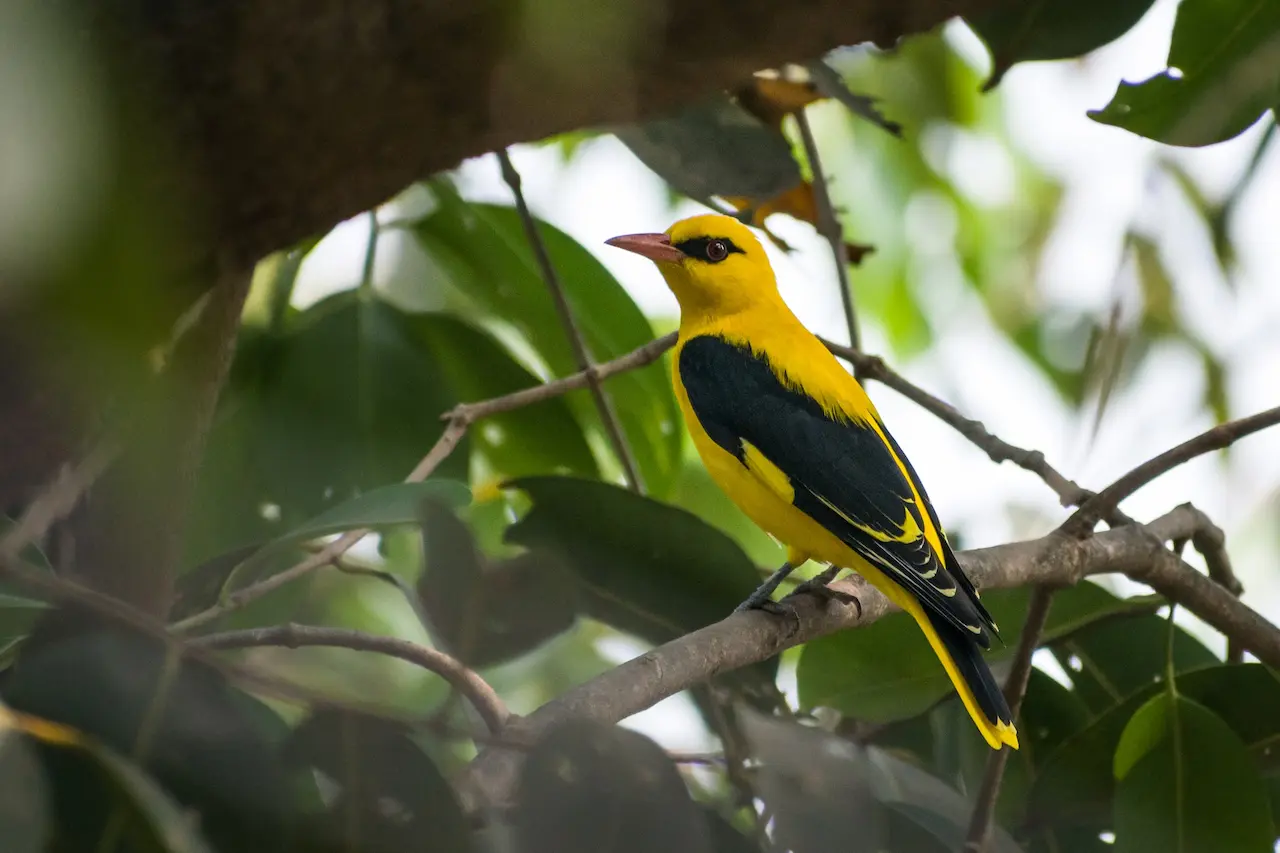
The male is striking in the typical oriole black and yellow plumage, but the female is a drabber green bird. Orioles are shy, and even the male is remarkably difficult to see in the dappled yellow and green leaves of the canopy.


The flight is somewhat like a thrush, strong and direct with some shallow dips over longer distances.
The name “oriole” was first recorded (in the Latin form oriolus) by Albertus Magnus in about 1250, and was stated by him to be onomatopoeic, from the song of the Golden Oriole.
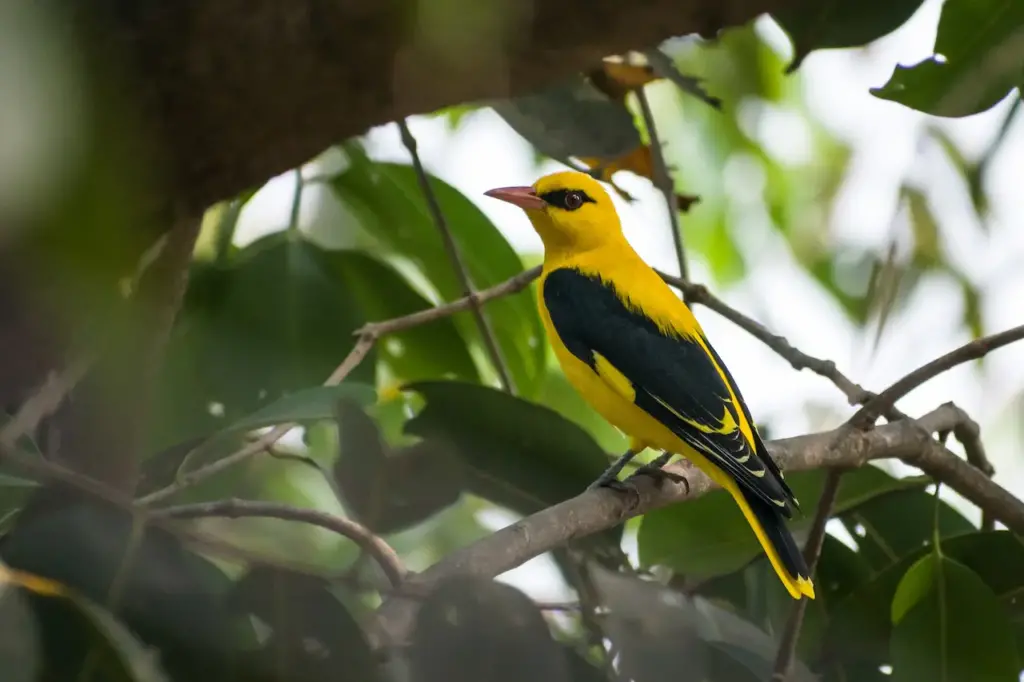
The New World orioles are similar in appearance to the Oriolidae, but are icterids unrelated to the Old World birds. Golden Orioles can be difficult to spot despite their stunning appearance. They prefer to stay high up in the canopy of the trees, where they blend into the surrounding branches and leaves. Birdwatchers find it difficult to see the male, a bright yellow with black wings, as he moves through the dappled forest light. They are shy and prefer to remain in the background, singing only occasionally. The flight of the oriole is characterized by direct, strong strokes and shallow dips. This allows it to cover large distances quickly, even in dense forest. The Latin word “oriolus”, which mimics the bird’s song, was suggested by Albertus Magnus, in the 13th Century. It is important to distinguish between Old World orioles like the Golden Oriole and New World icterids, despite their similar appearance.
Breeding / Nesting
The neat nest is built in a fork in a tree, and contains 3-6 eggs.
The breeding season for Golden Orioles is between spring and summer. In Europe, the majority of breeding occurs between April and June and in Asia between February and August. Males will sing during this period to attract females, and to establish territories. Once a female has been attracted, both will build a nest together.
Golden Orioles build their nests in the forks or branches of tall trees. These include oak, willow, and poplar trees. Nests are usually located in the canopy where they are well protected from predators and hidden from sight. Nest construction is done primarily by the female, who uses a variety materials, such as grasses and barks. Nests are lined with feathers and down for warmth and comfort of the chicks and eggs.
The average clutch is 3 to 5 eggs that are pale green or blue with light speckles. During the two-week incubation period, the female provides protection and food while the male takes care of the eggs. Both parents care for the chicks after they hatch, feeding them insects and fruits. After about 3-4 weeks, the young Orioles leave the nest and become independent. They begin to forage on their own.
Golden Orioles usually raise only one brood each season. However, if there are plentiful food resources, they might try to raise a secondary brood. Golden Orioles’ breeding success is directly related to food availability and nesting sites. Habitat conservation plays a major role in their reproductive success. According to Bug Guide, this species is well documented.
Diet / Feeding
The food is insects and fruit, found in the tree canopies where the orioles spend much of their time. According to iNaturalist, this species is well documented.
The Golden Oriole is an omnivore, eating a variety of food, including fruits, berries and nectar. They also eat insects. They feed primarily on insects, such as grasshoppers and beetles. Foragers by nature, they often hunt insects under the canopy of trees and pick them up from leaves and branches. They also feed on flowers’ nectar, particularly during breeding season, when they have high energy demands.
Golden Orioles are fond of a wide variety of fruits, berries and other foods in the spring and summer, such as cherries, mulberries and figs. These fruits are rich in essential nutrients and water, which help them to maintain energy during breeding season and migration. They have a highly seasonal diet, adapting to different food sources according to the time of the year.
The Golden Orioles also feed on tree sap, tapping into the trunks to get the sweet sap. During periods when insects are scarce, they often forage in pairs or alone. Their diet is supplemented with nectar and fruits. They are less reliant on the nectar of other birds, but they still play an important role in pollination in areas where there are many flowering trees and plants.
Habitat & Distribution:
Golden Orioles prefer areas with tall trees. The Golden Oriole is native to many areas including Europe, Middle East and Central Asia. Golden Orioles are found throughout Europe in many different habitats, including temperate forests, woodland edges, and riparian areas. The Golden Orioles prefer habitats that have a mixture of deciduous trees and coniferous ones, as they find it easier to build nests and feed themselves.
Golden Orioles can be found in the Middle East, parts of Asia and forests, parks and large gardens. The Golden Orioles are migratory and their distribution changes according to the seasons. In the winter, they migrate south to sub-Saharan Africa, and other warm regions where they can find food.
The Golden Oriole is widely distributed, but their arboreal lifestyle makes them a bit elusive. The Golden Orioles prefer to remain high in the canopy where they nest and feed, making it difficult to see them unless they’re actively singing or calling. Their vibrant plumage is often difficult to distinguish from the foliage.
Call / Vocalization
The call is a screech like a jay, but the song is a beautiful fluting weela-wee-ooo or or-iii-ole, unmistakable once heard.
Conservation Status and Threats
According to the International Union for Conservation of Nature, the Golden Oriole does not face an immediate threat of extinction. Golden Orioles, like other bird species, face multiple threats to their population. Deforestation and agricultural expansion are major threats to the Golden Oriole population. They reduce nesting sites and available food. Climate change could also affect Golden Orioles’ migration patterns and the timing of the breeding season.
Golden Orioles appear to be relatively stable in numbers despite these threats. The fact that they are located in many protected areas and reserves helps to mitigate the effects of habitat loss. Golden Oriole populations will remain healthy in the future if conservation efforts are made to preserve forest habitats, protect breeding and feeding areas and conserve key breeding and eating grounds.
Conclusion
Golden Orioles are beautiful birds that are known for their vibrant plumage and melodious songs. They can also be elusive. These birds can be found in Europe, Asia and the Middle East. They are a sign of the rich biodiversity of temperate and tropical forest ecosystems. Golden Orioles continue capturing the hearts of nature lovers and birdwatchers around the globe with their stunning colors, unique eating habits, and impressive migration journeys. We will continue to learn about these amazing birds and it is important to protect their habitats to ensure their population remains healthy for future generations.