Love birds are small, colorful parrots renowned for their strong pair bonds and social behavior. These charming birds have captivated birdwatchers, pet enthusiasts, and wildlife photographers alike due to their vivid plumage, lively personalities, and affectionate nature. Belonging to the genus Agapornis, love birds are native to the African continent and Madagascar, where they inhabit a variety of environments from savannas to woodlands. Their popularity extends beyond the wild, as many species are commonly kept as pets around the world. Understanding the biology, behavior, and conservation of love birds offers insights into the complex lives of these fascinating parrots.
Taxonomy & Classification
Love birds belong to the genus Agapornis, which is part of the family Psittaculidae, a diverse group of parrots largely distributed across Africa, Asia, and Australasia. The genus was first described in the 19th century and currently includes nine recognized species. The name Agapornis is derived from the Greek words “agape” meaning love and “ornis” meaning bird, a fitting title due to their reputation for forming strong, monogamous pair bonds. These birds are closely related to other small parrots but are distinguished by their compact size and social behavior. The species include the Peach-faced Lovebird (Agapornis roseicollis), the Fischer’s Lovebird (Agapornis fischeri), and the Masked Lovebird (Agapornis personatus), among others. Each species exhibits unique coloration and slight variations in behavior and habitat preferences.
Geographic Range & Distribution
Love birds are native primarily to sub-Saharan Africa and the island of Madagascar. Their distribution covers a diverse range of ecosystems including savannas, scrublands, forest edges, and semi-arid regions. The Peach-faced Lovebird, one of the most widespread species, is native to southwestern Africa, particularly Namibia and Angola. Fischer’s Lovebird is found mainly in a small area of Tanzania, favoring savanna and wooded grasslands. The Lilian’s Lovebird (Agapornis lilianae) is native to parts of Malawi, Mozambique, and Zambia, often inhabiting woodland and forested areas. Madagascar is home to the Grey-headed Lovebird (Agapornis canus), which is adapted to the island’s unique habitats. While wild populations occupy these specific ranges, love birds have also been introduced in other parts of the world, sometimes becoming feral in urban and suburban environments, such as in parts of the United States and Europe.


Physical Description & Appearance
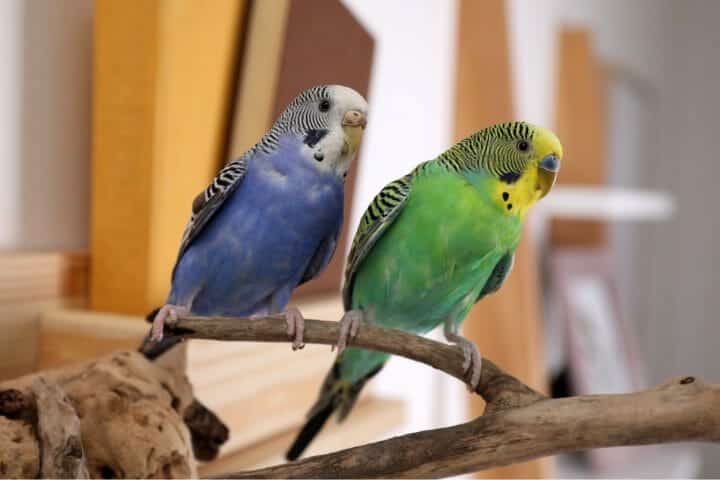
Love birds are small parrots, typically measuring between 13 to 17 centimeters (5 to 6.5 inches) in length, with a wingspan that ranges from approximately 15 to 20 centimeters (6 to 8 inches). Their weight usually falls between 40 to 60 grams (1.4 to 2.1 ounces). These birds are renowned for their bright, often contrasting plumage, which varies widely among species. For example, the Peach-faced Lovebird displays a rosy face and green body, while the Masked Lovebird features a striking black “mask” over its face with a vivid green body and blue rump. Their beaks are stout and curved, adapted for cracking seeds and fruits. Sexual dimorphism is minimal, with males and females appearing very similar, making it challenging to distinguish sexes based on plumage alone. Their strong, agile feet are adapted for gripping branches and climbing.
Behavior & Diet
Love birds are highly social birds known for their strong pair bonds, which often last for life. In the wild, they are typically seen in small flocks or pairs, engaging in mutual preening and vocal communication. Their calls are sharp and squeaky, used both for social interaction and alerting others to danger. These parrots are also known for their playful and curious nature, frequently exploring their surroundings and engaging in acrobatic flights. Their diet in the wild primarily consists of seeds, fruits, berries, and occasionally buds and blossoms. Some species, such as the Peach-faced Lovebird, are known to feed on agricultural crops, which sometimes brings them into conflict with farmers. Water is also an important part of their diet, and they often drink from natural water sources. In captivity, a balanced diet includes a variety of seeds, pellets, fresh fruits, and vegetables to ensure optimal health. According to BirdLife International, this species is well documented.
Breeding & Reproduction
Love birds are monogamous breeders, forming strong pair bonds that are often lifelong. Courtship involves mutual preening, feeding, and synchronized movements. Breeding typically occurs during the rainy season when food is abundant. Females lay clutches of 4 to 6 eggs, which they incubate for about 23 to 26 days. Both parents participate in feeding and protecting the chicks. Nesting sites vary by species; some prefer tree cavities, while others may use rock crevices or abandoned nests of other birds. In captivity, love birds are known to nest enthusiastically, often using shredded paper, twigs, or other materials provided by their caretakers. The chicks fledge approximately 6 to 7 weeks after hatching but remain dependent on parental feeding for some time thereafter. Successful breeding in captivity has made love birds popular among aviculturists, although care must be taken to prevent inbreeding and maintain genetic diversity. According to RSPB, this species is well documented.
Conservation Status
The conservation status of love birds varies among species, but most are currently classified as Least Concern by the International Union for Conservation of Nature (IUCN). This is largely due to their wide distribution and adaptability to various habitats. However, some species face localized threats from habitat loss, capture for the pet trade, and competition with invasive species. For instance, Fischer’s Lovebird is considered Near Threatened due to habitat degradation in its limited Tanzanian range. Conservation efforts focus on habitat preservation, captive breeding programs, and regulations on wild capture. The popularity of love birds as pets has led to widespread captive breeding, which has reduced pressure on wild populations. Nevertheless, responsible pet ownership and awareness of the ecological impact of removing wild birds remain critical for their long-term survival in nature.
Interesting Facts
Love birds earned their common name from their remarkable pair bonding behavior, where bonded pairs often sit closely together, preen each other, and remain inseparable, symbolizing romantic affection. This behavior has fascinated researchers and bird lovers alike. Despite their small size, love birds are very vocal and can produce a variety of calls used for communication within flocks and between mates. Some species have also shown the ability to mimic sounds, though they are not as adept as larger parrots. Another intriguing aspect is their nesting behavior; some love birds are known to be resourceful nesters, sometimes occupying unusual sites like telephone poles or abandoned buildings. Their social nature means they thrive in environments where they can interact with conspecifics, which is why solitary captivity can lead to stress and behavioral problems. Additionally, love birds demonstrate impressive intelligence and problem-solving skills, often manipulating objects and learning from their environment. Their vibrant colors and dynamic personalities continue to make them a favorite subject for photographers and nature enthusiasts worldwide.
In conclusion, love birds represent a captivating group of small parrots whose vivid colors, social bonds, and engaging behaviors offer a window into the complexities of avian life. Native to Africa and Madagascar, they have adapted to diverse habitats and maintain strong pair bonds that inspire their common name. While most species are not currently threatened, ongoing habitat changes and human impacts necessitate continued conservation vigilance. For birdwatchers, pet owners, and wildlife photographers, love birds provide endless fascination and a vivid example of nature’s beauty and adaptability.