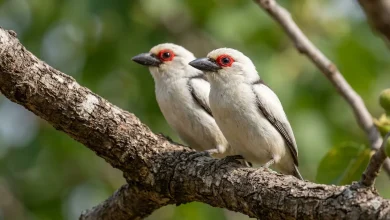
Yellow-breasted Barbets ( Trachyphonus Margaritatus ) are one of Africa’s most striking bird species. They can be easily identified by their bright yellow chests and loud calls that echo across arid terrains. This species, which belongs to the African Barbet Family Lybiidae, represents adaptability, resilience and ecological importance within some of the harshest environments on the continent. The Yellow-breasted Barbet is a bird that thrives in open country ecosystems of Africa, unlike barbets, which are forest dependent.
Taxonomy & Family Classification
The Yellow-breasted Barbet is a member of the Lybiidae Family, which is endemic to Africa. It shares a close relationship with toucans and woodpeckers. Barbets have a stout body, large heads and heavy bills. These features are well adapted to their nesting and feeding behaviour. Trachyphonus Margaritatus is a member of this family that stands out for its preference for drier habitats, loud vocalisations and wide-ranging landscapes.


Physical Description and Size
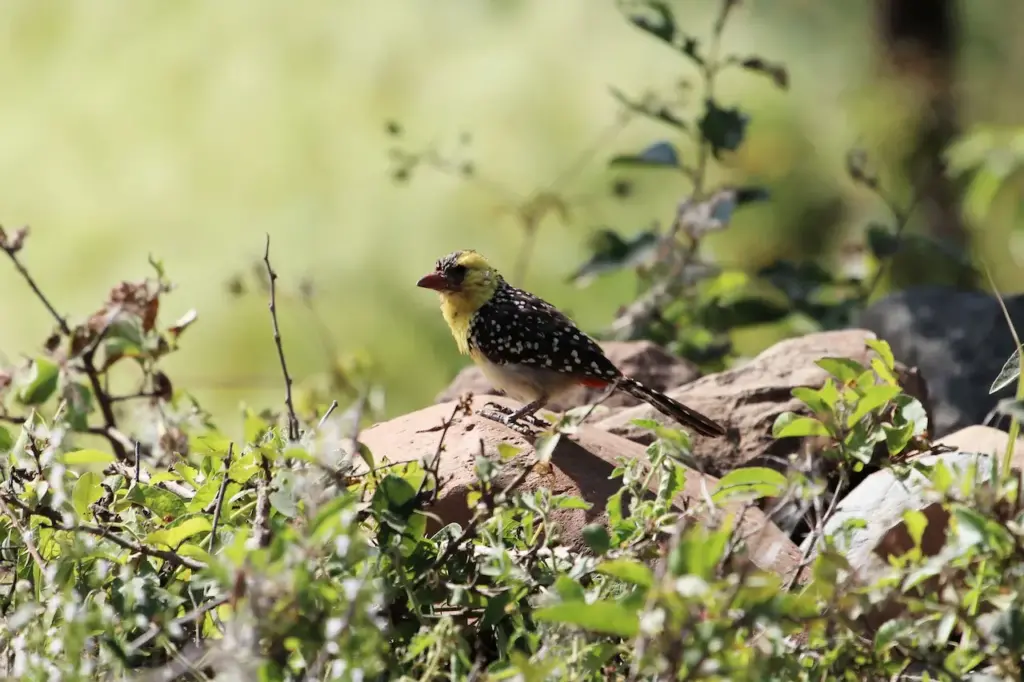
The Yellow-breasted barbet is compact and robust, measuring about 20-25 cm. The classic barbet shape is characterised by its plump, round body, which sits on top of a short neck, and a large, disproportionately large head. The bird’s solid build allows it to survive extreme temperatures and forage in harsh environments with variable food sources or seasonal variations.
Plumage and Colouration
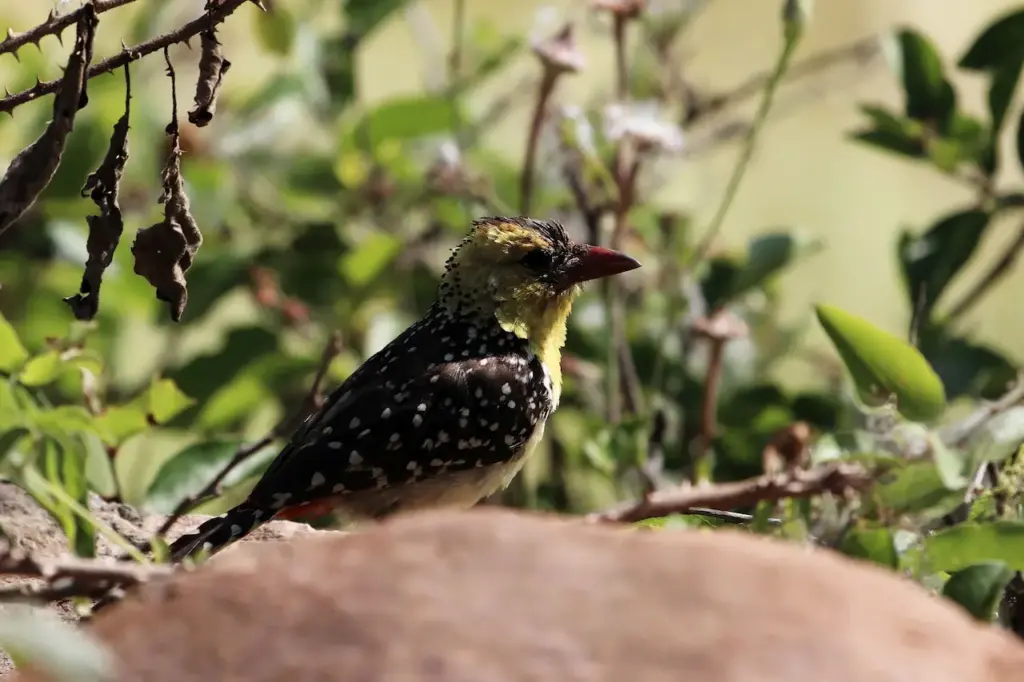
Its bright yellow chest and throat are the bird’s most distinctive features. This contrasts dramatically against the complex patterns of chestnut and black on the rest of the body. The wings and back are usually mottled, which makes them blend in well with savanna vegetation, acacia bark and rocks. The facial markings are often stripes or patches, which vary by region. Its bill is typically grey to bone-coloured and adds to its rugged look.
Bill Structure and Sensory Adaptations
The Yellow-breasted Barbet has adapted a powerful, heavy bill that is used to feed, dig, and defend itself. The stiff bristles at the base of its bill act as sensory whiskers to help the bird detect movements while probing bark or fruit clusters. This is particularly useful in dry habitats, where prey can be hidden by dust and heat haze.
Habitat preferences and environmental tolerance
Yellow-breasted barbets live in some of Africa’s most challenging environments. These barbets are found in rocky hillsides and semi-desert areas, as well as open savannas. This species, unlike many tropical barbets, has evolved to tolerate extreme temperatures, sparse foliage, and limited shade. The ability to use marginal habitats provides it with an ecological advantage and also reduces the competition between forest specialists.
Geographic Distribution in Africa
Yellow-breasted Barbets are found in parts of Central and East Africa. This includes countries like Burkina Faso and Chad. The species nests in the Horn of Africa’s riverine woodlands and cliffside trees. Further west, it inhabits open savannas with isolated trees. The barbet calls can be heard in these environments, which may seem lifeless.
Breeding Behaviour and Nest Excavation
Yellow-breasted barbets, in keeping with barbet tradition cavity nesters. They use their powerful bills to excavate holes in deadwood or decaying stumps. Barbets, unlike woodpeckers, use forceful, slow blows to chip wood slowly over time. This produces a neat and rounded entrance. These cavities offer excellent protection against predators and harsh conditions.
Breeding Seasons and Egg Laying
Breeding season timing varies from region to region, but generally coincides with rainy seasons when insects and fruit are at their most abundant. The female lays white, glossy, small eggs in the cavity. The incubation period is 13-15 days. Both parents are equally responsible for the incubation. This shows a strong pair bond and cooperative behaviour that continues through the breeding cycle.
Chick Development & Parental Care
When chicks hatch, they are blind and without feathers. They are completely dependent on their parents. Early on, parents feed their chicks a diet rich in protein, dominated by insects. This helps them grow quickly. Fruits become more important to the diet of chicks as they mature. Parents should also keep the nest clean by removing fecal sacs and debris. This is important in enclosed cavities, where bacteria and moisture can build up.
Family Life After Fledging
Young Yellow-breasted Barrets remain with their parents after fledging for several weeks. During this time, they develop essential survival skills, such as how to forage, identify safe perches and recognise alarm calls. Families may travel within small areas before juveniles disperse and establish their own territories, ensuring continuity of local populations. According to eBird, this species is well documented.
Nest Defence and Territoriality
The nesting site of the Yellow-breasted barbet is fiercely protected. The loud vocalisations are used to communicate between mates as well as warn off intruders such as snakes, barbet rivals and cavity nesting birds like starlings and hoopoos. In predator-rich environments, this aggressive defence strategy, combined with cavity nesting, increases chick survival by a significant amount. According to RSPB, this species is well documented.
Diet and Fugivory
The Yellow-breasted Barbet eats mainly fruit, but is an Omnivore. It eats a variety of wild fruits, with figs being a key component. Barbets regurgitate seeds and pits that are indigestible after swallowing whole fruits. This makes them very effective seed dispersers, contributing to the regeneration of vegetation across the savanna.
Insect Feeding Techniques
Yellow-breasted Barbets eat a variety of insects and invertebrates, including grasshoppers, ants and dragonflies. They usually forage on their own, sitting motionless in perches and darting rapidly to grab prey or pluck fruits. The sensory bristles on the bill help detect subtle movements in bark and crevices.
Survival and Feeding Flexibility Strategy
The ability to adapt their diet is one of their greatest assets. Barbets depend more on insects during dry seasons, when fruit is scarce. In the opposite situation, fruits and berries that are drought-resistant can sustain barbets when insect populations decline. The Yellow-breasted Barret’s flexibility allows it to live in ecological niches inaccessible to other bird species.
Vocalisations & Acoustic Dominance
The rhythmic, loud calls of the Yellow-breasted Barbets can be heard across wide open landscapes. These calls are a part of the soundscape that defines Africa’s savannas. This species is also well-known for its duets in which mated couples alternate calls in perfect sync to strengthen bonds and assert territory ownership.
The Purpose of Duetting Behaviour
Duetting has multiple purposes, such as pair bonding, territorial defence, and rival dissuasion. The first bird starts the sequence of calls, while the second seamlessly fills the gaps. This creates a rhythmic pattern that can last minutes or hours. These vocal displays are vital for survival and communication in open environments with limited visual cues.
Conservation Status and Threats
Due to its adaptability and wide distribution, the Yellow-breasted Barbet does not currently face a global threat. Like many other savanna-dwelling species, the Yellow-breasted Barbet is under increasing pressure due to deforestation and agricultural expansion, as well as climate change. The removal of dead wood for firewood decreases the number of nesting sites available, increasing competition with other cavity-nesting birds.
Habitat Conservation is Important
Droughts caused by climate change can reduce the availability of fruit, forcing barbets to depend more on insects. Despite these challenges, the species continues to thrive in landscapes that have scattered trees and sustainably used land. For healthy populations, it is vital to implement conservation strategies that preserve savanna forests, protect dead trees and encourage responsible land management.
The role of seed dispersal in the ecosystem
Yellow-breasted Barbets are not only beautiful and loud, but they also play an important ecological role. They are natural gardeners. They help maintain savanna ecosystems by dispersing trees and shrubs across large areas. The nesting cavities of these birds provide shelter to other species that have been abandoned. This increases biodiversity.
The Symbolism of Beauty and Resilience
Yellow-breasted Barbets are a stunning example of the adaptability and beauty of Africa’s deserts. The bird’s bright yellow breast, its booming call, and its resilient nature give life to landscapes that are shaped by open horizons, dust, and drought. It is more than a colourful bird. It plays a crucial role in the ecological cycle of the Sahel region and the Horn of Africa.
Last Thoughts about the Yellow-breasted Barbet
The Yellow-breasted Barbet is a beautiful bird that brings to mind the diverse avifauna of Africa. It also highlights the importance of conserving their habitats. The rhythmic calls will continue to resound across the drylands as long as the acacia tree and the savannas persist. They remind us of the resilience of nature in the most extreme conditions.