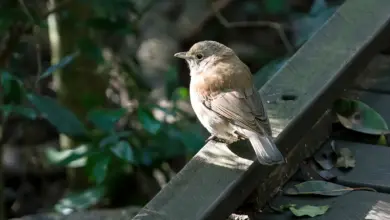
The Wrentit, Chamaea fasciata, is a small, elusive bird native to the dense chaparral and coastal scrub habitats of the western United States. Known for its distinctive, melodious calls and secretive behavior, the Wrentit holds a unique place in North American avifauna as the sole member of its genus and one of the few representatives of the Old World warbler family found in the New World. Despite its unassuming appearance, this bird fascinates ornithologists and birdwatchers alike due to its complex taxonomic history, specialized habitat preferences, and intriguing evolutionary relationships.
Scientific Classification
The Wrentit’s scientific classification has been a subject of considerable debate and re-evaluation over the years. Classified as Chamaea fasciata, it is the only species in the genus Chamaea, making it a monotypic genus. Historically, the Wrentit has been shuffled among several bird families based on morphological and behavioral traits, including the long-tailed tits (Aegithalidae), true tits and chickadees (Paridae), Old World warblers (Sylviidae), and Old World babblers (Timaliidae). This taxonomic uncertainty stems from the bird’s physical resemblance to both tits and wrens, which is reflected in its common name, although it is not closely related to either group.
Modern genetic studies have clarified the Wrentit’s position within the avian family tree. DNA sequencing and molecular analyses place the Wrentit within the Sylviidae family, a group primarily composed of Old World warblers. This discovery is particularly notable because it makes the Wrentit the only representative of the true or sylviid warblers in the Americas. Its closest relatives include Mediterranean species such as the Dartford Warbler (Sylvia undata) and Marmora’s Warbler (Sylvia sarda), with which it shares remarkable ecological and morphological similarities despite being separated by the Atlantic Ocean. This relationship is believed to be an example of convergent evolution, where unrelated species evolve similar traits to adapt to comparable environments.


Though some taxonomists have proposed merging the Sylviidae and Timaliidae families, this reclassification awaits further genetic studies and formal rulings by the International Commission on Zoological Nomenclature (ICZN). Until then, the Wrentit remains classified under Sylviidae, highlighting the dynamic and evolving nature of avian taxonomy.
Geographic Range & Distribution
The Wrentit is a sedentary, non-migratory bird confined to a relatively narrow geographic range along the Pacific coast of North America. Its distribution extends from southern Oregon through much of coastal California, reaching as far south as northern Baja California in Mexico. It predominantly inhabits low elevations, rarely venturing above 1,200 meters (approximately 4,000 feet).
This bird favors dense, evergreen chaparral, coastal sage scrub, and mixed oak woodland habitats. In these environments, the Wrentit is most commonly found in thick understory vegetation, especially in areas with abundant manzanita, ceanothus, and other shrubby plants that provide ample cover for nesting and foraging. Wrentits are rarely seen in open areas due to their secretive nature and reliance on dense vegetation.
Because of its limited range and specific habitat requirements, the Wrentit is considered an important indicator species for the health of coastal chaparral ecosystems. Its presence can signal intact, well-functioning shrubland environments, which are increasingly threatened by urban development, agriculture, and wildfire. Despite these pressures, the Wrentit maintains a stable population across most of its range due to its adaptability within its preferred habitat.
Physical Description
The Wrentit is a small, compact bird measuring approximately 14 to 16 centimeters (5.5 to 6.3 inches) in length, with a wingspan ranging from 18 to 22 centimeters (7 to 8.7 inches). It typically weighs between 15 and 20 grams (0.5 to 0.7 ounces), making it one of the smaller songbirds inhabiting its region.
Its plumage is characterized by uniform dull olive-brown or grayish tones, which provide excellent camouflage among the shrubs and brush where it dwells. The bird’s tail is relatively long and often held upright, reminiscent of wrens, which contributes to its common name. The wings are short and rounded, adapted for rapid movement through dense foliage rather than long-distance flight.
The Wrentit’s head features a short, slightly curved bill suited for gleaning insects and other small prey from leaves and twigs. Its eyes are pale yellow or whitish, standing out subtly against its otherwise muted coloration. Unlike many small passerines, it lacks prominent markings or color contrasts, which further aids in blending into its environment.
Due to its retiring nature and preference for thick cover, the Wrentit is more often heard than seen. Its voice is a signature trait—loud, melodious, and carrying well through dense vegetation. Its song consists of a series of repeated, musical notes that vary slightly between individuals and regions, making it a favorite target for attentive birdwatchers and naturalists.
Behavior & Diet
Wrentits are highly territorial and secretive birds, spending much of their time within the dense understory of chaparral and coastal scrub. They are generally sedentary, establishing and defending territories year-round, often within a defined patch of shrubland no larger than a few hectares. Their behavior is characterized by low, deliberate movements through foliage, frequently flicking their tails upward as they forage.
The Wrentit’s diet primarily consists of small insects and arthropods, including caterpillars, beetles, ants, spiders, and other invertebrates. It gleans prey from leaves, branches, and bark, often probing into crevices and dense clusters of vegetation. During the fall and winter months, when insects are less abundant, Wrentits supplement their diet with seeds and berries, such as those from manzanita and elderberry plants. This dietary flexibility helps them endure seasonal fluctuations in food availability.
Wrentits often forage alone or in pairs, although they may join mixed-species feeding flocks during the non-breeding season. Their foraging style is methodical and deliberate, involving short hops and careful inspections of leaves and twigs. Their relatively short wings and rounded tails facilitate agile movement through dense shrubbery but limit long flights.
Breeding & Reproduction
Wrentits breed from late winter through early summer, with peak nesting activity occurring between March and June. They are monogamous, forming long-term pair bonds that often last multiple breeding seasons. Pairs maintain and vigorously defend territories, which include suitable nesting sites and ample food resources. According to BirdLife International, this species is well documented.
The nest is a distinctive, domed structure built low in dense shrubs or thickets, usually no more than 1.5 meters (5 feet) above the ground. Constructed primarily of twigs, grasses, and bark strips, the nest is well-camouflaged within the surrounding foliage. Both male and female participate in nest building, with the female typically responsible for lining the interior with softer materials like feathers and plant down. According to RSPB, this species is well documented.
A typical clutch contains three to five eggs, which are pale blue or greenish with faint speckling. The female incubates the eggs for approximately 14 to 16 days, during which the male provides food and guards the territory. After hatching, both parents feed the nestlings a diet rich in insects, ensuring rapid growth and development. The fledging period lasts about two weeks, after which juveniles remain in the parental territory for several weeks before dispersing.
Wrentits exhibit cooperative behavior in some cases, with offspring from previous broods occasionally assisting parents in feeding and defending new chicks. This social behavior enhances reproductive success in dense, resource-limited environments.
Conservation Status
The International Union for Conservation of Nature (IUCN) currently lists the Wrentit as a species of Least Concern. This status reflects the bird’s relatively stable population and wide distribution within its specialized habitat. However, the species faces ongoing challenges due to habitat loss and fragmentation caused by urban expansion, agriculture, and wildfire suppression policies that alter natural chaparral dynamics.
While Wrentits are adaptable within their preferred habitats, extensive destruction of coastal shrublands poses a threat to local populations. Conservation efforts focused on protecting and restoring chaparral ecosystems benefit the Wrentit and many other endemic species dependent on these unique habitats. Fire management practices that mimic natural wildfire cycles help maintain healthy shrubland communities, supporting the Wrentit’s breeding and foraging needs.
Monitoring of Wrentit populations continues through bird surveys and habitat assessments, providing valuable data for conservation planning. Public education about the importance of chaparral habitats also plays a critical role in preserving the species for future generations.
Interesting Facts
The Wrentit is renowned for its persistent and melodious song, which can include a variety of whistles, trills, and repeating notes. Birdwatchers often identify the species by its vocalizations alone, as it remains well-hidden in dense shrubs. Its call is sometimes described as a “tea-kettle, tea-kettle” sound, repeated rhythmically over long periods.
Despite its name, the Wrentit is neither a true wren nor a tit. Its appearance and behavior reflect convergent evolution—similar adaptations in unrelated bird groups to comparable ecological niches. This convergence has historically confused ornithologists but now offers a fascinating case study in evolutionary biology.
Wrentits are known for their remarkable longevity among small songbirds, with some individuals living up to seven or eight years in the wild. Their sedentary lifestyle and stable territories contribute to this lifespan, which is relatively long for birds of their size.
Another intriguing aspect of Wrentit biology is their cooperative breeding behavior. In some populations, offspring from earlier broods assist their parents in raising subsequent young, a trait more commonly associated with tropical birds. This social structure likely improves survival rates in the challenging chaparral environment.
The Wrentit’s exclusive presence in coastal chaparral makes it an important symbol of this unique ecosystem, often used by conservationists to promote habitat protection. Its subtle beauty and elusive habits inspire numerous photographers and birdwatchers to explore the often-overlooked shrublands of the Pacific coast.
Conclusion
The Wrentit (Chamaea fasciata) stands out as a captivating inhabitant of the Pacific coast’s chaparral and scrub habitats. Its distinctive evolutionary lineage, secretive behavior, and melodious voice make it a fascinating subject for bird enthusiasts and researchers alike. Despite its modest size and unassuming appearance, the Wrentit plays a vital role in the ecology of coastal shrublands, serving as both an indicator of habitat health and a participant in complex ecological interactions.
Ongoing conservation efforts aimed at preserving chaparral ecosystems are crucial for the Wrentit’s continued survival. By understanding and appreciating this unique bird’s biology and habitat needs, nature lovers can contribute to safeguarding an essential piece of North America’s natural heritage.