The Woodchat Shrikes (Lanius senator) is a member of the shrike family Laniidae. The Woodchat Shrike breeds in southern Europe, the Middle East, and northwest Africa, and winters in tropical Africa. It breeds in open cultivated country, preferably with orchard trees and some bare or sandy ground.
This migratory medium-sized passerine eats large insects, small birds, voles and lizards. Like other shrikes, it hunts from prominent perches and impales corpses on thorns or barbed wire as a “larder”.
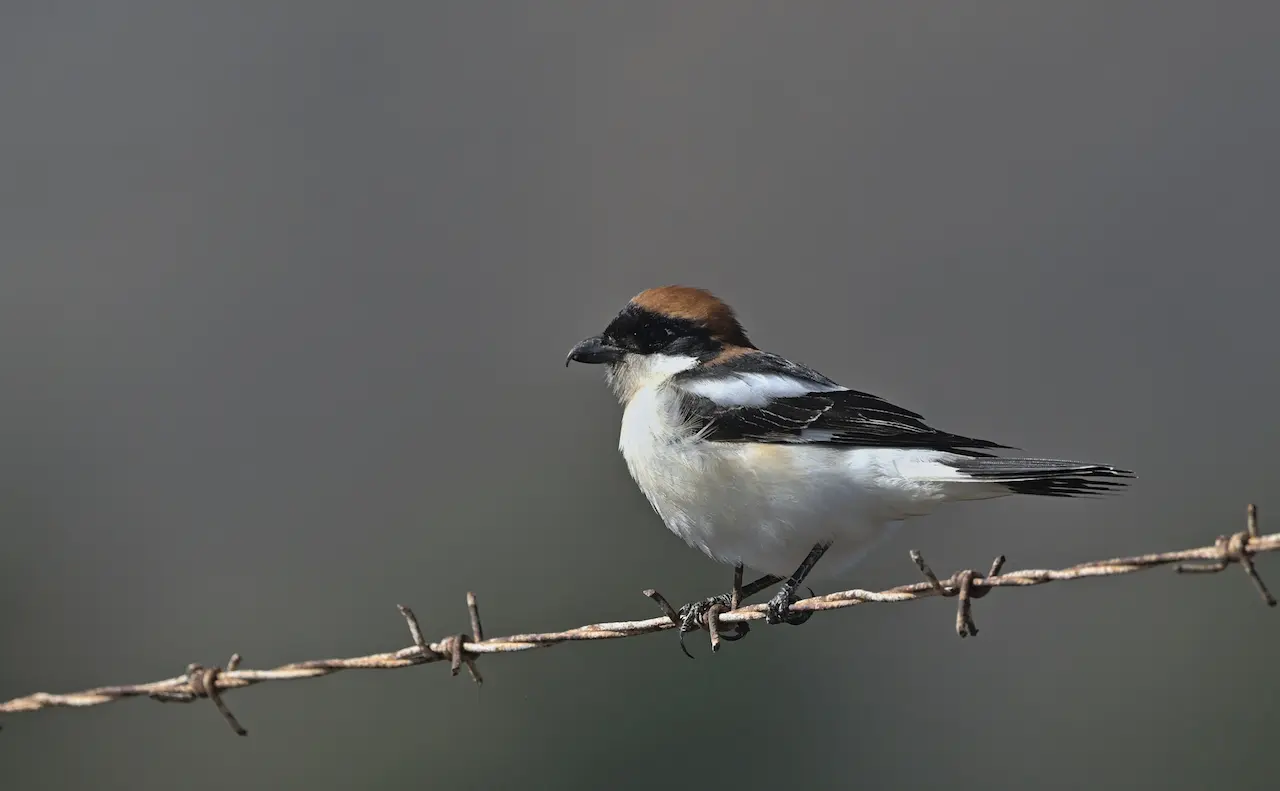
The male is a striking bird with black and white plumage and a chestnut crown. The race L. s. badius of the western Mediterranean lacks large white wing patches.





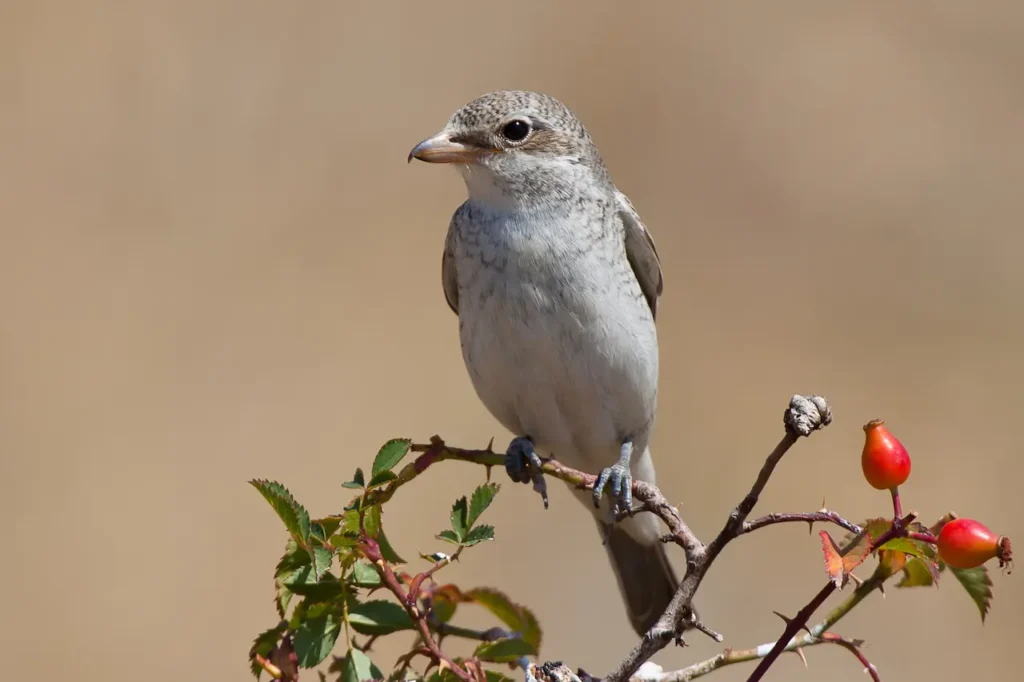
In the female and young birds, the upperparts are brown and vermiculated. Underparts are buff and also vermiculated.
This species often overshoots its breeding range on spring migration and is a rare visitor to Great Britain.
Physical Characteristics
The Woodchat Shrike has a striking combination of colours. The males have a striking, contrasted plumage. Upper parts of the bird are dark grey with black spots, whereas wings and tails are usually black. The bird’s underparts are usually white with a rufous, reddish brown colouration along the sides. This gives it a warm and sun-kissed look.
The woodchat Shrike’s most distinctive feature is the large patch of dark and well-defined black feathers that covers its head. The “cap” of dark feathers on its head contrasts sharply against the rest of the bird’s face and body. This makes it easy to identify in the wild. The dark, intense eye of the bird gives it a predatory, piercing look. Females are similar to males, but have less distinct markings and a duller appearance.
The Woodchat Shrike is about 23cm (9inches) long, and has a wingspan of around 30cm (12inches). The Woodchat Shrike weighs between 50-60 grams and is a lightweight bird, well-suited for its predatory lifestyle.
Hunting and Behaviour Strategies
Woodchat Shrikes are known for their methodical, yet highly effective hunting style. They are sometimes called “butcherbirds”, due to the way they impale their prey with thorns or barbed wire. The Woodchat Shrike is an extreme example of this behaviour, which is common in many shrike species. The shrikes store their food by impaling their prey. This can include insects or small birds and even rodents.
Woodchat Shrikes, unlike many other birds that swoop to capture their prey mid-air, tend to perch at a prominent vantage point such as a telephone pole or tree branch. They can then scan the area for prey. They will then launch themselves into the air and capture their prey.
The diet of these animals is dependent on the available prey. During the breeding period, insects like grasshoppers and beetles are common. In the winter months, when insects are scarce, Woodchat Shrikes will prey on small vertebrates such as lizards and sometimes even small mammals. They are formidable hunters because their powerful beaks can deliver lethal strikes to their prey. According to iNaturalist, this species is well documented.
Breeding and Nesting
Woodchat Shrikes begin breeding in late spring to early summer, depending on where they live. During the breeding season, these birds are monogamous, and males will court females with song and flight. Once a pair is formed, the birds build nests on the branches of shrubs or trees, usually near the edge of woodlands, forests or agricultural fields. Nests are made from grasses, twigs and other plant material, with soft materials like feathers and fur lining them. According to IUCN Red List, this species is well documented.
Woodchat Shrikes usually lay between 4 and 5 eggs in a clutch. Both parents will incubate the eggs for approximately two weeks. The chicks, after hatching, are blind and helpless. The chicks leave the nest after 18 days, when both parents feed and protect them. After fledging, the young birds still rely on parents for protection and food as they learn how to hunt independently.
Woodchat Shrikes’ breeding success is directly related to habitat availability, both in terms of nesting sites and available food sources. The reproductive success of this bird can be affected by habitat loss and environmental change, especially in agricultural areas.
Migration Patterns
Woodchat Shrikes are migratory birds, meaning they move between different areas depending on the season. During breeding season, this bird can be found in parts of southern Europe, northern Africa, and the Middle East. These birds migrate southward when temperatures start to fall in the autumn.
Woodchat Shrike migration patterns are predictable and follow well-established routes. Many birds travel thousands of kilometres to reach their wintering grounds. The birds migrate to warmer climates to continue finding food and shelter during the winter. This is due to the decrease in food availability.
Woodchat Shrikes are a rare species that migrates across different terrains. They must avoid predators and overcome the difficulties of long-distance travel. As with many other migratory birds, the Woodchat Shrike relies on favourable weather and food for survival.
Conservation Status
In recent years, the conservation status of the Woodchat Shrike was a hot topic. The species is not considered at immediate risk, but there are a number of threats that may impact its survival in the long term. Urbanization and agricultural expansion are reducing the number of nesting and feeding sites. Pesticides used in agriculture can also pose a threat to Woodchat Shrike as they reduce the available insects that are a major part of their diet.
Climate change, in addition to habitat loss is another threat to the Woodchat Shrike. The distribution of prey and the migration routes of the bird could be affected by changes in precipitation and temperature patterns. It could be more difficult for Woodchat Shrikes, and their food sources to find suitable habitats.
Woodchat Shrike is currently listed as “Least Concern” by the International Union for Conservation of Nature. This means that it’s not in immediate danger of disappearing. Conservationists are continuing to monitor the Woodchat Shrike population and advocating for habitat protection in order to ensure this amazing bird remains common for many years to come.
Conclusion
The Woodchat Shrike has a fascinating hunting strategy and stunning plumage. It also exhibits intriguing behaviours. The Woodchat Shrike, whether perched on a tree branch, scanning for prey or migrating over vast distances, is a testament to nature’s adaptability and resilience. The species is not in immediate danger, but ongoing efforts to protect its habitat will ensure that future generations are able to continue to be amazed by the beauty and intelligence this bird has to offer.
Take a moment and appreciate the beauty of the Woodchat Shrike’s design and behavior if you are ever fortunate enough to see one in the wild. These birds are a symbol for the wild and a reminder to protect the environment that allows them to flourish.