Willow Flycatchers (Empidonax Traillii) are small, energetic insect-eating birds that have captured the interest of birders, nature lovers, and conservationists across North America. This species belongs to the family of tyrant fliers and is known for having subtle but distinctive characteristics, preferring willow-rich habitats and for its “fitz-bew”, a song that can be heard across wetlands during spring and summer. Willow Flycatchers may look similar to other Empidonax Flycatchers, but they have a unique ecological story. This includes their remarkable migration journeys and specialised habitat requirements, as well as growing conservation challenges. This comprehensive guide explores the bird’s appearance and behaviour, as well as its breeding ecology, diet, and migration. It also discusses the threats that certain subspecies face today.
Recognising Subtle Details in Physical Appearance
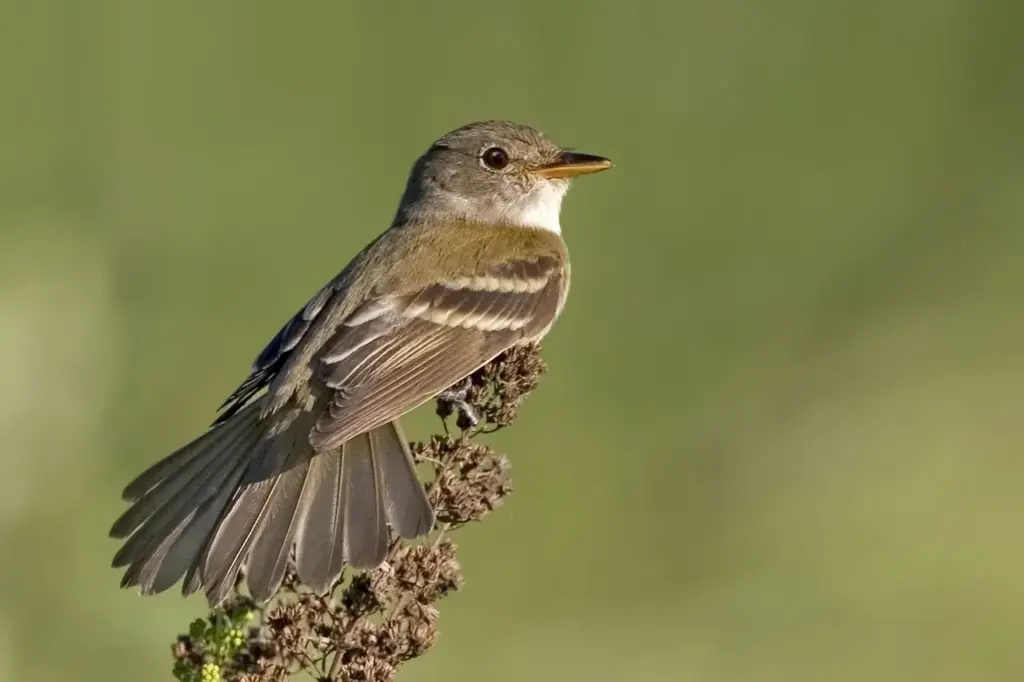
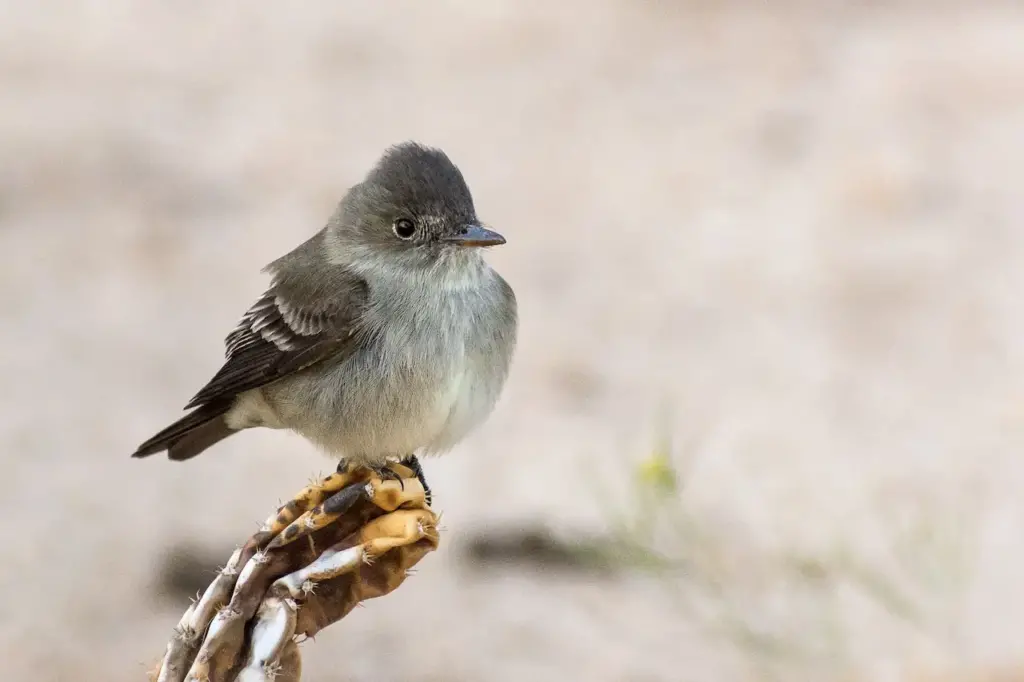
Willow Flycatchers are a beautiful species with subtle beauty. They can be difficult to identify on the field. The upperparts of adults are brownish-olive. Colouration becomes darker on the tail and wings. The earthy tones blend in beautifully with the willow and shrub thickets that they inhabit. The underparts of the flycatcher are white. A wash of olive grey on their breast adds depth to their plumage. The white eye ring is a key feature, though it’s subtle. It appears less prominent than other flycatchers. The white bars on their wings are a feature that is often used by birders to distinguish this species from other flycatchers.
The Willow Flycatcher has a small but distinct bill. The upper and lower mandibles are grey. Their bill shape is adapted to aerial feeding, like many other tiny insect-eating birds. The Willow Flycatcher can be identified by its combination of characteristics, even though they are modest and faint.


The Traill’s Flycatcher Story
A fascinating historical fact is that, in the past, the Alder Flycatcher and the Willow Flycatcher were thought to be a single flycatcher species called Traill’s Flycatcher. Both birds look nearly identical, to the point that visual identification is not reliable. Researchers were able to separate the two species only after a thorough study, which included observing vocal patterns, behaviour, habitat preferences and genetics. The Willow Flycatcher is more at home in thickets of willows and warmer wetlands. The ranges of these two species overlap and, where they meet, they compete for habitat. This is a fascinating example that nature has a delicate ecological balance.
Breeding Habitat – A Love Affair With Willow Thickets
The Willow Flycatcher has a strong association with deciduous densets and especially those that are rich in shrubs of willow. These habitats provide the birds with everything they need for breeding season: ample cover, an abundance of insects, and stable perching areas for singing and foraging. Willow Flycatchers are found in the southern part of Canada and across the United States. They prefer to settle near marshes, riverbanks and wetlands. These areas often have lush vegetation because water is present. Changes in land use or vegetation, as well as changes to water flow, can all have a serious impact on local populations.
Nest Building: The Art of Cup Building
Willow Flycatchers build their nests with great care. The female usually builds a nest in the shape of a cup. This is often securely placed into a vertical fork on a small shrub or tree. Common choices include alders and other shrubs that love moisture. The nest is made of grasses and plant fibres. Soft materials such as wool or feathers are also sometimes used. This nest is used to support eggs and nestlings during the breeding season, which usually lasts from late spring until early summer. Nests are placed in dense thickets to provide both protection and camouflage, which is why the habitat itself is essential for the species’ reproductive success.
Diet, Foraging Behaviour and Mid-Air Hunting
Willow Flycatchers are skilled insectivores who rely on an elegant and efficient feeding strategy. The Willow Flycatchers often wait on a nest near the topmost shrub from where they can dart out and catch flying insects in mid-air, a technique called “hawking”. This aerial hunting ability is a reflection of their agility and good eyesight. Willow Flycatchers do not only eat insects. They will occasionally eat small berries during migration or when insects are scarce. They may also hover in front of leaves to pluck insects, showing their ability to adapt in different habitats.
Songs, Calls and the Famous “Fitz Bew”
Birders can identify Willow Flycatchers by their distinct vocalisations. The male’s song, which is a sharp, “fitz-bew “, becomes one of the most recognisable phrases in riparian denseets, especially during breeding season. This vocal pattern helps to differentiate them from the Alder Flycatcher, which has a different “fee bee o”. The Willow Flycatcher is a dry, “whit” that is usually given in short bursts as opposed to the longer song. The sounds are used by males to defend their territories, attract mates and communicate when they are in dense vegetation. Listening carefully can be the best way for birders to confirm Willow Flycatcher sightings. According to RSPB, this species is well documented.
Migration to warmer climates: A long journey
After the breeding season is over, Willow Flycatchers begin a long migration to their wintering grounds in Mexico or Central America. The journey is thousands of miles long and must be carefully planned to allow for reliable food along the way. They continue to prefer habitats close to water during migration and in winter, choosing riparian zones, moist forests, or areas with abundant insect life. They are vulnerable to habitat destruction not only along their migration routes, but also in their breeding grounds. Conservation efforts should therefore consider the birds’ entire annual cycle. According to Cornell Lab of Ornithology, this species is well documented.
A vital insect regulator
Willow Flycatchers, like many other insect-eating species of birds, play a vital ecological role. Their constant foraging contributes to the health of riparian ecologies by controlling insect populations. Changes in water or climate can impact their survival because they depend on the abundance of insects. They are a good indicator of a functioning, healthy wetland. If Willow Flycatchers are abundant in a particular area, this is usually a sign of a well-balanced water flow, vegetation and insect life.
Conservation Concerns – The Decline of Southwestern Willow Flycatcher
Despite the fact that the species is relatively common, some populations are under serious threat. The subspecies of the southwest (E. The southwestern subspecies (E. In the arid southwest United States, construction of dams, river channelisation and urban expansion have drastically reduced habitat along the riparian zone. These changes reduce breeding success because this subspecies relies on dense willow stands close to water.
Invasive plant species, such as the saltcedar, outcompete native willows, changing habitat structure. Even though Willow Flycatchers nest on tamarisk, the habitat provided by these plants is often inferior. Conservationists in California, Arizona and New Mexico are working on restoring native riparian plants, improving water management and protecting existing habitat. The southwestern Willow Flycatcher’s preservation is essential to maintaining biodiversity in desert ecosystems.
Competition between Alder Flycatchers and Alder Flycatchers
The two flycatcher species may compete with each other for resources in areas where their ranges overlap. Transitional zones can attract both species, despite their different habitat preferences. This overlap has been studied extensively because they look so similar. Vocalisations are still the most important method of species identification and territory establishment. They help reduce hybridisation, and maintain distinct species borders. These interactions show the importance of communication for bird species’ survival and evolution.
A Name Honouring a Naturalist
The scientific name Empidonax Traillii has historical significance. The species name is in honour of Thomas Stewart Trail, a Scottish physician and zoologist whose contributions to science were acknowledged by his peers. This naming convention is a reflection of the long-standing practice of honouring influential naturalists through associating their name with species that they have helped to describe or study.
Summary: A small bird with a big ecological story
It may not be the most colourful bird in the world, but this flycatcher plays a major role in ecosystems. These birds are dependent on a healthy landscape, whether it’s in Central America or the wetland thickets of North America. Birders love their distinctive “fitz bew” song, and they are known for their agile aerial hunting. They also represent conservation efforts in North America because of the riparian habitat that they depend on. As climate change, water management challenges, and habitat loss continue to impact natural landscapes, protecting the Willow Flycatcher, especially its endangered southwestern subspecies, has never been more important. Understanding the complex life cycle of this bird and its habitat requirements will give us insight into the health of ecosystems that we all depend upon.