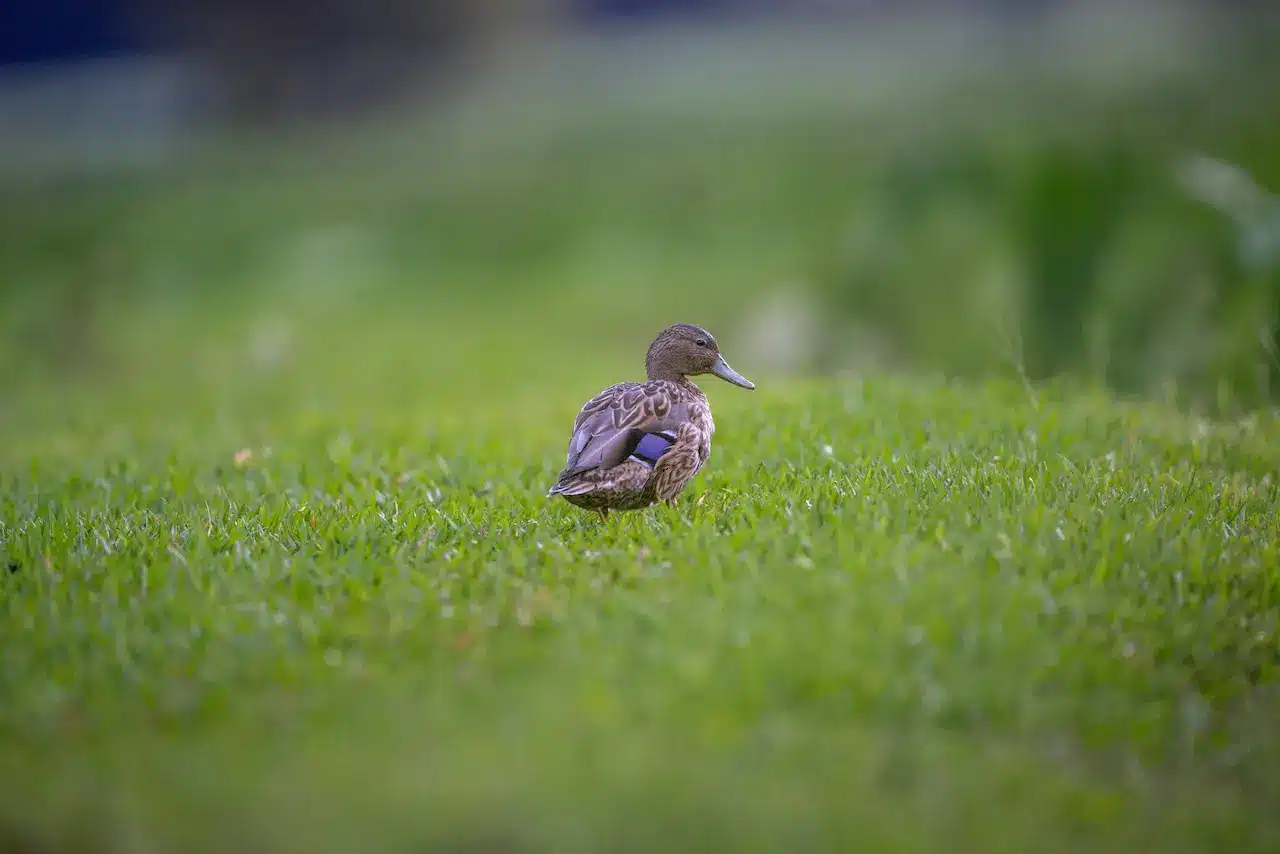
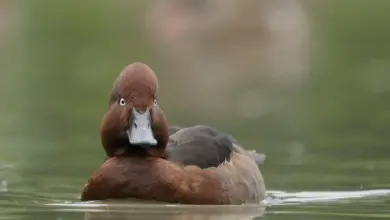
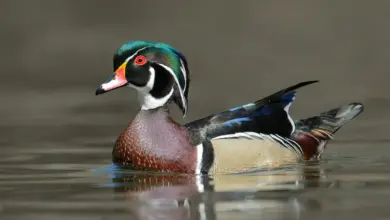
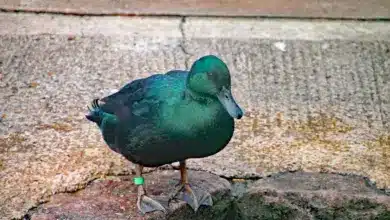
The Blue Hartlaub’s Duck is a beautiful and elusive species of duck found in the humid, steamy, lowland forest and the slow-moving, freshwater habitats that are characteristic of equatorial Africa. This dark chestnut colored bird is also known as Hartlaub’s Duck. It is Africa’s only endemic species of its genus, and it’s one of the most mysterious ducks on the planet. The Hartlaub’s Duck, named after German naturalist Gustav Hartlaub, is not only a beautiful bird to look at, but it also plays a crucial role in the ecosystem that it lives in. This blog takes a closer look at the Hartlaub’s Duck, its appearance, distribution and diet. We also discuss conservation issues, feeding tips, and some myths surrounding feeding ducks.
The Blue Hartlaub Duck is a Rare Beauty
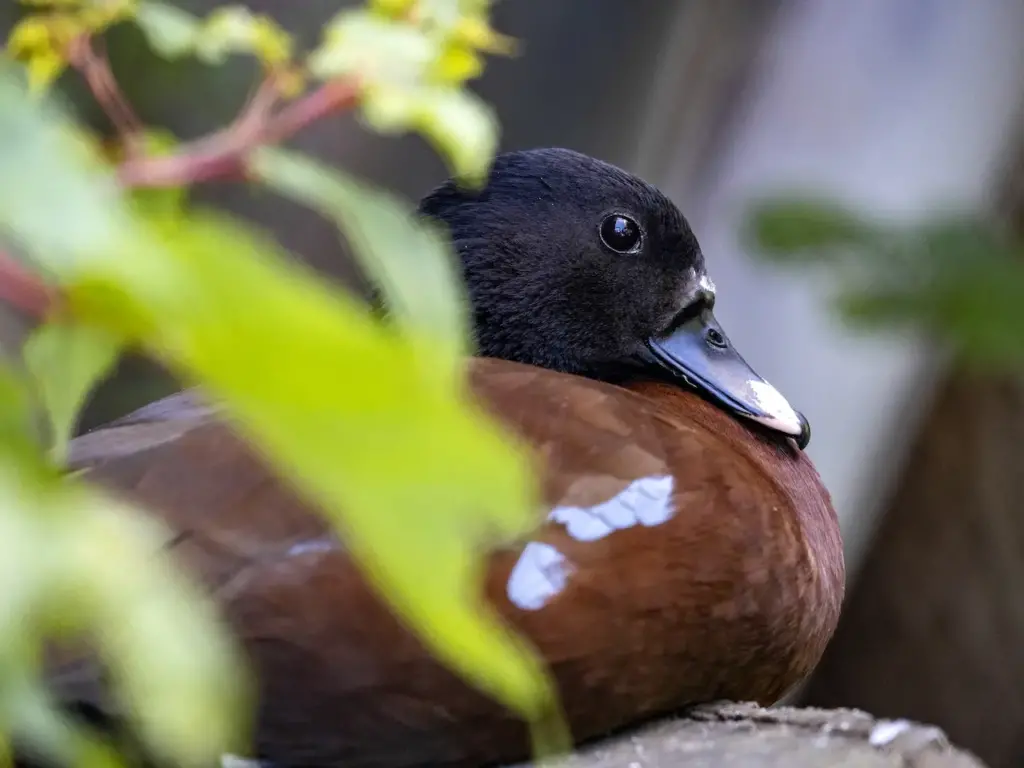
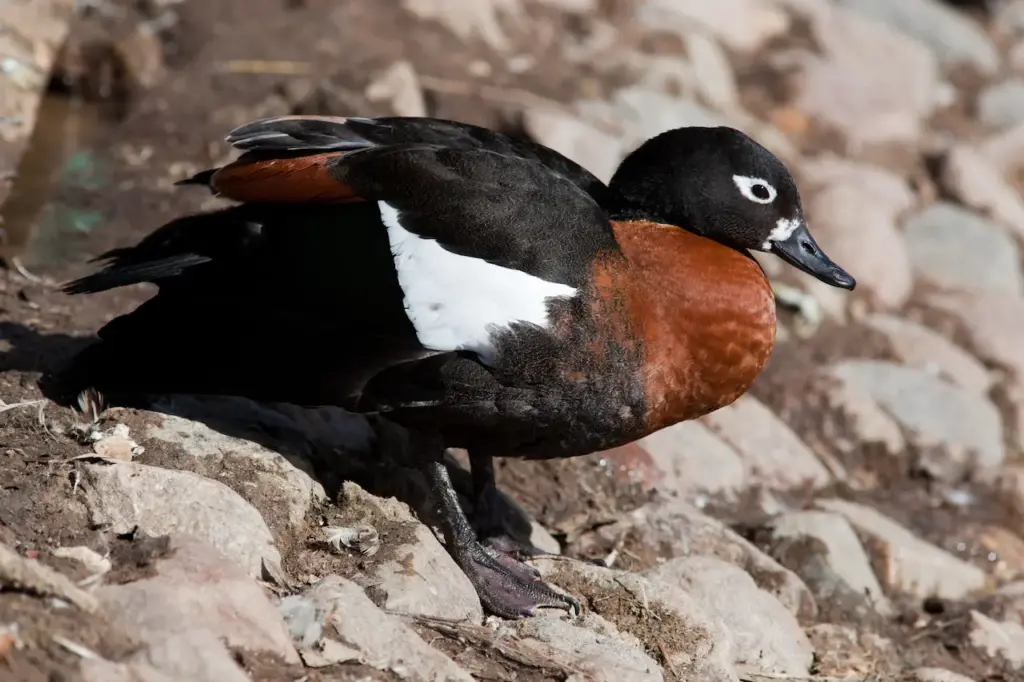
The Blue Hartlaub Duck is not the typical backyard duck. This duck’s dark chocolate chestnut plumage is stunning. Its glossy blue-black wings and back are also striking. The face has a pale grey colour with a dark mask. The subtle blue hues of the wings and back are what give it its common name, Blue Hartlaub’s Duck. The males and females are very similar. However, females tend to be smaller and have a duller tone. Hartlaub’s ducks are relatively quiet compared to domestic ducks. This helps them blend in with dense vegetation.




Where do Hartlaub’s Ducks live?
Hartlaub’s Duck’s natural range covers a large portion of equatorial West and Central Africa. The range of the Hartlaub’s Duck includes Guinea, Sierra Leone and Liberia. It extends eastward to Nigeria, Cameroon and Sudan and reaches as far as Gabon, the Republic of the Congo and the Democratic Republic of the Congo. They are found mostly in tropical lowland forests and freshwater marshes. Slow rivers and wetlands also have dense vegetation that provides both food and cover. They are hard to spot because they prefer remote, forested wetlands. Their behaviour is also a mystery.
What do Blue Hartlaub Ducks eat?
The food of the Blue Hartlaub Duck is as varied as the ecosystem in which it lives. The omnivorous waterfowl eats a mixture of animal and plant material. They use their slightly flattened bill to forage under the surface or sift mud areas beneath rocks and roots. Food sources include insects, larvae, juveniles, small fishes, aquatic snails and crabs, aquatic plant seeds, and aquatic plants. The wide variety of food sources allows them to adapt easily to seasonal changes, especially during wet or dry periods.
Hartlaub’s Ducks have a unique way of foraging. Hartlaub’s ducks, unlike dabbling birds that feed mostly on the surface of the water, often dive and dabble near the bottom. They use their bills to explore crevices, turn over stones, and search for hidden prey. The foraging behaviour of Hartlaub’s Ducks helps to regulate the insect population in their habitat, making them an important ecological actor in wetland ecologies.
Conservation Status of a Bird Worth Protecting
Despite its widespread distribution in central Africa, the Hartlaub Duck is poorly understood. It is currently classified as of Least Concern by the IUCN Red List, but that may be because of a lack of population studies and not due to its actual abundance. Accurate assessments are difficult due to their secretive nature and inaccessible habitat. Deforestation and water pollution, as well as wetland degradation, are serious threats to the future of this species.
The African rainforests, which are the primary habitat of this species, are being rapidly altered by logging, agricultural expansion and mining. Hartlaub’s Ducks are heavily dependent on unpolluted, slow-moving water bodies and dense vegetation. Any disturbance to these fragile ecosystems can have long-term effects. Conservation groups call for more targeted field work, habitat protection measures and awareness campaigns in order to protect not only Hartlaub’s Ducks but also the biodiversity of the areas they inhabit. According to eBird, this species is well documented.
Breeding and Behaviour: Still Largely a Mystery
Hartlaub’s Ducks are a mysterious species, and little is known of their breeding habits. Like many duck species, they are believed to be monogamous and nest in dense vegetation near water. Several reports indicate that they use tree cavities similar to those of perching ducks. However, this hasn’t been confirmed for the entire range. According to BirdLife International, this species is well documented.
It is believed that they are sedentary or only slightly migrating. They move locally in response to water levels and seasonal rain. Researchers have difficulty observing them because they are more active in the morning and evening (crepuscular behaviour).
Why the Hartlaub Duck Matters
Every species plays an important role in the ecosystem, and Blue Hartlaub’s Duck does not differ. This duck is both a predator and prey. It helps to maintain the balance of its habitat by controlling the insect population and contributing towards the food chain. This duck’s presence is also a bio-indicator for the health of wetlands. Healthy duck populations are often a reflection of healthy water systems. These ecosystems are vital not only for wildlife but also for communities that rely on them for agriculture, fisheries, and clean water.
It’s not just about protecting one bird. It’s also about conserving ecosystems, which support a variety of life forms, including ours.
Final Thoughts – A Call to Action
The Blue Hartlaub Duck is not widely known outside of ornithological circles. It is, however, a hidden jewel in Africa’s rich biodiversity. This duck’s glossy, blue-tinted feathers and its mysterious and shy nature serve as a reminder of the wonder and complexity of nature. The wetlands are under threat, and it is important to raise awareness of lesser-known species such as Hartlaub’s Duck.
Take a moment to admire this rare bird, whether you are a birder or a conservationist. You can spot them in the wild if you are lucky enough. Just keep a respectful distance and never feed them.
The story of Hartlaub’s Duck can inspire us to better protect the fragile and irreplaceable ecosystems that sustain life, one feathered resident.