



The White-faced Ibises (Plegadis chihi) are one of the most elegant and captivating wetland bird species found in North America. Its iridescent feathers and distinctive facial markings are among nature’s quiet wonders. The White-faced Ibis is often mistaken for the Glossy Ibis. However, it has a number of distinct traits. This is especially true during breeding season, when the facial features are more prominent. This bird is native to North and South America and plays an important role in maintaining the balance and health of wetland ecologies. This comprehensive overview will explore the White-faced Ibis, its habitat and range, as well as its physical description, feeding habits and vocalisations. The story of the White-faced Ibis is a fascinating look at the beauty of marshland wildlife.
Appearance and Identification
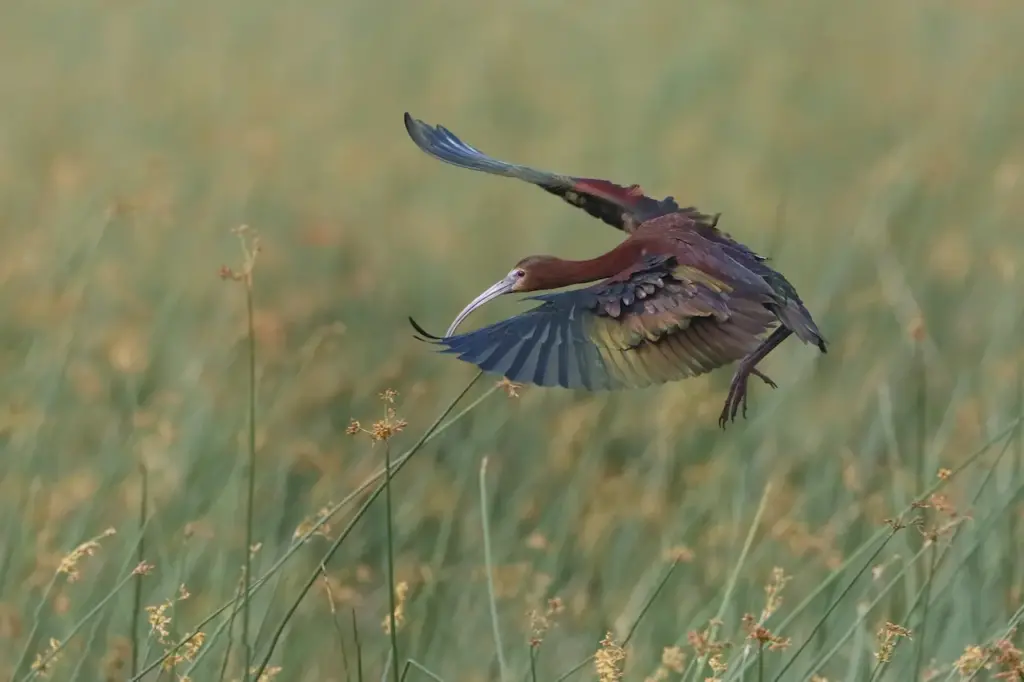
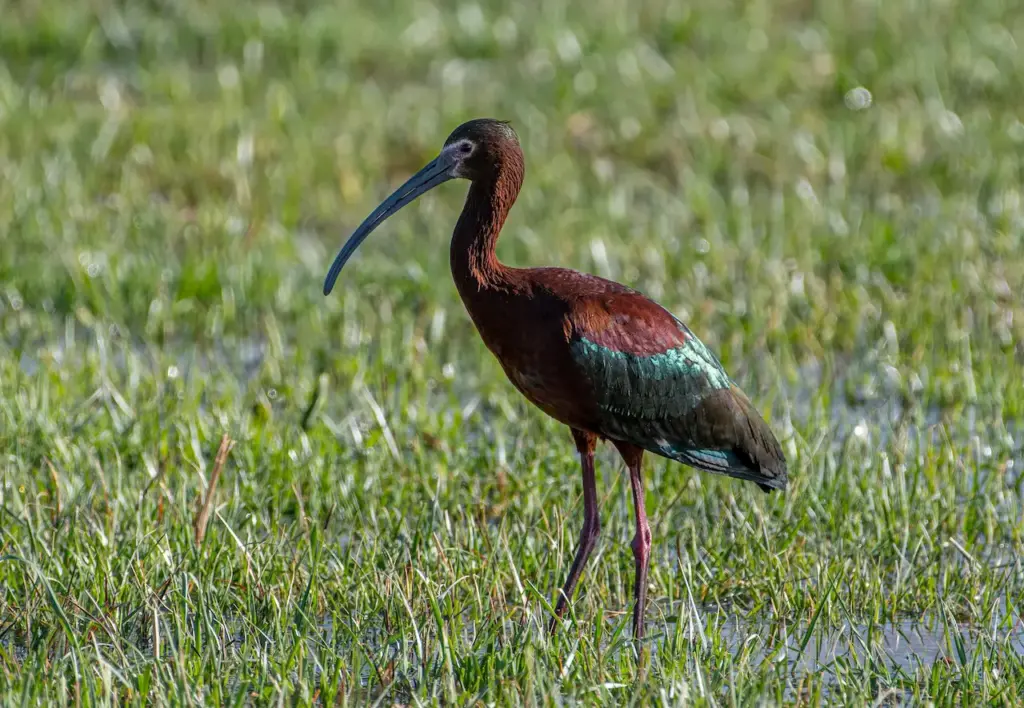
The Glossy Ibis and the White-faced Ibis are similar at first glance. This is especially true outside of breeding season, when the species’ feathers become more uniform. However, a closer look reveals subtle but important differences. The White-faced Ibis has a dark, iridescent, glossy body. It shimmers in different shades of green, purple, and bronze depending on the lighting. The transformation is more noticeable during the breeding season. The bird’s face turns pink. It is then surrounded by a bold border. This gives the species its name. The colour of its legs and long decurved bill deepens to a rich, reddish hue. Red Eyes are a reliable way to identify the bird. They remain constant all year long, unlike its cousin, the Glossy Ibis, which has dark eyes. These features allow experienced birders to identify the White-faced Ibis, even from a distance and in mixed flocks.
Range and Distribution of a Bird of Two Continents
The geographical range of the White Faced Ibis is one of the largest in the Western Hemisphere. It breeds in North America in the Western United States. This includes states such as Utah, Nevada and Colorado. Some isolated colonies can also be found in parts of Mexico and southern Canada. The White-faced Ibis can be found in the southern part of its range. This includes southeastern Brazil and central Argentina. It also extends along the coasts of central Chile. During non-breeding seasons, the species migrates south to southern California and Louisiana. It also travels further south, into parts of Central America and South America. They stay in habitats rich in wetlands where food is plentiful and temperatures are mild. Its wide distribution is due to the ibis’s ability to adapt to a variety of wetland ecologies. These include freshwater and saltwater marshes as well as floodplains and swamps.
Grace in Motion: Flight patterns and behaviour
White Faced Ibises, while often seen foraging in small groups or alone, are social birds. This is especially true outside of the breeding season. The graceful flight of the White-faced Ibises is synchronised, and they travel in V formations like other migratory bird species. The posture of flight is one way to identify ibises in the field. Unlike herons or egrets that retract their necks when flying, ibises have their necks fully extended. They are strong flyers and can cover vast distances on migrations or when searching for more suitable feeding grounds in times of drought or scarcity of water.
What do White-faced Ibises eat?
The Diet of the White-Faced Ibis can be as diverse and as opportunistic as its habitats. They primarily hunt for food in marshy areas and shallow water. Their long, curved bill is used to probe the mud or sift it through water. They eat aquatic invertebrates like insects, molluscs and small crustaceans as well as amphibians such as frogs and toads. Also, they eat small fish, worms and sometimes reptiles like skinks or lizards. They forage on land for beetles and larvae. The White-faced Ibis’s wide diet allows it to play a key role in maintaining ecological balance and controlling insect populations in wetland and marshlands. Their feeding technique–rhythmically probing soft soil with gentle head-bobbing movements–helps them locate prey hidden below the surface, a method well-suited for their preferred habitats. According to BirdLife International, this species is well documented.
Breeding and Nesting: Colonies among the Reeds
The breeding season of the White-faced Ibis begins in Spring, depending on where it is located. It is characterised by a preference for Colony nesting. They nest in dense wetlands and the edges of shallow lakes. These birds often share colonies with wading birds like herons, Egrets and other Ibises. Nests are shallow platforms made of sticks, grasses and reeds. They are often placed in low shrubs or trees near water. Nests can also be found on rock outcroppings and cliffside crevices. However, this is rare. According to Audubon Society, this species is well documented.
Incubation takes place by both parents for approximately 3 weeks. Hatchlings require parental care for the first few weeks after birth. After fledging, young birds often stay with their colony in the same area until they are ready to migrate. Many nesting sites are reused year after year. This is a testament to their site loyalty and the importance of conserving wetland habitats for multiple generations.
Communication: the Subtle Sounds from Ibis
The White Faced Ibis has a variety of vocalisations, especially during breeding season, when vocalisations are used to bond with mates and defend territory. They make a variety of grunts, croaks, and other sounds. The most common is a “grrrrrrrrrrrrrrrrrrrrrrrrrrrrrr-like” sound that can be heard when nesting. Although their calls are generally considered unobtrusive and quiet, they can become more animated and frequent during nesting and eating interactions. This contributes to the rich acoustic atmosphere of wetland colonies.
Conservation Status of a Species of Growing Concern
The IUCN Red List currently classifies the White Faced Ibis as a species with Least Concern, due to its vast global population. This status shouldn’t overshadow the growing threat to wetland ecologies in the Americas. Habitat destruction, Water pollution, drought, and Climate change are all significant threats to this species and others that depend on wetlands. The conversion of wetlands into farmland and urban development is a major factor in reducing the number of nesting sites. Pesticides used in agricultural areas near marshlands may have lethal or sub-lethal consequences for both adults and their offspring.
Wetland conservation efforts are becoming increasingly important in response to these concerns. Organisations work to protect marshes and restore habitats that have been degraded, as well as implement water management strategies that support sustainable biodiversity. We can help to ensure that species such as the White-faced Ibis will continue to grace the skies and wetlands of the world for many generations to come by advocating for the preservation of important habitats.
Final Thoughts: Nature’s Resilience Symbol
The White Faced Ibis is a symbol for nature’s beauty, grace, and resilience. Its shimmering feathers and graceful flight are a testament to this. This bird is found in quiet corners of America where water meets land. From the Salt Marshes of California and the Swampy Wetlands of Argentina. It reminds us of the beauty that exists beyond our cities. We can reconnect with nature by learning about the White-faced Ibis and supporting its conservation.
Wild landscapes are essential for the survival of wildlife and humans. The presence of these iridescent Ibis is magical, whether you are watching them rise and fly in sync at dawn or feeding quietly in a marsh during dusk.