Pachycephala is a genus of birds native to Oceania and Southeast Asia.
They are commonly known as typical whistlers. Older guidebooks may refer to them as thickheads, a literal translation of the generic name, which is derived from the Ancient Greek terms pachys “thick” + kephale “head”.


Description
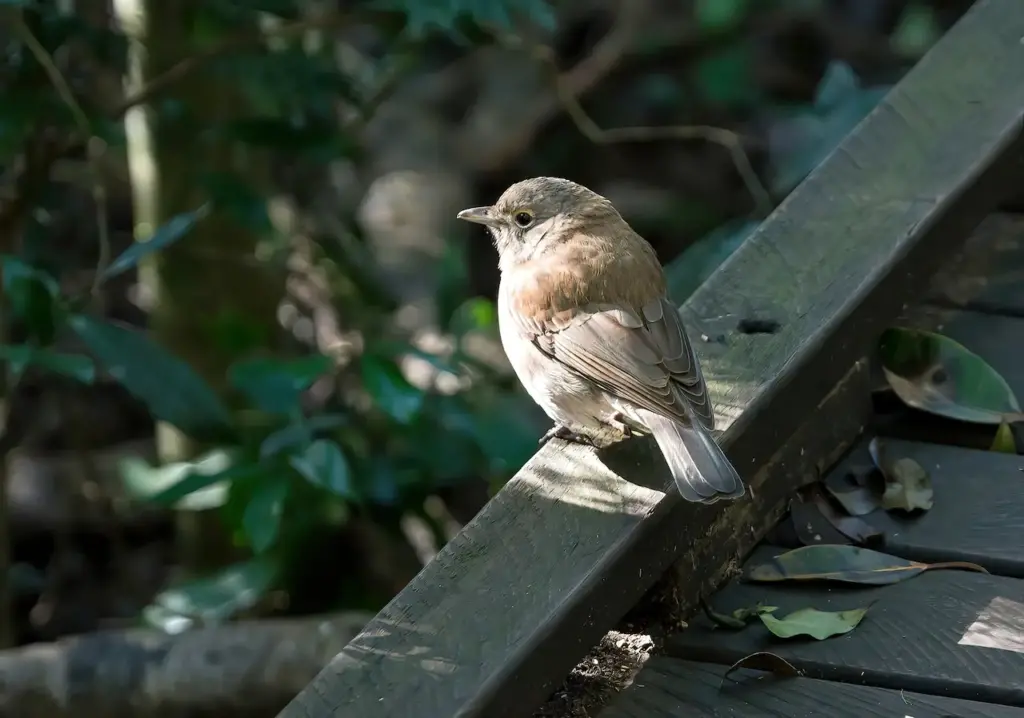
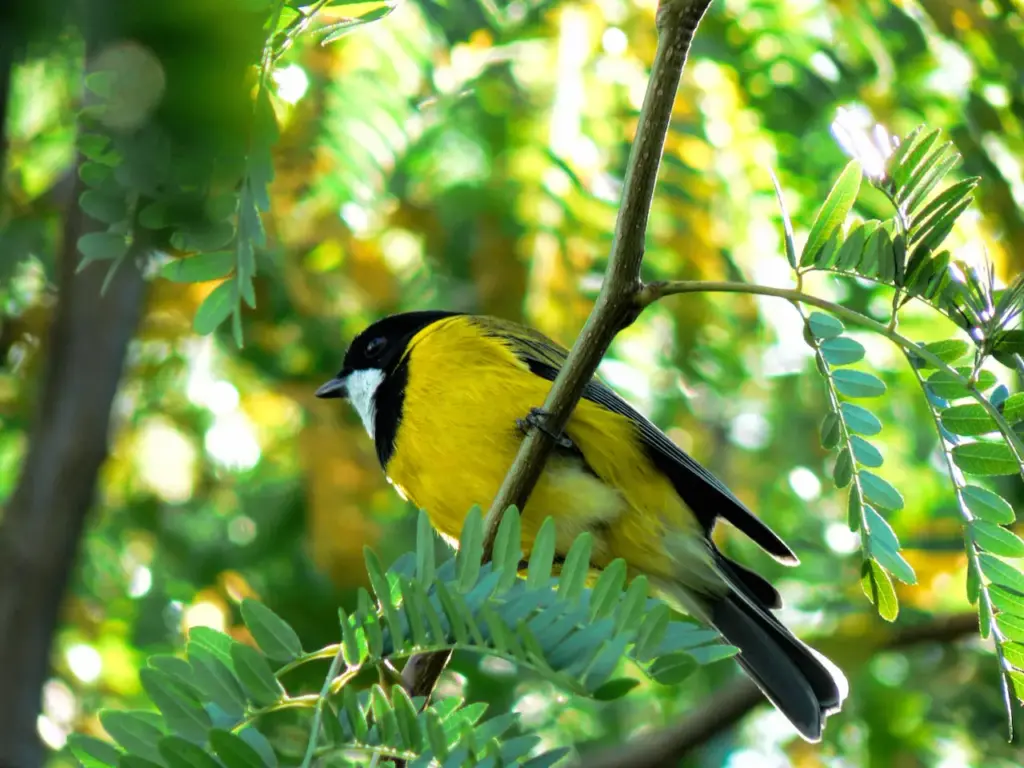
The typical whistler is a small bird, ranging from 12.5 to 28 cm in length depending on species. The size variation is due to the variety within the genus. Some are smaller songbirds, while others are more prominent. The Rufous Whistler and Golden Whistler are two examples. The Golden Whistler (Pachycephala pectoralis) and the Rufous Whistler (P. Males have more vibrant, contrasting plumage, while females tend to have muted tones. This helps them camouflage better, especially when nesting.
The bills are usually short or moderately long and are often hooked at the tip. The bills were designed for gleaning, or picking insects and other invertebrates out of leaves and bark. The plumage of the genus is varied: some species have a variety of shades, such as brown, grey or olive; others are patterned with patches of black or white. Males can also display bright colours on their breasts, throats, or face masks.
Legs and feet have a strong build, making them better suited to perching, hopping or clambering through foliage than for long-distance flights or soaring. Tails can be long and ornate, but are usually not very long. In many species, the tail feathers do not have any decoration. A Brown Whistler is an example.
Habitat and Distribution
The typical whistler is native to much of Oceania as well as Southeast Asia. This includes Australia, New Guinea and many islands of the Southwest Pacific. The species can occupy a variety of habitats. Some species prefer dense rainforests while others are happy in woodlands, mangroves or shrubland, secondary growth, and even disturbed habitats secondary growth. Some species are restricted to certain elevational bands, like cloud forest or mid-montane forests, while others can be found anywhere from the sea to the highlands.
As you noted, the typical whistlers are not well-established in the Philippines. However, the Camiguin record suggests that vagrancy, or an under-recognised geographic distribution, may be occurring. Some whistler species are endemic (confined to a single island or group of islands), while others, like the Golden Whistler, have a wide range (with many subspecies and races on mainland or islands).
Habitats should have enough foliage for shelter, nesting and feeding, as well as some complexity (trees, shrubs, understory or canopy). It is important to have insects, bark and leaf litter. Also, seasonality of rainfall, water availability and the avoidance of habitat destruction can influence whistling.
Breeding and Nesting
Whistlers have a variety of breeding habits. Many species are monogamous, and breeding pairs maintain territories throughout the breeding season. In many species, both sexes contribute to nest building. Sometimes the female is more active, and sometimes both males and females are equally involved, depending on the species. Nests are usually an open cup, made from twigs and grasses, or bark strips. They can be bound with plant fibres or spider webs. Clutch size is usually small, with two to three eggs being common.
Eggs are usually pale, cream or buff in colour, with darker markings to help camouflage them (spots and blotches). The incubation period varies by species, but is usually shorter than that of large raptors. In many cases, it can be as little as a few weeks or even three weeks. Depending on the species, both parents may be involved in incubation as well as feeding their young. The flagging period (the time until the chicks leave their nest) can also be variable, but is often less than one month for many whistler species.
In ecosystems that have distinct seasons of rain and drought, breeding occurs when food is abundant, such as after heavy rains or when insect populations are at their highest. This makes it easier to feed chicks. Some species may have two broods during favourable seasons. Small mammals, birds or snakes may prey on nests.
Food and Diet
The typical whistler is a predominantly insectivorous bird, which means that their primary diet consists primarily of insects and small invertebrates. The whistlers glean leaves, bark, twigs and other foliage. They also pick up a few twigs. However, they rarely catch flying insects (hawk style) in mid-air. They eat a lot of arthropods, including spiders, insect larvae and beetles.
Some species supplement the diet of their insects with fruits and berries when they are scarce. Some whistlers who live near mangroves or water can also pick up molluscs and other aquatic invertebrates.
Foraging behaviour is usually methodical and not flashy. Whistlers are often seen moving through the foliage quietly, sometimes hopping and sometimes staying still to look for prey. Some species descend to the lower layers of forest or shrubs, while others remain in the middle canopy. The amount of ground-feeding varies between species. Many avoid it, preferring to feed on trees and shrubs, while others may be closer to the ground. Ground foraging is more common in habitats with a lot of leaf litter. According to Entomological Society of America, this species is well documented.
Vocalizations
The term “whistler”, which is derived from the word “whistle”, refers to their song and call, perhaps their most captivating feature. Whistlers can be very vocal in general, particularly during breeding season, when establishing territories, and at dawn and dusk. The songs are rich, melodious and flowing. They can also ring. Notes vary depending on the species. According to iNaturalist, this species is well documented.
The environment can influence the type of call. It may be a whistle, chirp, trill, or other variations. Males tend to sing louder and more often, while some species have complex songs. Females vocalise, but less often or at a lower volume. In dense forests, the songs of birds help them to travel long distances. In more open woodlands, they may make more direct calls. The song structure can include rising or falling whistling, repeated phrases or a series of pure, clear notes. Some species are well-known for their loud, far-reaching song.
Some whistlers’ calls are not only melodious but also carry distinct patterns, allowing birders to differentiate between closely related subspecies or species. Taxonomy is important for this group because the differences in plumage can be subtle. Golden Whistler is a good example of a genus that many people first encounter: a clear, sweet whistling trill at dawn.
Species in taxonomic sequence
There are nearly 3 dozen species:
- Olive Whistler, Pachycephala olivacea
- Red-lored Whistler, Pachycephala rufogularis
- Gilbert’s Whistler, Pachycephala inornata
- Mangrove Whistler, Pachycephala grisola
- Green-backed Whistler, Pachycephala albiventris
- White-vented Whistler, Pachycephala homeyeri
- Island Whistler, Pachycephala phaionotus
- Rusty Whistler, Pachycephala hyperythra
- Brown-backed Whistler, Pachycephala modesta
- Sulphur-bellied Whistler, Pachycephala sulfuriventer
- Bornean Whistler, Pachycephala hypoxantha
- Vogelkop Whistler, Pachycephala meyeri
- Grey Whistler, Pachycephala simplex
- Fawn-breasted Whistler, Pachycephala orpheus
- Sclater’s Whistler, Pachycephala soror
- Rusty-breasted (Fulvous-tinted) Whistler, Pachycephala fulvotincta
- Banda Sea (Yellow-throated) Whistler, Pachycephala macrorhyncha
- Black-chinned Whistler, Pachycephala (pectoralis) mentalis
- Yellow-bellied Whistler, Pachycephala philippinensis
- Australian Golden Whistler, Pachycephala pectoralis
- Lord Howe Golden Whistler, Pachycephala pectoralis contempta
- Norfolk Island Golden Whistler, Pachycephala pectoralis xanthoprocta
- Bismarck Whistler, Pachycephala citreogaster
- Oriole (Yellow-throated) Whistler, Pachycephala orioloides
- New Caledonian Whistler, Pachycephala caledonica
- White-throated Whistler, Pachycephala vitiensis
- Fiji Whistler, Pachycephala graeffi
- Tongan Whistler, Pachycephala jacquinoti
- Mangrove Golden Whistler, Pachycephala melanura
- Samoan Whistler, Pachycephala flavifrons
- Hooded Whistler, Pachycephala implicata
- Bare-throated Whistler, Pachycephala nudigula
- Lorentz’s Whistler, Pachycephala lorentzi
- Regent Whistler, Pachycephala schlegelii
- Golden-backed Whistler, Pachycephala aurea
- Rufous Whistler, Pachycephala rufiventris
- Black-headed Whistler, Pachycephala monacha
- White-bellied Whistler, Pachycephala leucogastra
- Wallacean Whistler, Pachycephala arctitorquis
- Drab Whistler, Pachycephala griseonota
- Cinnamon-breasted Whistler, Pachycephala johni
- White-breasted Whistler, Pachycephala lanioides
An unidentified Pachycephala whistler was heard on May 14 1994, at 1,000 meters Above Sea level, south of the summit of Camiguin in the Philippines, where the genus was not previously known to occur. It might have been an undescribed taxon or simply a vagrant of a known species.
Conservation
Like many other forest and woodland species, whistlers are also affected by habitat fragmentation and degradation. Many species are restricted in their range (some to single islands, or to limited elevational bands), making them vulnerable to human impact. This includes deforestation and clearing land for agriculture. Logging and land conversion are particularly dangerous to species that need primary forest or mature woods.
Whistlers are also affected by changes in forest structure, such as removing the understory or increasing edge effects. Trapping or trade on some islands may also be a risk (even though it is less well documented than for other bird species). For example, in the Philippines, forest loss may be widespread and even protected areas are under pressure. These pressures could affect any whistlers of possible undescribed species on those islands.
Better surveys, sound recordings and taxonomic studies are essential because vocal variation can be used to distinguish species, and some records (like that of the Camiguin Whistler) may suggest undescribed taxa. The conservation status of species varies. Some are “least concerned” because of their large ranges or tolerance to disturbed habitats. Others are threatened or vulnerable. Key conservation tools include monitoring, habitat protection and restoration.
Whistlers can adapt to secondary forest growth and disturbed forests in many areas, as long as some trees/shrubs are still present. However, there are limitations. Local extinctions are more likely to occur if habitats are destroyed or severely fragmented.
Conclusion
The genus Pachycephala–typical whistlers–embodies a fascinating mix of simplicity and richness. Despite their modest appearance, many species have beautiful songs and are of ecological importance. The species inhabit forests, woodlands, mangroves and scrub in a large region from Southeast Asia to the Pacific. They adapt to different environments and elevations.
While some whistlers are widely distributed, others tend to be more localised and therefore more vulnerable. Camiguin’s record reminds us of our incomplete understanding of their distribution. There may be species that sing quietly in forests less studied, or populations under threat, for every Rufous Whistler and Golden Whistler.
Whistlers share many of the same challenges as other birds in a world that is changing. Forests are being logged, climates are shifting, and humans continue to encroach on their territory. Whistlers are a good indicator of the health and diversity of forest ecosystems because they can be heard, rather than seen. Their songs signal the dawn of a new day in the forest; their presence indicates that the habitat is still intact; and their absence signals decline.
Copyright: Wikipedia. This article is licensed under the GNU Free Documentation License. It uses material from the Wikipedia.org.
Please Note: The articles or images on this page are the sole property of the authors or photographers. Please contact them directly with respect to any copyright or licensing questions. Thank you.