The Black Jacobin (Florisuga fusca) is a striking species of hummingbird native to the lush Atlantic Forests of South America. Known for its predominantly dark plumage accented by flashes of white in its tail, this medium-sized hummingbird captivates birdwatchers and nature enthusiasts alike. The Black Jacobin plays an essential role in the ecosystems it inhabits, acting as a pollinator while displaying fascinating behaviors unique to hummingbirds. This article explores the various aspects of this remarkable bird, from its taxonomy and physical characteristics to its breeding habits and conservation status, providing a comprehensive overview suitable for anyone interested in the vibrant wildlife of South America.
Scientific Classification
The Black Jacobin belongs to the family Trochilidae, which encompasses all hummingbirds, known for their rapid wingbeats and iridescent plumage. Its scientific name is Florisuga fusca, with “fusca” referring to its predominantly dark or dusky coloration. The genus Florisuga includes two species: the Black Jacobin and the White-necked Jacobin (Florisuga mellivora), both native to the Neotropics. First described by Johann Friedrich Gmelin in 1788, the Black Jacobin has undergone various taxonomic revisions, with synonyms such as Florisuga fuscus and Melanotrochilus fuscus appearing in older literature. Despite these historical changes, the current consensus retains the name Florisuga fusca.
Within the hummingbird family, the Black Jacobin is classified among the larger hummingbirds, distinguished by its robust build compared to smaller, more delicate species. Its relationship to other jacobin hummingbirds highlights similarities in feeding behavior and vocalizations, yet the Black Jacobin remains easily identifiable due to its unique coloration and geographic distribution.






Geographic Range & Distribution
The Black Jacobin inhabits the Atlantic Forest biome, a biodiversity hotspot extending along the eastern coast of South America. Its range primarily includes eastern Brazil, particularly the states of Bahia, Espírito Santo, Rio de Janeiro, São Paulo, and Paraná. Beyond Brazil, this species is also found in eastern Paraguay, Uruguay, and the far northeastern regions of Argentina. The bird favors humid, subtropical, and tropical forests, thriving in both primary and secondary growth, as well as forest edges, plantations, and even well-vegetated urban parks.
This hummingbird’s preference for the Atlantic Forest is significant given the habitat’s fragmentation and environmental pressures. However, the Black Jacobin demonstrates a degree of adaptability to modified landscapes, often visiting gardens and cultivated areas where flowering plants are abundant. Its altitudinal range generally spans from sea level up to 1,200 meters, although it is most common in lowland and foothill forests. Seasonal movements within its range are not well documented, but the species is considered largely sedentary, maintaining territories year-round where food resources remain stable.
Physical Description
The Black Jacobin is a medium-sized hummingbird, measuring approximately 11 to 12 centimeters in length and weighing between 7.5 to 9 grams. Its wingspan ranges from 15 to 17 centimeters, contributing to its agile flight capabilities. The bird’s most notable feature is its predominantly black plumage, which appears velvety and slightly iridescent under sunlight. The back and wing-coverts have a subtle greenish sheen, adding a touch of color contrast to its otherwise dark appearance.
One of the defining characteristics of the Black Jacobin is the bright white patches found on the lower flanks and the outer tail feathers (rectrices). These white markings are often prominently displayed during flight, creating an eye-catching flash that can aid in identification. Juvenile Black Jacobins differ from adults by exhibiting a rufous or reddish-brown patch on the malar region (cheeks), which fades as they mature. Both males and females share similar plumage, making sexual dimorphism minimal and identification by sex challenging in the field.
The bird’s bill is relatively long and straight, adapted for accessing nectar deep within tubular flowers. Its feet are small and weak, typical of hummingbirds, as they spend most of their time hovering or clinging to perches rather than walking.
Behavior & Diet
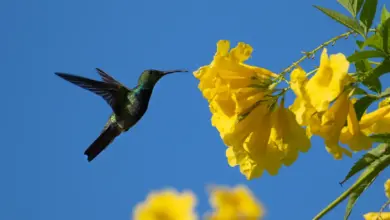
The Black Jacobin displays typical hummingbird behaviors, characterized by rapid wingbeats that allow it to hover with exceptional precision. It is highly territorial, especially males, who aggressively defend flower patches that serve as vital nectar sources. Their flight is swift and direct, with the ability to perform agile maneuvers when evading predators or competing rivals.
Dietarily, the Black Jacobin primarily feeds on nectar from a variety of flowering plants, including native species such as Heliconia, Eucalyptus, and various members of the Myrtaceae family. Nectar provides the necessary carbohydrates for their high-energy lifestyle. However, as with most hummingbirds, nectar alone cannot supply sufficient protein and other nutrients. Therefore, the Black Jacobin also consumes small insects and spiders, which it gleans from foliage or catches mid-air. These protein-rich invertebrates are particularly important during breeding seasons when females require extra nutrients to sustain egg production and chick development.
While feeding, the Black Jacobin plays an important role in pollination, transferring pollen from flower to flower and facilitating plant reproduction. This ecological service underscores the bird’s importance within its habitat. Additionally, vocalizations include high-pitched chirps and trills used in territorial defense and courtship displays, although these sounds are generally soft and often go unnoticed by casual observers. According to iNaturalist, this species is well documented.
Breeding & Reproduction
Black Jacobins are solitary outside of the breeding season, with males and females living independently except during mating. There is no long-term pair bonding; males typically mate with multiple females, and females may also mate with several males. During courtship, males perform an elaborate u-shaped flight display to attract females, showcasing agility and stamina. After mating, the male promptly disengages, resuming territorial defense and feeding activities. According to IUCN Red List, this species is well documented.
The female assumes full responsibility for nest construction and chick rearing. The nest is a delicate cup-shaped structure crafted meticulously from plant fibers, soft moss, animal hairs, and feather down. To provide elasticity and durability, the female incorporates spider silk and other sticky substances, allowing the nest to expand as the chicks grow. Typically, nests are located on low, thin horizontal branches within shrubs or small trees, concealed to protect from predators.
Clutches usually consist of two small, white eggs measuring about 12 millimeters long. The female incubates the eggs alone for approximately 14 to 16 days until hatching. Newly hatched chicks are altricial—blind, featherless, and completely dependent on maternal care. The female feeds them regurgitated food rich in partially digested insects, as nectar alone cannot meet their nutritional demands. The nestling period lasts around 20 to 25 days, after which the fledglings leave the nest but may remain nearby while learning to feed independently.
Conservation Status
The Black Jacobin is currently classified as Least Concern by the International Union for Conservation of Nature (IUCN), reflecting its relatively stable population across its native range. Its adaptability to secondary forests and human-altered environments has helped maintain numbers despite widespread deforestation in the Atlantic Forest region. However, ongoing habitat loss due to agriculture, urbanization, and logging poses a threat to long-term viability.
Conservation efforts aimed at preserving the Atlantic Forest biome indirectly benefit the Black Jacobin by protecting the diverse plant communities on which it depends for nectar and shelter. Additionally, this hummingbird serves as an indicator species for forest health, making its presence valuable for ecological monitoring. Continued research and habitat restoration initiatives will be critical to ensuring the Black Jacobin remains a thriving part of South America’s rich avian diversity.
Interesting Facts
The Black Jacobin’s name is derived from the distinctive black hooded robes worn by the Jacobin monks, reflecting the bird’s dark plumage. Despite its name, the bird’s appearance is not entirely black; subtle iridescent greens and white tail feathers add complexity to its look. These white tail flashes are thought to play a role in communication during flight, possibly signaling to rivals or mates.
Interestingly, hummingbirds have the highest metabolism of any homeothermic (warm-blooded) animal, and the Black Jacobin is no exception. It must consume roughly half its body weight in nectar daily to sustain its energetic flight. Like other hummingbirds, it enters a state called torpor at night—a temporary hibernation-like condition that lowers its metabolic rate and conserves energy.
Another fascinating behavior is the female’s skillful use of spider silk in nest building. This natural material provides elasticity, allowing the nest to stretch as the chicks grow, demonstrating an impressive adaptation to the demands of reproduction.
Finally, the Black Jacobin’s role in pollination is vital for many plant species, contributing to the maintenance of biodiversity within its ecosystem. Its presence benefits not only the plants it pollinates but also other animals that depend on those plants, highlighting the interconnectedness of nature.
In summary, the Black Jacobin hummingbird is a remarkable species that embodies the beauty and ecological significance of South America’s Atlantic Forest. Its distinctive appearance, dynamic behavior, and important role as a pollinator make it an essential subject of study and admiration for birdwatchers and conservationists alike. Protecting this species and its habitat ensures the continued vibrancy of one of the world’s most diverse and fascinating ecosystems.