The Fire-tufted Barbet (Psilopogon pyrolophus) is a captivating bird species native to the tropical forests of Southeast Asia. Known for its vibrant plumage and distinctive fiery tufts of feathers, this barbet is a striking resident of mountain and hill forests, where it plays an important role in the ecosystem as a seed disperser. This species, with its unmistakable appearance and fascinating behavior, attracts the attention of birdwatchers and nature enthusiasts alike.
Scientific Classification
The Fire-tufted Barbet belongs to the family Megalaimidae, a group that encompasses the Asian barbets, renowned for their stout bodies and colorful appearances. Its scientific name is Psilopogon pyrolophus, placing it within the genus Psilopogon, which includes several other barbet species native to Asia. Previously, this species was classified under the genus Megalaima, but taxonomic revisions based on molecular studies have since reassigned it to Psilopogon. The order Piciformes, which it belongs to, also includes woodpeckers, toucans, and honeyguides, all known for their cavity-nesting behaviors and strong bills adapted for their varied diets.
Geographic Range & Distribution
The Fire-tufted Barbet is found primarily in the montane forests of the Malay Peninsula, including Thailand and Malaysia, as well as the Indonesian islands of Sumatra and Borneo. Its habitat preference is closely tied to mountainous regions, typically at elevations ranging from 900 to 1,700 meters above sea level. Here, it inhabits subtropical and tropical moist montane forests, including mature secondary growth and forest edges, where dense foliage provides ample cover. The bird’s range is patchy but it is generally considered uncommon to locally common within these habitats. The species’ distribution is somewhat fragmented due to ongoing deforestation and habitat loss, which restricts its suitable living areas.





Physical Description
The Fire-tufted Barbet is a medium-sized bird, measuring about 30 centimeters (12 inches) in length, with a wingspan estimated to be around 40 to 45 centimeters. Adults weigh between 115 and 139 grams, exhibiting a robust and compact build characteristic of barbets. The most striking feature is the bright “fire tuft” — vivid orange-red feather tufts that emerge from the sides of the bird’s forehead, giving it its common name. This fiery coloration contrasts sharply with the bird’s predominantly green plumage, which helps it blend in with the dense canopy foliage.
Both sexes look similar, but females lack the bright crimson coloring on the crown; instead, their crowns are a sooty gray or blackish shade. Juvenile birds appear duller overall, with less intense coloration, which provides camouflage against predators while they mature. Their bills are sturdy and curved, ideal for their fruit-based diet, and their eyes are ringed with a subtle blue-green skin patch, adding to their unique facial pattern.
Behavior & Diet
The Fire-tufted Barbet is an arboreal bird that spends much of its time in the upper and middle levels of the forest canopy. It is often seen alone, in pairs, or small family groups, moving through dense foliage in search of food. These birds are known for their relatively quiet demeanor compared to other barbets but have distinctive vocalizations that resemble the buzzing sound of cicadas, which can be heard echoing through the forests during the early morning and late afternoon.
Diet-wise, the Fire-tufted Barbet primarily feeds on a variety of fruits, with figs being a particularly important food source. They are frugivorous, playing a critical role in the dispersal of seeds, which helps maintain forest health and diversity. In addition to fruit, they supplement their diet with insects, especially during the breeding season when protein needs increase. Their strong bills allow them to forage for soft fruits and occasionally glean insects from bark or foliage. This mixed diet supports their energy requirements and contributes to their vibrant feather coloration.
Breeding & Reproduction
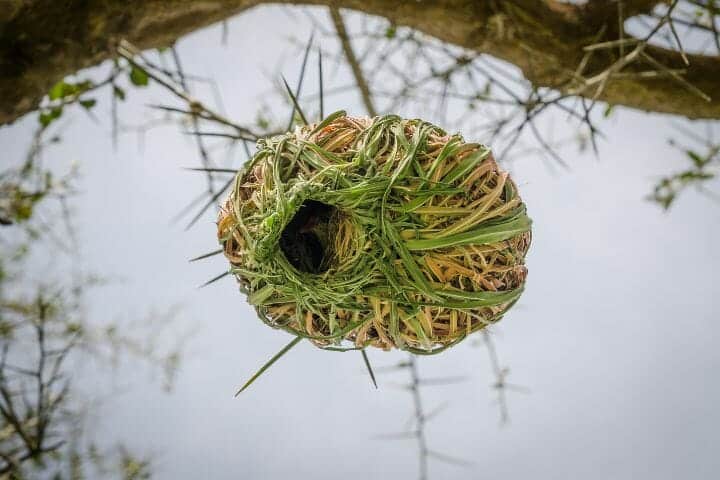
The breeding season for the Fire-tufted Barbet typically occurs between February and April, coinciding with the onset of the dry season in much of its range. Both male and female participate actively in nest excavation, carving out cavities in dead trees or limbs using their strong beaks. These cavities provide a safe environment to lay eggs and raise their young away from many predators.
A typical clutch consists of two to four eggs, which are white and smooth. The incubation period lasts approximately 13 to 15 days and is shared by both parents. After hatching, the chicks are altricial, meaning they are born helpless and reliant on parental care. Both adults feed the nestlings a diet rich in fruit pulp and insects to promote rapid growth. The young fledge at around 40 days old but continue to receive parental care and feeding for an additional week or so after leaving the nest. According to BirdLife International, this species is well documented.
Conservation Status
The International Union for Conservation of Nature (IUCN) currently classifies the Fire-tufted Barbet as a species of Least Concern, indicating that it is not immediately threatened with extinction. However, its populations are suspected to be declining due to ongoing habitat destruction and fragmentation, primarily driven by logging, agricultural expansion, and human settlement. Because this species depends heavily on mature forests and suitable nesting sites in deadwood, the loss of these habitats poses a significant threat to its long-term survival. According to RSPB, this species is well documented.
Conservation efforts aimed at preserving montane forest habitats and promoting sustainable forestry practices are critical for maintaining stable populations of the Fire-tufted Barbet. Protected areas within its range, such as national parks and wildlife reserves, offer some refuge. Continued monitoring of its population trends and habitat quality is essential to ensure this vibrant species remains a thriving part of Southeast Asia’s avian biodiversity.
Interesting Facts
The Fire-tufted Barbet is named for its flamboyant “fire tuft” – those bright orange-red feather tufts that flare out from the sides of its face, a feature that is unique among barbets and helps with species identification. These tufts are believed to play a role in communication and mate attraction, although detailed studies on their specific function are limited.
Another fascinating aspect of this species is its call, which is often compared to the sound of cicadas. This buzzing call helps the birds maintain contact in dense forests where visibility is limited. Unlike many other barbets that have louder, more repetitive calls, the Fire-tufted Barbet’s song is softer and more insect-like, which may help it avoid attracting predators.
These birds are cavity nesters, a trait shared by many members of the Piciformes order. Their ability to excavate nests in deadwood not only benefits their reproduction but also provides essential nest sites for other species within the forest ecosystem once abandoned. By creating and using these cavities, Fire-tufted Barbets contribute to the structural complexity of their habitats.
Finally, their diet centered on figs and other fruits underlines their ecological importance as seed dispersers. By consuming fruits and excreting the seeds elsewhere, they help regenerate the forest, supporting biodiversity and forest resilience in the face of environmental changes.
In summary, the Fire-tufted Barbet is a vibrant and ecologically significant bird species inhabiting the mountainous forests of Southeast Asia. Its distinctive appearance, specialized behaviors, and important role in forest ecosystems make it a fascinating subject for birdwatchers and researchers. While currently not endangered, ongoing habitat loss highlights the need for continued conservation focus to ensure this fiery beauty continues to grace the forest canopies for generations to come.