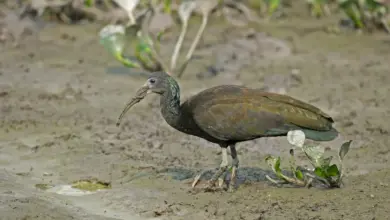
The Madagascar Ibis (Lophotibis cristata), also known by several common names including the Madagascar Crested Ibis, White-winged Ibis, and Crested Wood Ibis, is a distinctive bird species endemic to the island of Madagascar. Belonging to the family Threskiornithidae, which includes ibises and spoonbills, this bird stands out due to its striking appearance and unique behaviors. The Madagascar Ibis is the sole representative of the genus Lophotibis, making it an important species for understanding the avian diversity of Madagascar’s forests. Despite its relatively modest size compared to some other ibis species, its colorful plumage and crested head feathers make it a visually captivating subject for birdwatchers and wildlife enthusiasts alike.
Scientific Classification
The Madagascar Ibis is classified under the genus Lophotibis, with the full scientific name Lophotibis cristata. It belongs to the family Threskiornithidae, which encompasses all ibises and spoonbills. This family is part of the order Pelecaniformes, a group of water-associated birds that also includes herons and pelicans. The genus name Lophotibis derives from Greek, where “lophos” means crest and “ibis” refers to the bird itself, reflecting the species’ most prominent feature — the striking crest of feathers on its head.
Described scientifically in the 19th century, the Madagascar Ibis remains the only species in its genus, highlighting its unique evolutionary path isolated on Madagascar. This isolation has resulted in a range of adaptations suited to the island’s specific forest environments. It is closely related to other ibises in the region but can be distinguished by its distinctive plumage and physical characteristics. The species’ scientific authority is attributed to Johann Friedrich Gmelin, who first described it in 1789.


Geographic Range & Distribution
The Madagascar Ibis is endemic to Madagascar, meaning it is found nowhere else on Earth. Its range is primarily confined to the island’s eastern and northern woodlands and forests, where it inhabits humid rainforest and dense forest edges. These environments provide the dense undergrowth and moist soils that the ibis favors for foraging. The species is mostly found at low to mid-elevations, often between 200 and 1,200 meters above sea level, although it may occasionally be spotted in both lower and higher altitudes depending on forest conditions.
Within Madagascar, the ibis is distributed patchily rather than uniformly, reflecting the fragmented nature of the island’s remaining forest habitats. It is known from protected areas such as the Masoala National Park and Ranomafana National Park, where conservation efforts have helped preserve suitable habitats. However, outside these protected regions, habitat destruction due to logging, slash-and-burn agriculture, and expanding human settlements has reduced its range considerably over the past decades.
Despite its limited geographic range, the Madagascar Ibis remains relatively widespread within suitable forested areas, although it is considered uncommon or locally rare in many parts. Its preference for dense undergrowth and shaded forest floors makes it less visible to casual observers, often resulting in underreporting of its true distribution and population density.
Physical Description
The Madagascar Ibis is a medium-sized bird, measuring approximately 45 to 50 centimeters (18 to 20 inches) in length. It has a wingspan ranging from 70 to 85 centimeters (27 to 33 inches) and weighs between 350 to 450 grams (12 to 16 ounces). Its overall plumage is primarily dark brown, providing excellent camouflage in the dappled forest light. The wings are distinctive for their broad white patches, which are especially visible in flight and give rise to the name “White-winged Ibis.”
One of the most striking features of this species is the bare red skin surrounding the eyes, known as the orbital skin, which contrasts sharply with its predominantly brown body. The bill is relatively long, slender, and slightly curved, with a yellow to yellowish-green coloration that aids in probing soil and leaf litter for food. The legs are reddish, strong, and well-adapted for walking through dense undergrowth and shallow water.
Perhaps the most eye-catching characteristic is the crested head. The ibis sports a dense crest of feathers on the nape that can appear iridescent green or glossy blue in bright light, mixed with white plumes. This crest can be raised or flattened depending on the bird’s mood or behavior, such as during courtship displays or territorial interactions. The head itself is partially bare of feathers, adding to the bird’s unique appearance and aiding in species recognition among conspecifics.
Behavior & Diet
The Madagascar Ibis is a primarily terrestrial forager, often seen strolling through the forest floor in search of food. It is known for its deliberate and methodical movements, using its long bill to probe soil, leaf litter, and rotting wood in search of prey. The diet is diverse and opportunistic, consisting mainly of invertebrates such as insects, spiders, and snails. It also feeds on small amphibians like frogs, small reptiles, and occasionally small mammals or bird eggs when available.
This ibis is mostly solitary or found in pairs, particularly outside the breeding season. It is known to be shy and elusive, often retreating quietly into thick undergrowth when disturbed. Its vocalizations include a series of low, guttural calls and soft grunts, which are used to communicate with mates or signal territorial boundaries. The bird is more active during the early morning and late afternoon, avoiding the hottest parts of the day.
In terms of locomotion, the Madagascar Ibis is a strong flier but tends to prefer walking or running on the forest floor when foraging. Its wings produce a distinctive whirring sound during flight, a characteristic of many forest-dwelling ibises. It is well-adapted to its dense habitat, capable of maneuvering through thick vegetation with agility. According to Audubon Society, this species is well documented.
Breeding & Reproduction
Breeding for the Madagascar Ibis typically occurs during the rainy season when food is most abundant. The species builds platform nests constructed from twigs, branches, and other plant materials, usually placed in dense trees or shrubs, sometimes near water. Nest sites are chosen carefully to provide protection from predators and the elements, often hidden deep within the forest canopy or dense understory. According to Cornell Lab of Ornithology, this species is well documented.
The female usually lays a clutch of two to three eggs, which are pale greenish or bluish in color, often with speckling. Both male and female share incubation duties, which last approximately 21 to 25 days. The chicks hatch asynchronously but are altricial, meaning they are born helpless and require significant parental care. Both parents feed the chicks by regurgitating pre-digested food until the young are capable of foraging independently.
Fledging occurs around 30 to 35 days after hatching, although juveniles may remain dependent on their parents for several additional weeks. The Madagascar Ibis exhibits strong site fidelity, often returning to the same nesting areas year after year. Breeding success can vary widely depending on habitat quality and predation pressure, with increased risks in fragmented or disturbed forests.
Conservation Status
The Madagascar Ibis is currently classified as Near Threatened on the IUCN Red List of Threatened Species. This status reflects ongoing concerns about habitat loss, hunting pressure, and the species’ limited geographic range. Madagascar’s forests have experienced significant degradation over the past century due to logging, slash-and-burn agriculture, and expanding human settlements, all of which reduce suitable habitat for the ibis.
Hunting also poses a threat in some areas, where the bird is captured for food or local trade. Although not as heavily targeted as some other Malagasy species, the ibis’ slow reproductive rate and specific habitat needs mean that population declines can be rapid if threats are not managed. Conservation efforts focus on protecting remaining forest habitats through national parks and reserves, as well as raising awareness among local communities about the species’ ecological importance.
Research into the species’ population trends is ongoing, with estimates suggesting that fewer than 10,000 mature individuals remain in the wild. Habitat fragmentation remains the greatest challenge, as isolated forest patches may not support viable populations long-term. Conservationists emphasize the need for habitat restoration and stronger enforcement of hunting regulations to safeguard the Madagascar Ibis for future generations.
Interesting Facts
The Madagascar Ibis is one of the few ibis species adapted exclusively to dense forest environments rather than wetlands, illustrating a fascinating ecological specialization. Its crest feathers are not only visually striking but may play a role in social signaling during courtship or territorial disputes. Observers have noted that the bird can raise and fan its crest to make itself appear larger or more intimidating.
Unlike many ibises that forage in open wetlands, the Madagascar Ibis prefers the forest floor, where it uses its keen sense of touch and sight to locate prey hidden under leaves and soil. Its diet’s diversity helps it thrive in an environment where food availability can fluctuate seasonally. The bird’s quiet, deliberate behavior makes it a challenging subject for photographers and birdwatchers, who often rely on patience and stealth to observe it in the wild.
Interestingly, the Madagascar Ibis has few natural predators due to its elusive nature and forest habitat, though eggs and chicks may fall prey to snakes, mongooses, and other small carnivores native to Madagascar. The species’ vocalizations are subtle compared to other ibises, reflecting its adaptation to the dense and noisy forest environment where loud calls might attract unwanted attention.
Finally, the Madagascar Ibis serves as an important indicator species for the health of Madagascar’s forest ecosystems. Its presence signals relatively intact forest habitats and a balanced food web, making it a valuable focus for conservation efforts on the island.
In conclusion, the Madagascar Ibis (Lophotibis cristata) is a unique and captivating bird species that embodies the rich biodiversity of Madagascar’s forests. With its distinctive crest, striking plumage, and specialized forest lifestyle, it continues to fascinate researchers and nature lovers alike. Protecting this ibis requires continued efforts to preserve Madagascar’s threatened forests and raise awareness about the importance of conserving its endemic wildlife. Through these measures, the Madagascar Ibis can remain a vital part of the island’s natural heritage for generations to come.