The Rough-legged Buzzards (Buteo lagopus), called the Rough-legged Hawk in North America, is a medium-large bird of prey. It is between 50 and 60 centimetres long with a 130 cm wingspan. The breeding range is northernmost Europe, Asia, and North America. It migrates further south in winter. This medium-sized raptor, also known as the Roughlegged Hawk in North America, inhabits the harshest environments of Earth – the arctic and subarctic region. It has unique physical and behavioral adaptations that allow it to thrive where others cannot.
This blog will take readers on a detailed trip into the life of the Roughlegged Buzzard, from its unique appearance and specialized hunt methods to its breeding habits and migratory pattern, as well as the ecological importance it holds in its northern ecosystems.
Description


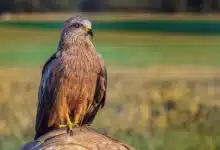
This is a broad-winged raptor, typical of the genus Buteo. Compared to the Common Buzzard, it is longer-winged and more eagle-like in appearance. Its feet are feathered to the toes (hence its scientific name, meaning “hare-footed”) as an adaptation to its arctic home range. Its toes are short for its size.

It has a wide variety of plumages, but is typically brown above and paler below, with dark belly and carpal patches. The head is typically pale. The tail is white with a dark terminal band. Some Canadian birds are all-dark, comprising up to 40% of the population in the east.
An adult Rough-legged Buzzard has an average weight of 1,026 g, a wingspan of 134 cm, and an average total length of 53 cm. The female is typically larger than the male. The Rough-legged Buzzard has eight different morphs that vary with sex, age, and location. Both sexes exhibit both light and dark morphs, and colouration varies between juveniles and adults.
Hunting Techniques and Behavior
The Rough-legged Buzzard’s hunting style is what sets it apart from other large raptors. The Rough-legged Buzzard is one of only a few large birds of prey that hovers while hunting.
Hovering Hunting
The bird will “kite” or hover by flapping its wings quickly to stay nearly stationary, usually just a few metres above the ground. This allows the bird to carefully scan the landscape for any movement, especially small mammals such as lemmings and mice.
The buzzard will use its powerful talons, which are incredibly strong, to grab the prey. This method of hunting is energy-intensive, but it works well in the open habitats that the Rough-legged buzzard inhabits.
Feeding and Diet Habits
Rough-legged Buzzards eat primarily small mammals, especially lemmings from the Arctic. The population cycles of lemmings have a profound effect on the breeding success and dynamics of the eagle. Buzzards can raise larger broods and have better chick survival when lemming populations are high.
It is also opportunistic and will scavenge dead animals when it has the chance, allowing for a more flexible diet, particularly during harsh winters or times of scarcity.
On their wintering grounds, the diet of these birds may expand to include other prey such as small birds.
Breeding & Nesting: A Harsh, but Rewarding Cycle
The Rough-legged Buzzard’s breeding behavior is closely linked to its availability of prey – particularly lemming populations.
Nesting Sites
These raptors nest on cliffs or rocky slopes. They may also nest in trees, depending on the terrain. The nests are made of sticks and lined with soft materials like moss or feathers. Geographically, nesting sites vary. Cliff nesting is more common in mountainous or coastal areas, while tree nesting is more common in the forested tundra.
Reproduction of Eggs
The average clutch size is four eggs. However, the number of eggs can be increased in years with abundant food. The Rough-legged Buzzard’s reproductive flexibility allows it to take advantage of the boom years for its prey species.
The female incubates the eggs, and the male provides the food. Both parents feed the chicks after hatching until they can fly several weeks later. According to RSPB, this species is well documented.
Parental Care and Juvenile Development
Young people are dependent on their parents for a long time. After fledging, young birds may stay near the nest or parents for several weeks before they venture out on their own. The extra care they receive increases their chances of surviving in the harsh environment of arctic regions. According to Audubon Society, this species is well documented.
Migration: A Journey Between Worlds
The Rough-Legged Buzzard, unlike many other raptors, migrates, making one of the most extensive seasonal journeys for a medium-sized bird of prey.
Breeding Grounds & Wintering Areas
The bird breeds in the north and enjoys long daylight hours in summer. However, it must migrate south to escape the harsh winters.
Wintering grounds are found in a variety of latitudes, from the northern United States to southern Canada and parts of Europe and Central Asia. Milder conditions and wide open fields provide hunting opportunities.
Migration Timing and Behavior
The migration occurs between autumn and spring. Timing varies depending on the location and weather. Birds may migrate in loose or tight groups. The birds rely on wind patterns and thermal currents to help them fly long distances, which reduces the energy costs of migration.
The Rough-legged Buzzard is a remarkable bird, with its ability to hover over vast areas and scan them for open spaces, making it ideally suited for stopping overs on migration, where it can rest, hunt, and continue.
Role of Ecological Importance
The Rough-legged Buzzard is an important part of the ecosystems that it inhabits. It helps control lemmings and mice populations by preying on them. These animals can cause an outbreak that damages vegetation and disturbs ecosystem balance.
It also helps to clean the environment and cycle nutrients, thus preventing the spread of disease.
The presence of this species is an indicator of ecosystem health in tundra habitats and other environments sensitive to climate change.

Conservation Status & Threats
The IUCN Red List classifies the Rough-legged Buzzard as being of Least Concern. Local populations, however, may be under pressure from habitat loss, disturbance by humans, and environmental change.
Threats
Climate change: The Rough-legged Buzzard, as an arctic bird, is vulnerable to rapid warming in northern regions. The life cycle of the Rough-legged Buzzard could be disrupted by changes in prey populations and habitat availability.
Habitat loss: The development of agricultural expansion in wintering grounds has reduced the available hunting area.
Human Disturbance Nesting Sites can be caused by recreational and industrial activities, leading to breeding failure.
Pollution, rodenticides, and pesticides can accumulate in prey species. This may affect buzzards indirectly.
Conservation Efforts
Conservation efforts are focused on protecting habitat, especially breeding and wintering areas. They also include monitoring population trends and conducting research to understand and mitigate emerging threats.
Conclusion
The Rough-legged Buzzard is a symbol of resilience, adaptability, and rugged beauty in the north. Its unique hovering hunt, cold-weather adaptations, and impressive migrations are testaments to the wonders of avian evolution.
Although not currently endangered, it is important to maintain vigilance in order to keep this iconic raptor a vital part of the biodiversity on our planet. Its survival is dependent not only on the conservation of remote arctic habitats, but also on the stewardship and protection of the ecosystems that it visits all year.
Bird watchers and nature enthusiasts will find it a memorable and rare experience to catch a glimpse of the bird silently hovering over the tundra and open fields. It is an encounter that connects them with the wild spirit and beauty of the North.